Canada's Supreme Court upholds most of Quebec's Bill 21
The court made an exception for elected members of Quebec's National Assembly who wear religious face coverings.
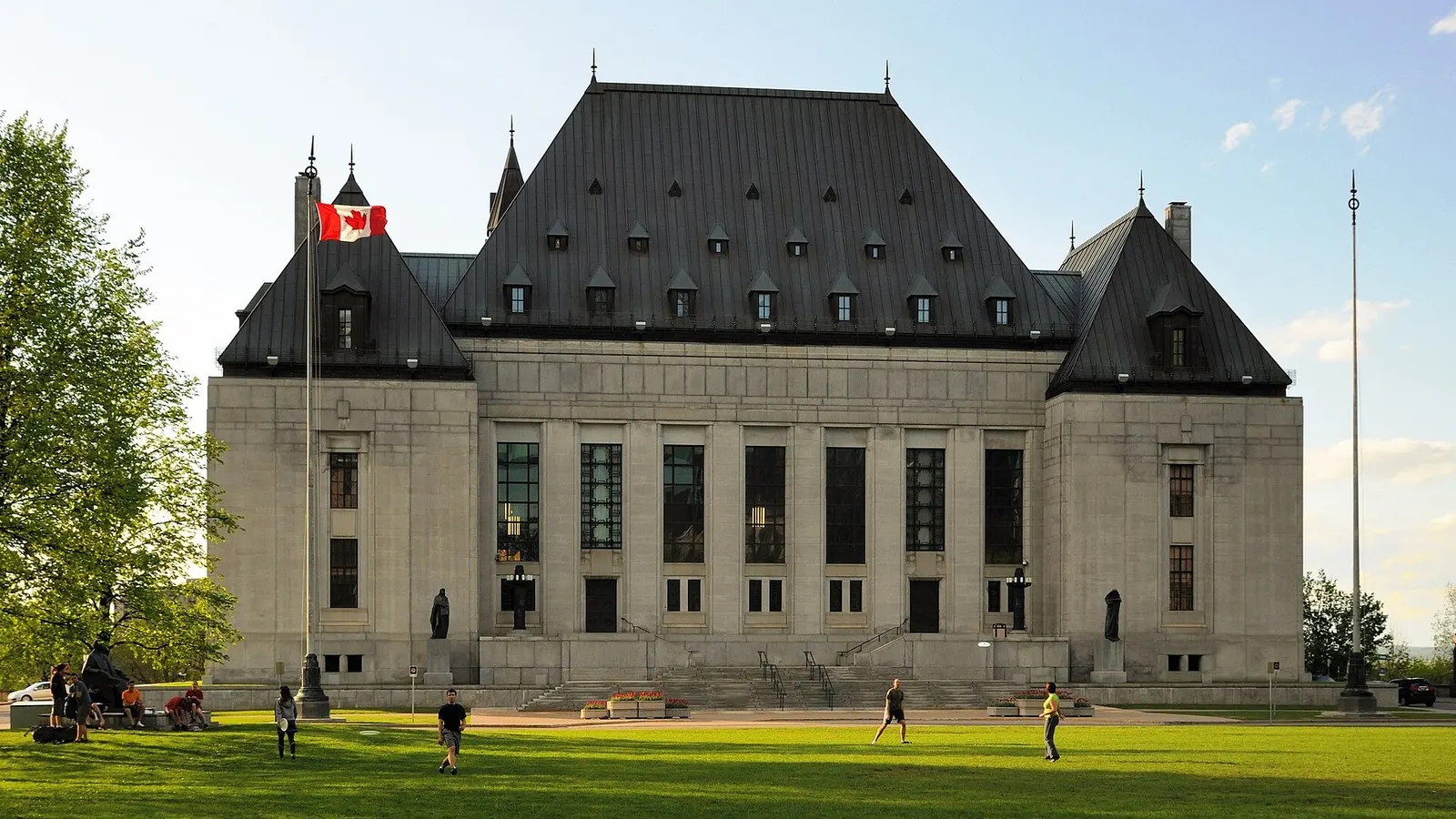
Canada's Supreme Court on Friday upheld most of Quebec's Bill 21, which bars public schoolteachers, police officers and other authority figures from wearing religious symbols at work.
The court also confirmed that governments may use the notwithstanding clause before a court determines whether a law breaches the Charter of Rights and Freedoms. Quebec invoked the clause when it enacted Bill 21 in 2019, the first pre-emptive use of the provision to protect legislation from court challenges, The Guardian reported.
Quebec says the measure separates religion from government and protects state secularism, or laïcité, which it regards as essential to its identity. Challengers, including Muslim, Sikh and Catholic women teachers, argued that the law violated their fundamental rights.
Chief Justice Richard Wagner wrote that "Bill 21 is rooted in Quebec's legitimate and historical commitment to ensuring the laicity of the state in a free and democratic society."
The Guardian put the ruling at 6-1 and said it allowed Quebec to protect the law against most court challenges. Wagner wrote for three justices and found Quebec had "validly used" its power to maintain the law, Al Jazeera reported.
The court made one exception. It found that barring elected members of Quebec's National Assembly from wearing religious face coverings violated their democratic rights.
By 4-3, the justices held that judges may formally declare a law inconsistent with the Charter even when the notwithstanding clause keeps it in force. They made no such declaration about Bill 21. The court rejected most arguments based on rights outside the clause's reach, including equality between men and women and education rights for Quebec's English-speaking minority.
Justices Andromache Karakatsanis, Michelle O'Bonsawin and Nicholas Kasirer wrote that the clause "cannot be used to authorize laws that are incompatible with the fundamental character of Canada as a free and democratic country." The dissenting justices found that Bill 21 infringes religious freedom, freedom of expression and equality rights.
In a partial dissent, Karakatsanis and O'Bonsawin wrote that Muslim women bear the heaviest effects, including women denied jobs because they wear a hijab.
Stephen Brown, CEO of the National Council of Canadian Muslims, called the decision "a sombre day" for Quebec and Canada. "In the 21st century, entire categories of people are now barred from entire sectors of employment, not because of what they have done, but because of who they are," Brown said.
Brown urged the federal government to consider limits on the clause or using its power to cancel provincial laws. That power was last used against a Quebec law in 1910, according to the National Assembly.
Bloc Québécois leader Yves-François Blanchet called the ruling an "important victory for the Quebec National Assembly." He rejected Brown's appeal for federal action, saying "at some point, the madness has to stop."
Prime Minister Mark Carney told CBC that the government was studying the decision closely. He said "the core of the judgment is that the use of the notwithstanding clause for virtually all of the obligations of what is called Bill 21 was appropriate."
"This is not what we were hoping for. In fact, it's a patchwork of a decision," said Howard Sapers, executive director of the Canadian Civil Liberties Association.
Bouchera Chelbi, a teacher who wears a hijab, is exempt because she was already employed when the law began. But she told CBC she would never be promoted. "If you belong to certain religions, you have no place here," she said.
The law covers a hijab, turban, kippah and cross, among other symbols. An override under the notwithstanding clause can last up to five years and must be renewed. Quebec renewed its use for Bill 21 in 2024.
Joe Ortona, chair of the English Montreal School Board, which challenged the law, said, "This isn't the end of the road. This is the end of the legal road."
Quebec's Parti Québécois government has pledged a bill barring elementary school students from wearing religious symbols at school.
Sources
- The Guardian: Canada’s top court upholds Quebec law barring public sector workers from wearing religious symbols
- BBC News: Canada's top court largely upholds Quebec ban on religious symbols for public servants
- Al Jazeera: Canada’s top court largely upholds Quebec’s religious symbols ban
- AP News: Canada’s Supreme Court largely upholds Quebec ban on religious symbols for public servants
- CBC: Rights groups vow to keep fighting after Supreme Court largely upholds Quebec's controversial secularism law | CBC