U.S. aircraft disables propulsion of commercial ship after Iran blockade breach attempt
Central Command said the Palau-flagged bulk carrier ignored warnings after leaving Bandar Abbas and that its crew was unharmed.
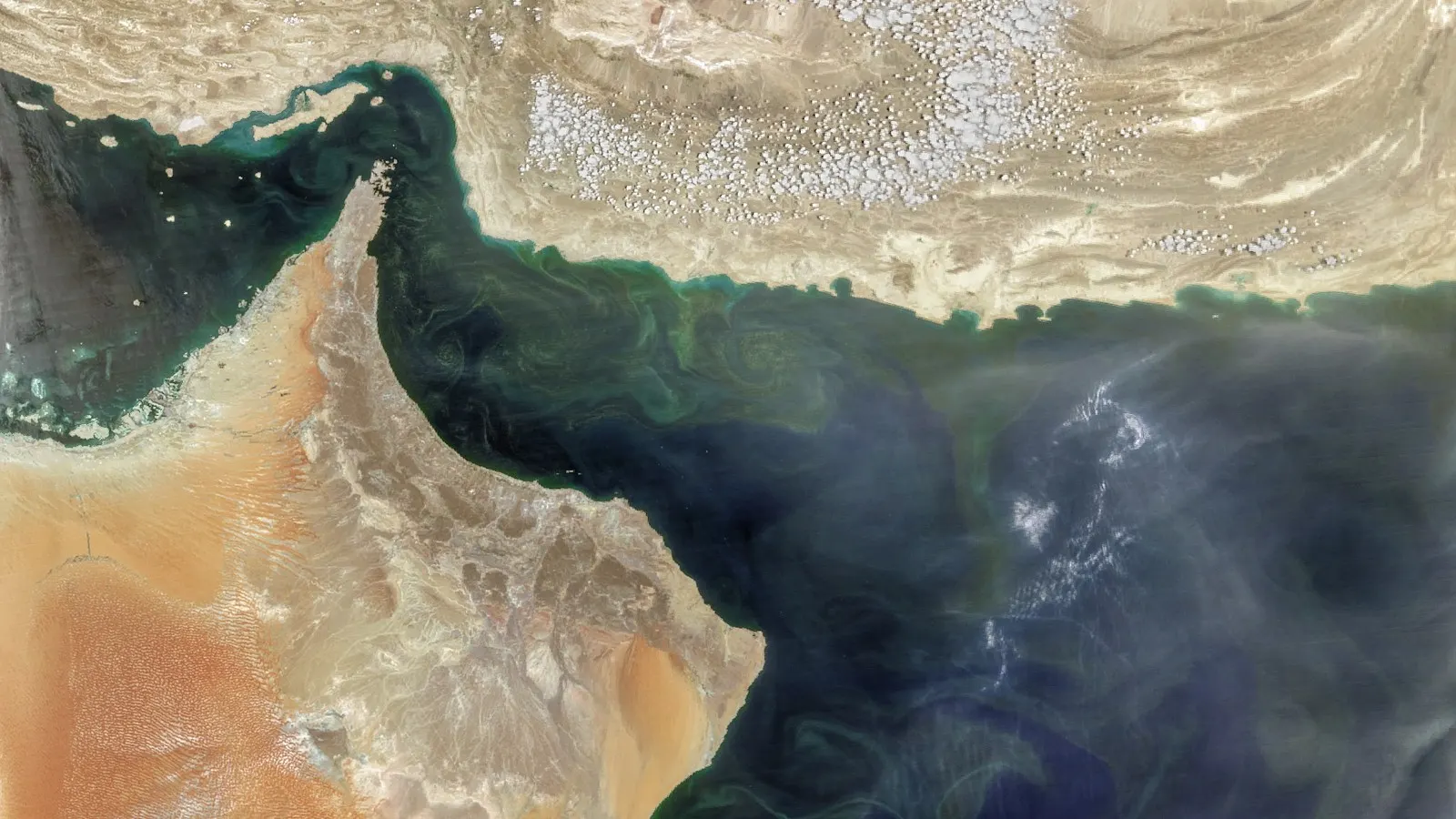
A U.S. military aircraft disabled a commercial ship in the Gulf of Oman on Thursday after its crew attempted to breach the U.S. naval blockade of Iran, U.S. Central Command said.
Central Command identified the ship as the Palau-flagged bulk carrier M/V Pacific Archer and said its crew disregarded multiple warnings after departing the Iranian port of Bandar Abbas. The aircraft fired precision munitions into the vessel’s stern.
“The ship's propulsion was ultimately disabled and the civilian crew was unharmed,” Central Command said in its announcement of the strike Friday.
The command released unclassified footage of a munition hitting the ship, which The Hill said lasted eight seconds.
CENTCOM disabled a commercial vessel in the Gulf of Oman, Nov. 26, after the crew attempted to run the U.S. naval blockade, despite multiple warnings, following departure from Bandar Abbas.
— U.S. Central Command (@CENTCOM) November 27, 2026
A U.S. military aircraft launched precision munitions that struck the stern of
U.S. forces have redirected 158 commercial vessels that complied with the blockade and disabled six that did not, Central Command said.
The Pacific Archer is at least the 15th vessel disclosed as disabled since the spring start of the blockade, and the sixth since its summer resumption, The Associated Press reported. The preceding vessel was disabled on Nov. 7.
Tracking websites show Singapore as the Pacific Archer’s destination, according to the AP.
It was not immediately clear who owns or operates the ship, what cargo it carried or how many crew members were aboard. Its current status was also unknown, as was whether Iran or Palau had responded.
U.S. forces maintained the blockade from mid-April through late June during the U.S. and Israeli war on Iran. It was lifted during peace talks with Tehran, then restarted in mid-July.
Central Command wrote on X on Nov. 21 that the blockade had lasted 130 consecutive days and was “preventing Iran's Islamic Revolutionary Guard Corps from exporting billions of dollars in crude oil.” Adm. Brad Cooper, the command’s leader, said Oct. 16 that Iran had lost $25 billion in oil revenue because of the blockade.
“As a point of emphasis, with the exception of the humanitarian assistance we've allowed in, Iran has no exports and no imports by sea,” Cooper said in a video.
Central Command has consistently said U.S. forces give merchant ships multiple warnings before opening fire. In June, officials in India said a U.S. strike killed three Indian sailors aboard the M/T Settebello, a tanker attempting to evade the blockade. The head of the International Maritime Organization, a United Nations agency, condemned the strike.
Iran continues to warn vessels against crossing the Strait of Hormuz without Tehran’s approval. Iran’s Revolutionary Guard said Friday that two tankers attempted an unauthorized route through the strait, with one hitting a naval mine and the other forced back.
The AP said those accounts could not be independently verified. In a statement carried by the state broadcaster, the Guard said attempted unauthorized crossings by oil tankers had dropped sharply in recent days.
President Donald Trump said Thursday that he would end the conflict “sort of whenever” he decides to wind it down. The war reaches nine months on Saturday.
Sources
- The Hill: Military says it disabled vessel that ‘attempted to run the U.S. naval blockade’ against Iran
- AP News: US military says it disabled another ship that tried to breach naval blockade on Iranian ports
- The Hindu: U.S. military says it disabled commercial ship trying to run Iran blockade
- ABC News: Iran live updates: US military disables vessel while enforcing blockade
- U.S. Central Command (@CENTCOM) on X