

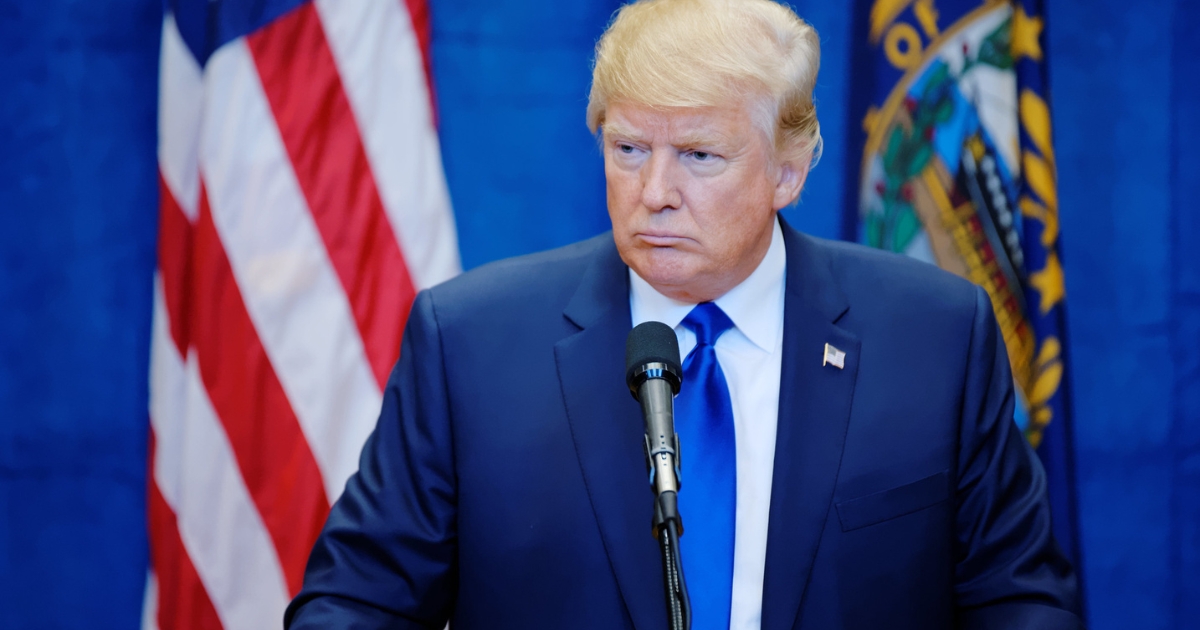
President Donald Trump’s recent barrage of late-night social media posts has prompted fresh concern from at least one medical expert, who says the behavior may point to an underlying health issue that should not be ignored.
In comments aired on The Daily Beast Podcast, Dr. Bruce Davidson, a professor at Washington State University’s Elson S. Floyd College of Medicine, said Trump’s erratic posting spree resembles a common post-stroke complication known as agitated depression, according to reporting by Raw Story.
Last week, Trump stayed up into the early morning hours posting on Truth Social, cycling through attacks on political rivals, complaints about not receiving a Nobel Peace Prize, and grievances tied to his recent appearance at the World Economic Forum in Davos. The volume and tone of the posts stood out even by Trump’s standards.
1/31
I believe there is growing evidence, that the White House is covering up the fact that Donald Trump has been dealing with TIA strokes.
AND that he likely had a more significant ischemic stroke this week. pic.twitter.com/aO327vaoCj
— Adam Cochran (adamscochran.eth) (@adamscochran) August 31, 2025
“He’s up at night, which can worsen depression. It’s common to get depression,” Davidson said on the podcast, adding, “And he’s angry because he didn’t get a Nobel Prize.”
Davidson stressed that his concern was not political, but clinical. He pointed to Trump’s fixation on perceived slights and the emotional volatility of the posts as potential indicators of distress rather than strategy.
“I mean, here’s a man who’s been elected president twice, and he cares about a Nobel Prize,” Davidson said. “Other things seem to get under his skin, and so it concerns me.”
The physician went further, suggesting that Trump’s medical team should take a more active role.
Trump has lost control of the right side of his lower body. He can’t control his right leg to move parallel w his left. He’s sick. He’s having strokes. Strokes result in dementia. #DementiaDon #ImpeachTrumpNow #25thAmendment pic.twitter.com/676uSKmSKY
— Menckim’s Ghost 🇺🇸 (@menen_c) January 23, 2026
“When I see the president appearing like a patient having trouble, I want his physicians to engage,” Davidson said. “And this illustrates, I regret to say, a terrible, increasing weakness in American medical leadership.”
Did Trump have a stroke? TIA? He was sitting like this for 30 mins in Sept … Is the White House lying to us?
He sleeps during meetings. Can’t even help it.
He has bruises on his hands, swelling on his kankles.
He had an “annual” health visit that was months early where… pic.twitter.com/MFndtAW3ce
— Jason Lavin (@jasonlavin) January 24, 2026
Davidson emphasized that physicians have clear priorities, beginning with reducing suffering and preventing further harm — responsibilities he suggested may not currently be met.
The concerns arrive amid renewed scrutiny of Trump’s physical presence during public appearances last week at the World Economic Forum. Footage and photographs from Davos showed the president appearing fatigued at times, with moments of stiffness and slowed movement that drew attention online, though the White House has issued no medical updates.
While Davidson did not claim Trump had suffered a stroke, he outlined the behavior as consistent with symptoms doctors are trained to monitor closely, especially in older patients under high stress and irregular sleep patterns.
Other medical professionals have cautioned in recent weeks against diagnosing any public figure from afar, noting that visible behavior alone cannot confirm neurological events. Still, Davidson argued that when one notes a changes in sleep, mood, and impulse control, it should immediately prompt internal medical review, particularly for a sitting president.
“A physician has three primary responsibilities. The first is relief of suffering. Second, prevent disability, and the third priority is postpone death. That’s what we’re supposed to do.”
A language and speech pathologist analyzes Trump’s speech. pic.twitter.com/SoJh5VTgiU
— Annalea 🪷🐝🌻 #TeamAspirin (@citizengatsby) January 23, 2026
Trump’s physicians have not publicly responded to Davidson’s remarks. The White House has also not released new health information following Trump’s Davos trip or his recent posting activity.
For now, the concern remains limited to expert commentary rather than official findings. But Davidson’s warning adds to a growing chorus urging transparency and vigilance — not speculation — when it comes to the health of the person holding the most powerful office in the country.
And as Trump continues posting through the night, the question raised by doctors isn’t political. It’s medical.