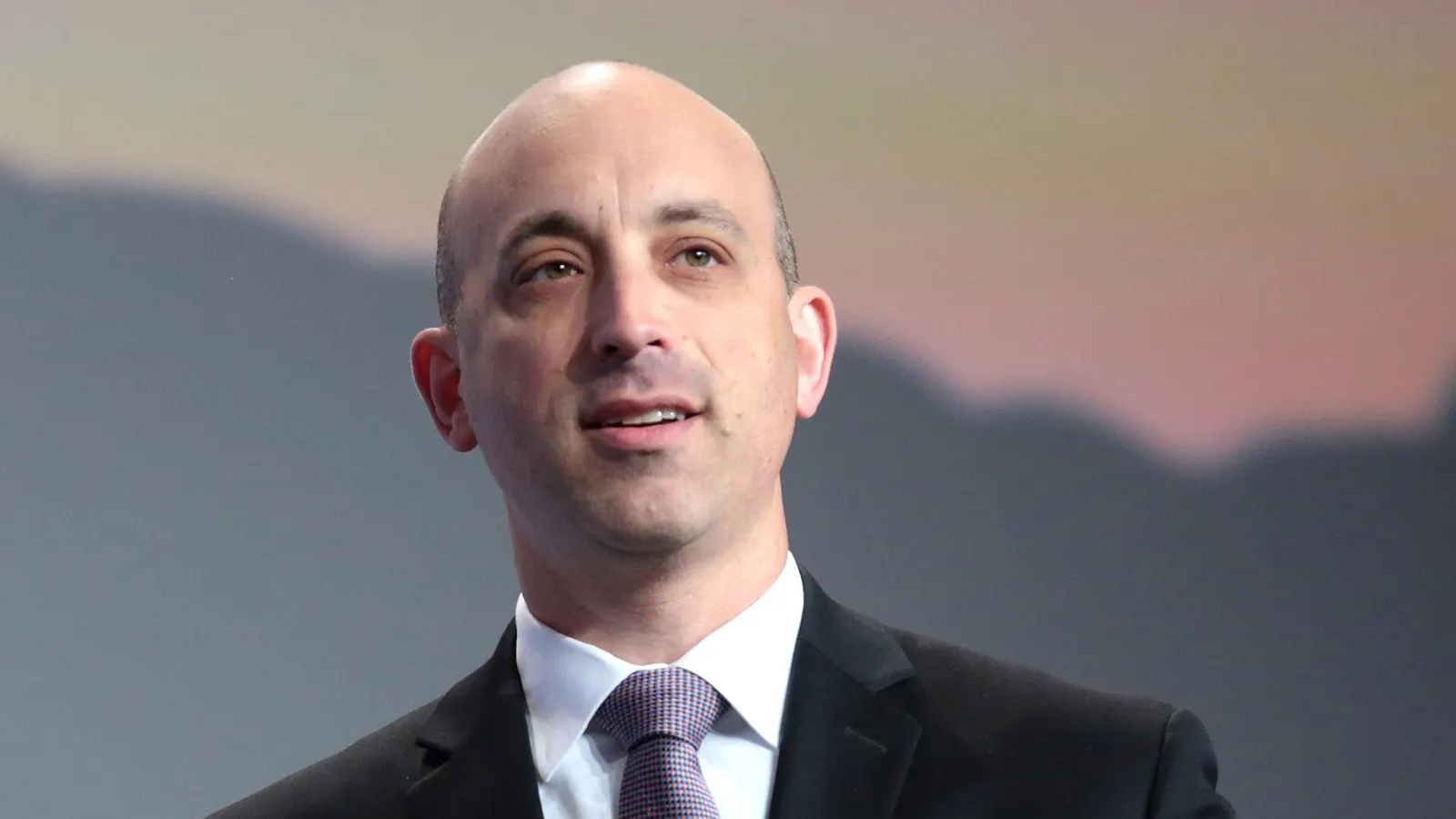
Taiwan voters cast ballots as Puma Shen challenges Taipei mayor
In Taipei, ruling-party candidate Puma Shen faces incumbent Chiang Wan-an in a race the mayor has called very close.
Voters went to the polls Saturday to elect mayors and local leaders in Taiwan’s 22 cities and counties, with China watching and Taipei’s incumbent mayor facing a ruling-party challenger.
About 11,000 positions are up for election in the "nine-in-one" vote, named for the nine categories of local posts. Those elected will serve four-year terms. In Taipei, long a Kuomintang (KMT) stronghold, Mayor Chiang Wan-an of the KMT faces Democratic Progressive Party (DPP) candidate Puma Shen.
A win for Shen would make him the DPP’s first Taipei mayor in nearly 30 years. Chinese police say he is wanted for alleged "separatist activities," and China has denounced him.
Shen began the contest as the underdog, but his rallies have attracted large crowds and his campaign ribbons and badges have drawn strong demand. Chiang told supporters the race was "very close."
Austin Wang, a political scientist at the University of Nevada, said Beijing could view a Shen victory in the KMT’s heartland as "quite shameful."
Earlier in November, Shen said Chinese police had never contacted him and that the Taipei vote would be a victory for democracy against pressure from Beijing, whoever won. In a recent interview with The Guardian, he called the race "a slap to China" even if he lost.
Taiwan’s government has proposed a record 18% defence spending increase for next year, including funding for drones and missiles. Under the proposal, spending would exceed 1 trillion Taiwan dollars, a level never reached before.
The government has urged people to watch for false social media claims, citing Chinese disinformation efforts. Its Mainland Affairs Council said Beijing is attempting to shape the result through "cognitive warfare" and "transnational repression."
Beijing calls the interference allegations "completely fabricated." Zhu Fenglian, a spokesperson for China’s Taiwan Affairs Office, said the allegations "stir up anti-China sentiment to win votes."
The Guardian reported that Taiwanese officials have raised alarms about thousands of suspected misinformation or election interference incidents, and that certain candidates have faced harassment from Chinese authorities. The Guardian also cited reports of hundreds of China-linked AI-generated videos spreading disinformation about Taiwanese politicians disliked by Beijing.
Shen’s campaign office said AI videos depicting him appeared to be a "classic tactic China uses to smear specific targets," according to BBC News. The outlet reported, citing local media, that Shen has taken legal action against people sharing deepfakes.
President Lai Ching-te campaigned for DPP candidates in the final days before the vote. On Thursday night, he appeared for the party’s mayoral candidate in Taoyuan City. He also asked a New Taipei City rally to support the party’s candidates there.
In New Taipei, the DPP’s Su Chiao-hui is mounting a strong challenge in Taiwan’s most populous city, a KMT stronghold with a KMT mayor.
Thousands of Chiang supporters carrying flags and balloons gathered on a major street for his final rally Friday night. Shen called off his final outdoor rally, replacing it with an online event. That event attracted over 500,000 YouTube viewers, according to Al Jazeera, while The Straits Times estimated that several hundred thousand people watched.
Taiwan’s Defence Ministry counted 33 sorties toward Taiwan by Chinese People’s Liberation Army warplanes, including bombers and fighter jets, between Friday and Saturday. Schools, temples and community centres opened for voting at 8 a.m. Saturday, or 00:00 GMT. Polls were scheduled to close at 4 p.m. (08:00 GMT).
KMT defends its local gains
The KMT won 14 cities and counties in the 2022 local elections, while the DPP took five and other parties or independents won three. Chiang’s Taipei victory in 2022 was by a double-digit margin; he is seen as a possible future presidential candidate.
Shen is an academic-turned-lawmaker and an expert on China’s information warfare. He is the first candidate under Beijing sanctions to seek the Taipei mayoralty, according to The Guardian. Beijing declared him a "diehard separatist" in 2024.
Most candidates belong to the DPP or KMT. The KMT favours closer ties with Beijing, while the DPP rejects China’s sovereignty claims. KMT Chairwoman Cheng Li-wun travelled to China in April to meet Chinese President Xi Jinping.
China claims Taiwan as its territory and has threatened to seize the island by force. Beijing has repeatedly weighed in on the elections, although campaigns have centred on local concerns such as transport, childcare and environmental issues instead of China.
"Many of the candidates toned down their attacks. In order to try and get the swing voters, they talked more about policy," Wei-hao Huang, a political science professor at National Sun Yat-sen University, told The Independent.
"They have nothing to lose for this election," Sanho Chung, a National Cheng Kung University assistant professor who teaches political science, told The Independent about the DPP, which won only five of 22 localities in 2022.
Presidential calculations
"Even though local elections are not about China, the outcome of local elections will have huge implications for cross-strait relations," said Wei-Ting Yen, a political scientist at Academia Sinica.
Yen told The Guardian that if the KMT loses some traditional strongholds, Beijing "may need to reconsider what is the most effective strategy for influencing Taiwanese people."
Liu Jia-wei, a political science professor at National Taipei University, said turnout among undecided and young voters will determine the "very tight race" in Taipei. Liu said Beijing "will continue to closely monitor Taiwan's local political situation."
Analysts cited by Deutsche Welle say local results offer an unreliable guide to the next presidential election, due in early 2028. Lai is expected to seek a second term, with the DPP likely to rally behind him.
The KMT could soon begin discussing its presidential ticket once voting ends; outgoing Taichung Mayor Lu Shiow-yen and parliamentary speaker Han Kuo-yu are among the leading potential candidates. Cheng is seen as another possible contender, though she could face pressure to step down if the party performs poorly.
Results are expected by early Saturday evening.
Sources
- Deutsche Welle: Taiwan goes to polls in closely watched local elections
- The Guardian: Threat from China looms large over Taiwan’s local elections
- Al Jazeera: Taiwan votes in local elections to choose mayors, other leaders
- The Straits Times: Taiwan goes to polls, warns of Beijing interference
- The Independent: AI fakes are trying to influence Taiwan’s key elections. Taipei suspects China
- BBC News: Taiwan election: Is China behind a wave of AI fakes and disinformation?
- AP News: Taiwan holds elections to choose mayors and other local leaders as China looks on