Supreme Court to hear case that could overturn Connecticut rifle ban
The justices will also consider a Cook County, Illinois, ordinance; the Trump administration backs the challengers.
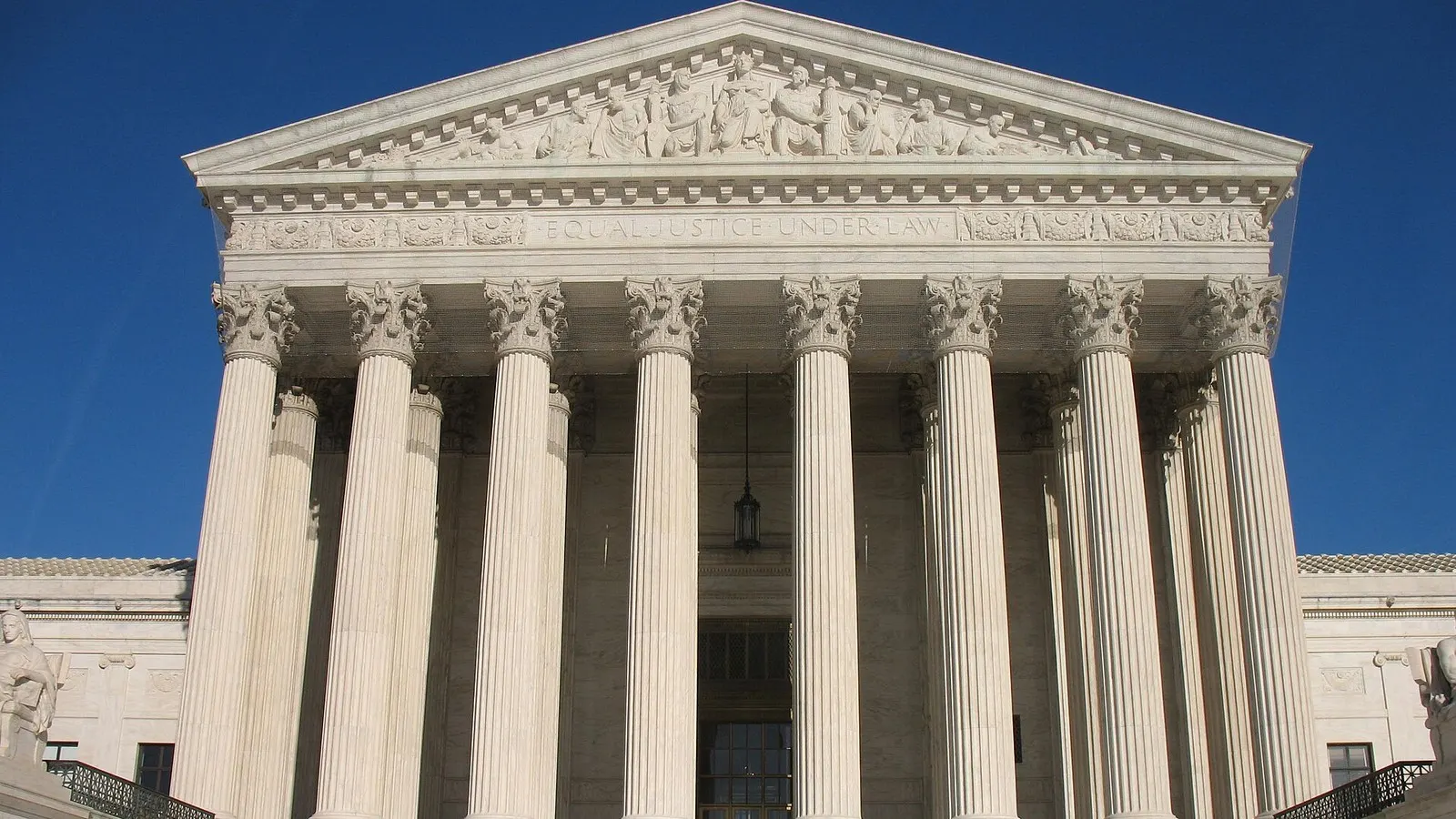
The Supreme Court will hear arguments Wednesday in a case that could overturn Connecticut's post-Sandy Hook ban on AR-15-style rifles and establish a constitutional right to possess them.
The justices will consider Connecticut's law alongside a similar ordinance in Cook County, Illinois, which includes Chicago. The case is called Khaya vs. Cook County.
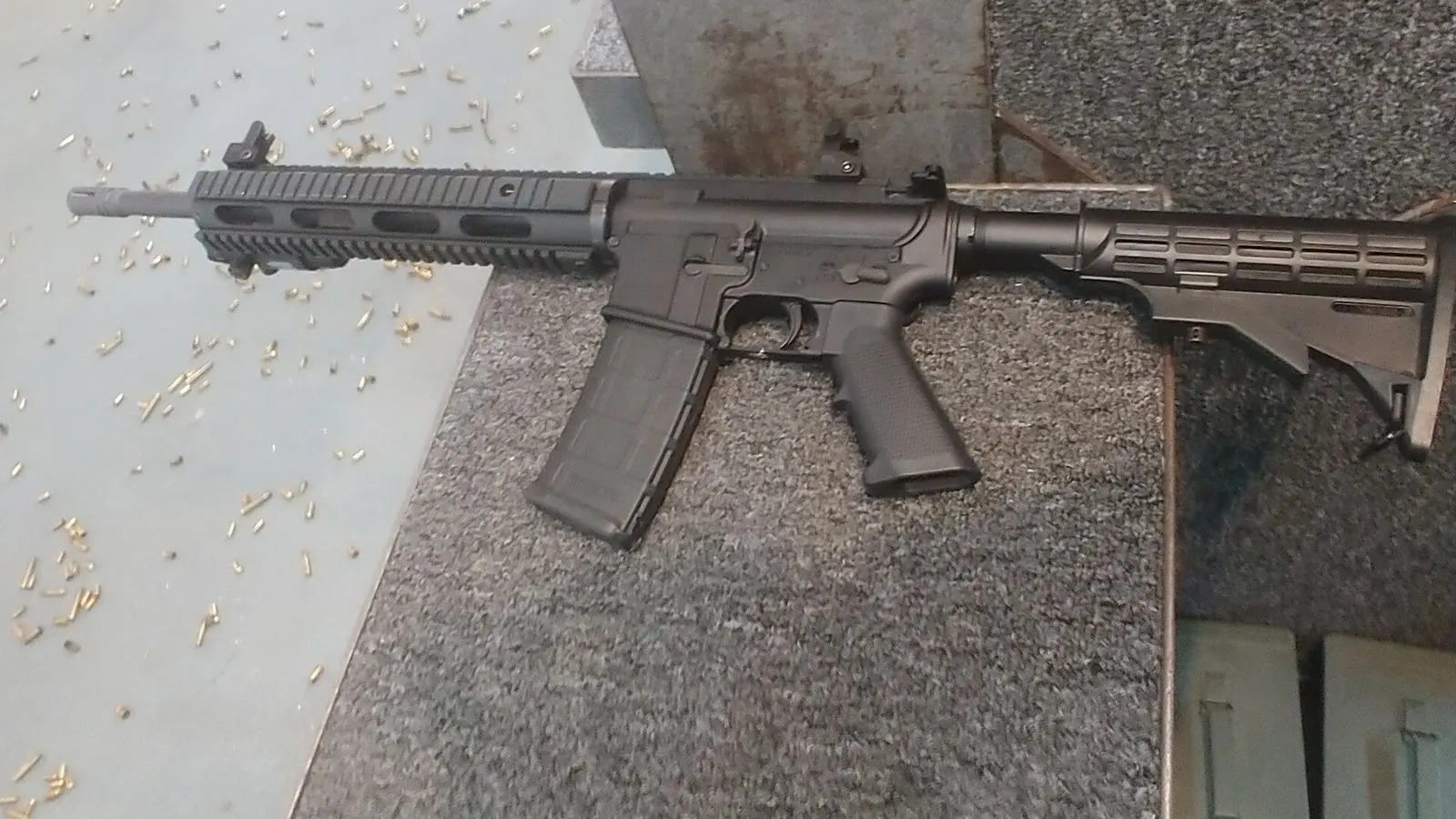
Connecticut prohibits AR-15s and comparable semiautomatic rifles, as well as "large capacity magazines" that hold more than 10 rounds of ammunition. The state argued in a court brief that "from 14th-century England to 21st century America, governments have restricted weapons because of their unusually dangerous properties." It described the AR-15 as "the signal example of an unusually dangerous weapon today."
Cook County's lawyers wrote, "Once it becomes clear that a new weapon poses an unacceptable threat to human life, legislatures should be able to act."
The Trump administration supports the challengers. It argues that courts have upheld bans on especially dangerous weapons such as machine guns, but history does not justify comparable limits on weapons "in common use" by law-abiding citizens. The U.S. solicitor general wrote that semiautomatic rifles are "unquestionably in common use among law-abiding citizens."
Nicole Hockley, 55, whose son Dylan was killed at Sandy Hook, said overturning the ban "would almost be saying, yet again, 'Dylan's life didn't matter'".
Hockley said of the justices, "But can they look at their child and say, 'I'm going to override Connecticut's laws to protect its own people, and I'm going to value the AR-15 and semiautomatic rifles over your life?' It just makes no sense."
Bill Sack, senior director of legal operations at the Second Amendment Foundation, told Reuters, "If the government has the power to categorically ban the most popular guns in the country, then the right to 'keep and bear arms' is a dead letter."
"We all view this as the Super Bowl of gun rights for the time being," Sack said.
Dane Hassan, owner of the Southbury Trading Post gun shop, called for a national focus on people with mental health issues. "But just to take that one platform and ban it doesn't stop anything," he said.
Law followed 2012 shooting
A gunman with an AR-15 fired 154 rounds in under five minutes during the Dec. 14, 2012, massacre at Sandy Hook Elementary School in Newtown, Connecticut.
He killed 20 first-grade children and six adults before killing himself. Connecticut lawmakers subsequently expanded the state's "assault weapons" ban to cover the AR-15 and other semiautomatic rifles like the one used in the shooting.
'Common use' at issue
The court's "common use" test dates to District of Columbia v. Heller in 2008, when the justices struck down a Washington, D.C., handgun ban by a 5-4 vote. The court concluded that the Second Amendment protects weapons "in common use."
The justices ruled in 2022 that firearm restrictions must have roots in the nation's history, a decision followed by a flood of challenges to gun laws.
A 2026 survey cited by challengers estimated that Americans own 40 million AR-15-type rifles, making the firearms more common than Ford F-Series pickup trucks. Justice Brett Kavanaugh wrote in a Maryland case in 2025 that "Americans possess an estimated 20 to 30 million AR-15s."
Chief Justice John G. Roberts and Justice Amy Coney Barrett may cast the deciding votes, the Los Angeles Times reported.
"This case is life or death," said Janet Carter, managing director of Second Amendment litigation at Everytown Law. Carter said an assault weapon and a large-capacity magazine were involved in each of the 10 mass shootings with the highest casualties in the past 10 years.
"Assault weapons don't change the likelihood of committing the crime but they do impact the level of carnage," said James Alan Fox, a Northeastern University criminology professor. Fox said semiautomatic rifles are not involved in most mass shootings, though such shootings have killed nearly twice as many people on average as other mass shootings.
UCLA law professor Adam Winkler doubted that a ruling would greatly affect public safety, but said, "Striking them down could prompt a backlash against the court and likely exacerbate its already historically low approval rates."
Hockley will travel to Washington next week with other families and survivors of deadly mass shootings, The Associated Press reported. The AP said the court is expected to rule around the end of June.