

The Donald Trump administration is advancing a bold new approach on the global stage, using the United Nations platform to promote an “America First” strategy that prioritizes U.S. economic growth while encouraging other nations to rethink traditional foreign aid models. The shift is also expected to create expanded opportunities for American businesses.
According to reports, the Trump administration initiative—described as “trade over aid”—urges countries to scale back reliance on large-scale humanitarian assistance and instead invest in partnerships with U.S. companies. A diplomatic cable sent to American embassies and consulates outlines plans to leverage the UN system to “create business opportunities for US companies,” the Daily Mail reports.
In the communication, reviewed by The Washington Post, Secretary of State Marco Rubio directed diplomats to issue a démarche—an official diplomatic request—encouraging foreign governments to support the plan. The proposal is expected to be formally introduced at the United Nations later this month.
“U.S. goods trade deficit has decreased by 24% between April 2025 when tariffs first went into place, through February 2026 compared to the same period a year earlier. It’s gone down by over 30% with China in particular.”@USTradeRep Amb. Greer highlights @POTUS‘ trade wins: pic.twitter.com/512ubezTHq
— Rapid Response 47 (@RapidResponse47) April 16, 2026
The concept was first reported by Devex, which obtained internal State Department documents detailing the strategy. Those materials argue that long-standing aid systems have delivered limited results. “For decades, government aid has been flowing from developed to developing countries with only limited impact,” one document states.
“It has not solved the world’s economic development challenges, and it has often created dependency, inefficiency, and corruption,” the note continues.
Officials say the new model aims to replace one-directional aid flows with mutually beneficial economic relationships. “Donors and developing countries are ready to try a new development aid model,” the document adds. “The old model has been government-centered and one-directional: aid flowed from donor to recipient countries. The new model emphasizes mutually profitable business relationships between private sectors and countries.”
The State Department further emphasized that private enterprise—not government aid—has historically driven the world’s most successful economies. An official familiar with the discussions told The Washington Post, “It’s solidifying our stance on dropping aid completely and letting companies enrich themselves on newer markets.”
.@SecRollins: “Just in one year alone, we have cut [the Ag] deficit by 42%… We expect, based on the numbers this year, corn exports to be up 25%, our ethanol exports to be up 20%, our tree nut exports to be up 11%, our dairy exports to be up 17%.” pic.twitter.com/vwYuMabtGn
— Rapid Response 47 (@RapidResponse47) April 16, 2026
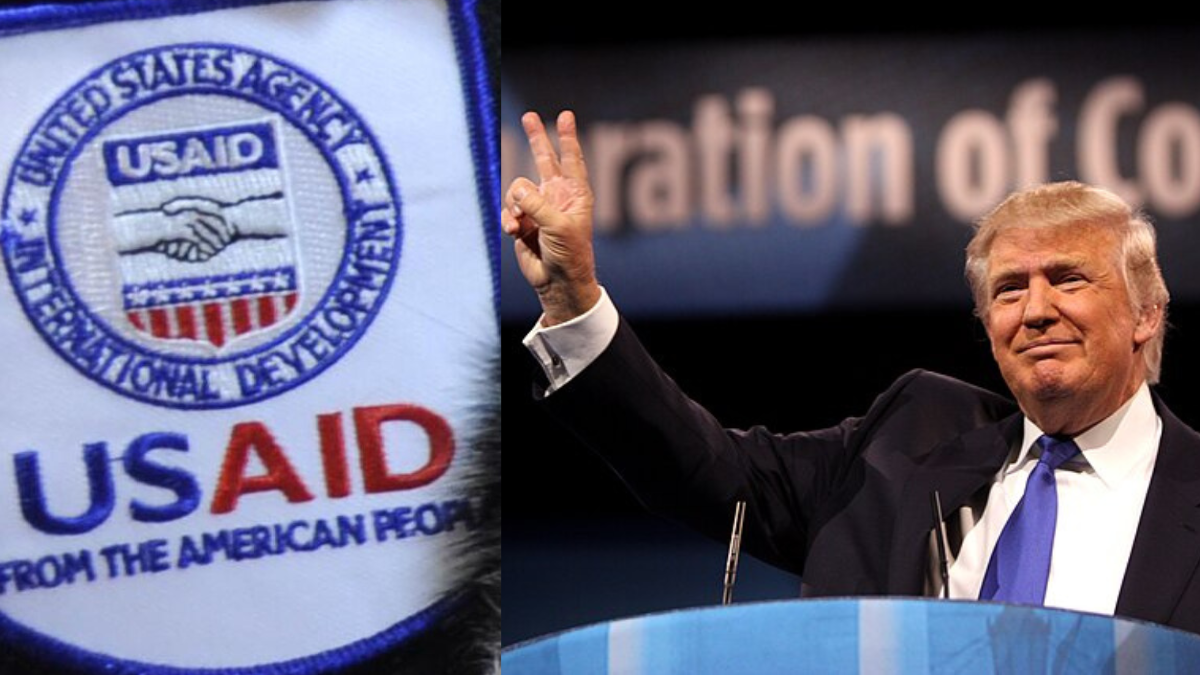
The policy shift follows the Trump administration’s decision to dismantle the United States Agency for International Development, which had long been the world’s largest provider of foreign assistance, operating with an annual budget of roughly $25 billion.
President Donald Trump and allies, including Elon Musk, have argued that the agency was plagued by “waste, fraud and abuse,” while critics of the previous system have said it fostered long-term dependency among recipient nations.
Even before Trump’s return to office, several Western countries—including Germany, Sweden, Canada, and Norway—had begun scaling back foreign aid commitments. Since the administration’s push for reform, nations such as France, Japan, and the United Kingdom have taken similar steps.
Data from the Organization for Economic Co-operation and Development shows that aid contributions from member nations dropped by roughly 23 percent between 2024 and 2025, with the United States accounting for about three-quarters of that decline.