

Trigger Warning: This article contains references to the alleged child physical abuse, murder, and suicide that some readers may find distressing.
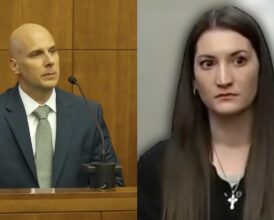
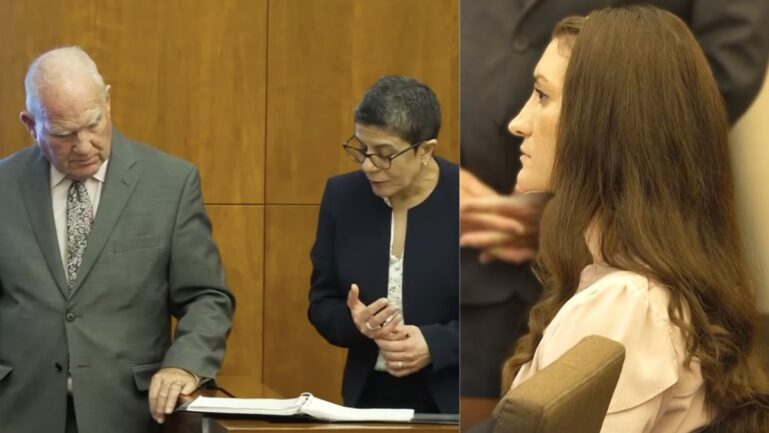
Lindsay Clancy’s defense attorney, Kevin Reddington, questioned the psychiatrist regarding her psychiatric evaluation and treatment at McLean Hospital. Dr. Alia Goodheart testified in court and explained why she didn’t diagnose Clancy with postpartum psychosis.
She agreed that Clancy came to the hospital on January 1, 2023, for a voluntary five-day stay. Goodheart called Clancy a “low-risk” patient despite her recent symptom of developing insomnia. The psychiatrist said, “I had no reason to believe she was not a reliable reporter,’ and diagnosed her with major depressive disorder without psychotic features.
Earlier, a forensic psychiatrist also testified in court, claiming the Massachusetts mom did not have signs of psychosis. Reddington asked her about the tests and examinations that were done during Clancy’s stay at the hospital. Testifying at trial, Goodheart stated that while McLean Hospital drew the patient’s blood, the samples were not evaluated for medication levels, noting the tests differed from routine substance abuse screenings. She testified, “Psychiatry is not based on blood tests; it’s based on the patient who is sitting in front of you.’
Reddington asked, “Did you look at the thyroid reads?” She claimed she would have reviewed it if she had treated her further, but it was not checked at that time. The defense further asked her, “The Edinburgh postpartum depression scale. Was that administered to Lindsay when she was in for the four and a half days that she was in your hospital?”
She replied, “We don’t administer scales.” The attorney argued, “That’s an accepted tool to evaluate a patient as a psychiatrist or a psychologist, isn’t it?” Goodheart explained [that] the test is not used for diagnoses. Reddington established that the doctors also failed to obtain Clancy’s medical records from previous evaluations.
Law&Crime shared the courtroom video on YouTube. It has almost 200k views as people continue to watch the ongoing trial. Clancy stands accused of strangling her three kids to death and attempting to commit suicide. Her defense has claimed it to be the result of postpartum psychosis and the impact of 13 different medications she took to deal with her mental issues.
Surprising testimony from Lindsay Clancy’s trial.
McLean/Harvard psychiatrist didn’t test for thyroid on an admission for depression?
A 32-year-old woman presents with depression, fatigue, brain fog, 8 months postpartum.
Wouldn’t TSH be pretty routine?Here is the actual… pic.twitter.com/nwBxMOLUFf
— Nicolas Badre (@BadreNicolas) August 9, 2026
She was vocal about her postpartum anxiety and depression, but she did not receive the right treatment. Clancy has admitted to the crime, but the defense has argued she was overmedicated and mentally suffering, so she should not be held responsible.
Meanwhile, the prosecutors allege she planned the murders and sent her then-husband to a pharmacy and restaurant to be alone with the kids. Viewers have started debating who to blame for the murders as new evidence and testimonies are revealed in the court. One viewer noted, “This was painful to watch. This sounds like total negligence on the part of the ‘psychiatrist’ at McLean Hospital.”
Another one pointed out, “The lawyer shows a much better understanding of psychiatric illness and assessment than the witness.” One more added, “This is the perfect example of how mental health care is completely inadequate. Just inexcusable.” “As a mental health provider, I’m very impressed with the defense attorney’s grasp on all of this,” commented a professional.
Disclaimer: The Inquisitr could not independently confirm the facts of this incident and is reporting based on the information available within the public video record.