

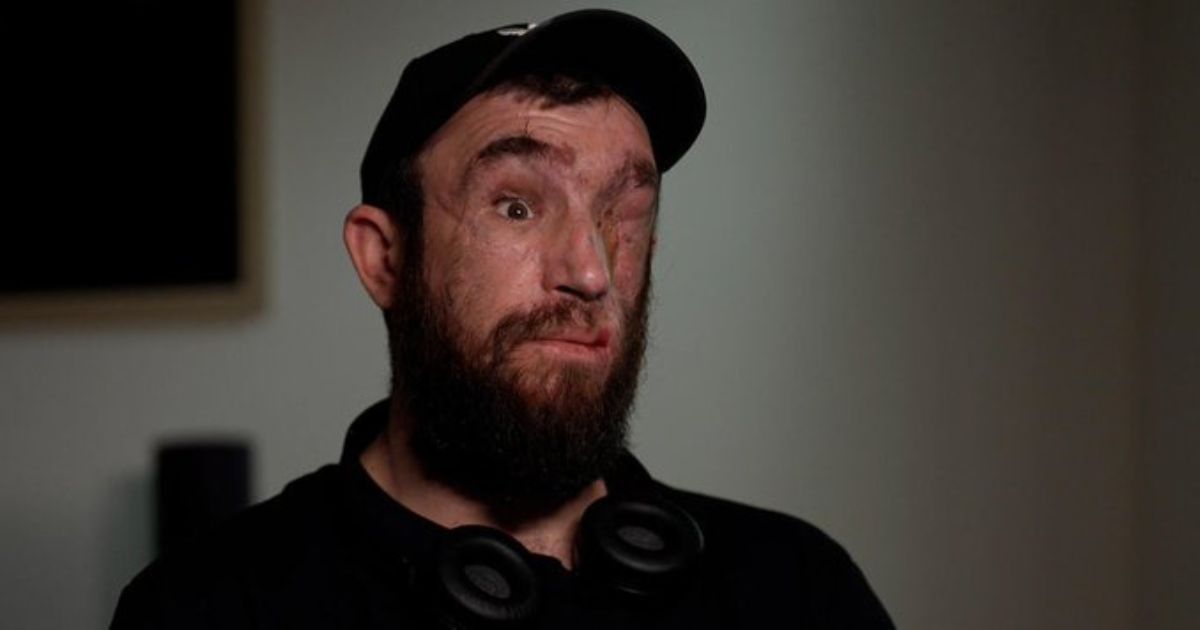
As new discussions unfold over a possible U.S.-backed plan to end the war in Ukraine, a wounded Ukrainian soldier is asking a question that many in his country are struggling with, “How much more can we give?” The words come from Pavlo Martsenyuk, a 34-year-old serviceman who lost his sight after an anti-tank mine explosion and is now recovering at the Unbroken rehabilitation hospital in Lviv.
Martsenyuk told CBS News he has lost count of how many friends and fellow soldiers he has buried since Russia’s full-scale invasion began nearly four years ago. He said the road back has been long, marked by surgeries, mental health treatment, and learning to navigate what he describes as “an entirely new life.”
Ukrainian soldier Pavlo Martsenyuk has lost count of the friends and comrades he’s lost since Russia launched its full-scale invasion of his country almost four years ago. The 34-year-old says he does his best to keep alive the memories of the men he fought alongside
— PEER COMMUNITY HUB, Our Empowerment Zone! 🇨🇦✌️ (@p_communityhub) December 2, 2025
Despite his injuries, he says he wants to set an example for his children and remind people outside Ukraine of the human cost of the conflict. He believes too many observers underestimate what Ukrainians have already sacrificed.
The debate over sacrifice has intensified this week as President Donald Trump pushes a peace plan that would require Ukraine to surrender some of its currently occupied territory to Russia in exchange for an end to fighting. The plan is part of ongoing talks involving Trump’s son-in-law Jared Kushner and special envoy Steve Witkoff, who traveled to Moscow to meet with Vladimir Putin on Tuesday. At the same time, Ukrainian President Volodymyr Zelenskyy is holding meetings with European leaders to shore up support for continued resistance.
Ukrainian soldier Pavlo Martsenyuk, 34, has lost count of the friends and comrades killed since Russia launched its full-scale invasion almost four years ago, and he says he fights to keep their memories alive as he works through the long, painful recovery from an anti-tank mine… pic.twitter.com/532FWRHRff
— CBS News (@CBSNews) December 2, 2025
Trump has argued that his proposal includes “big concessions” from Russia, telling reporters that Moscow would “stop fighting and not take any more land.” Ukrainian officials and several European leaders have rejected this framing, warning that allowing Russia to keep any seized land would reward aggression and undermine long-term global security.
For Martsenyuk, the idea hits a painful nerve. Ukraine has already lost territory and thousands of lives since the invasion began. “We have already given up territory, we have given part of ourselves,” he said. “How much more can we give?”
He added, “”Can’t we analyze history? It all smells like something done before.”
This is as good a day as any to once again note that there are no other world leaders I can think of who have both nobly defied Trump’s extortive quid pro quo blackmail and fought bravely to thwart Putin’s murderous aggression. Trump AND Putin. He’s in a tough place now and… pic.twitter.com/2iJBbdzs1l
— The Shallow State (@OurShallowState) November 26, 2025
His comments echo concerns raised by European leaders, who have warned against repeating past mistakes. Poland’s Donald Tusk recently said no one should pressure Zelenskyy into territorial concessions, noting that “appeasement never was a road to a just and lasting peace.” Martsenyuk said Europe’s own history shows the dangers of allowing authoritarian land grabs to go unchecked.
CBS News reports that Ukraine’s resistance to the proposal remains a key obstacle in the negotiations. Zelenskyy has repeatedly said that no peace deal can involve giving Russia permanent control of Ukrainian land. Many of Ukraine’s allies in Europe share that view, arguing that such a deal would simply encourage future aggression.
“I’ve seen a lot in my life. I’m happy to be alive,” says Pavlo Martsenyuk, a Ukrainian soldier who lost his sight in a mine explosion near Pokrovsk. With the support of his family, he is recovering and uses a phone app to help him navigate and remember directions. pic.twitter.com/OvOFHcB1Ew
— Radio Free Europe/Radio Liberty (@RFERL) April 11, 2025
Martsenyuk’s story is one of thousands from the front lines, a reminder that the conflict is not just about borders or negotiations but real lives changed forever. As international talks continue, his question is becoming part of the broader debate over what a fair and lasting peace should look like.
Not to mention the fact that heavyweights like Hilary Clinton are also backing the Ukraine and pointing out how unfair the peace deal really is.