


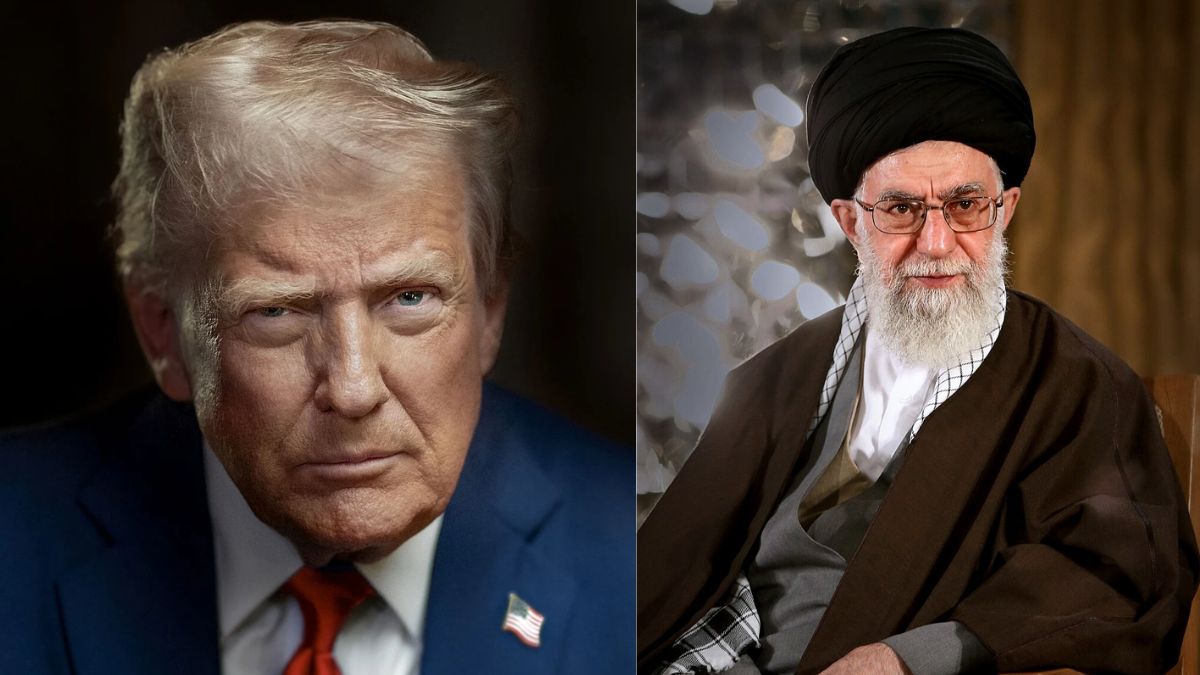
Following the joint U.S.-Israel attack on Iran, Pentagon briefers told congressional staff there was no evidence that Iran was planning to strike the United States or its bases in the region. The revelation came during a private briefing on Sunday, CNN reported, citing multiple sources.
Politico reported similarly, citing two people who attended the meeting, saying there was no immediate evidence suggesting Iran would attack the U.S. imminently. The reports appear to contradict President Trump’s claims that Iran was planning to attack America, which he cited as justification for the joint strike.
On Saturday, the White House claimed there were indications that Iran was preparing to launch missiles at the U.S., prompting the decision to act. That same day, Anna Kelly told CNN, “President Trump is absolutely right to highlight the grave concern posed by Iran, a country that chants ‘death to America,’ possessing intercontinental ballistic missiles.” Trump had also previously said Iran was building missiles that “could soon reach the American homeland.”
New: Pentagon briefers acknowledged to congressional staff in a briefing Sunday that Iran was not planning to strike US forces or bases in the Middle East unless Israel attacked Iran first, multiple sources to @NatashaBertrand, @jmhansler & me.
Why this matters: It undercuts…
— Zachary Cohen (@ZcohenCNN) March 2, 2026
However, the U.S. Defense Intelligence Agency published an assessment last year stating that Iran was years away from possessing or building the type of ballistic missile capable of reaching the United States. Moreover, there is currently no intelligence report suggesting Iran is building such missiles, the assessment said.
Following Trump’s claims last week that Iran was developing intercontinental ballistic missiles to attack the U.S., the country’s foreign minister, Abbas Araghchi, said Iran was neither pursuing such weapons nor interested in doing so. Now, three sources have told CNN the same, confirming that Iran was not developing an ICBM.
On Sunday, Pentagon briefers did highlight Iran’s ballistic missile program and proxy forces as evidence of the possibility that the country could attack the United States. However, sources who spoke to CNN said those concerns were longstanding and could not be used as a reason to justify the urgent U.S.-Israeli strike carried out on Iran on Saturday.
A Reuters report says President Donald Trump’s claim that Iran will soon have missiles capable of striking the United States is not backed by current U.S. intelligence assessments. According to the report, an unclassified 2025 assessment by the Defense Intelligence Agency…
— CNBC-TV18 (@CNBCTV18News) February 27, 2026
CNN reported that the briefers acknowledged “there was no indication that Iran was preparing to preemptively strike U.S. bases in the region in anticipation of some sort of attacks from American-Israeli forces.” The briefers did not clarify Iran’s future plans following the strikes.
This information regarding the U.S.-Israel joint attack on Iran has further heightened tensions, as it raises questions about the administration’s justification that the strike was carried out in anticipation of a potential Iranian attack. The joint operation also resulted in the death of Iran’s Supreme Leader, Ayatollah Ali Khamenei, which was followed by a series of retaliatory actions from Iran.
Trump has repeatedly described himself as a “Peace President” and has said he deserves the Nobel Peace Prize for helping prevent conflicts. Critics argue that the strike on Iran appears inconsistent with those claims. With the original justification now under scrutiny, attention has shifted to how Iran may respond and what consequences the escalation could have for the United States.