


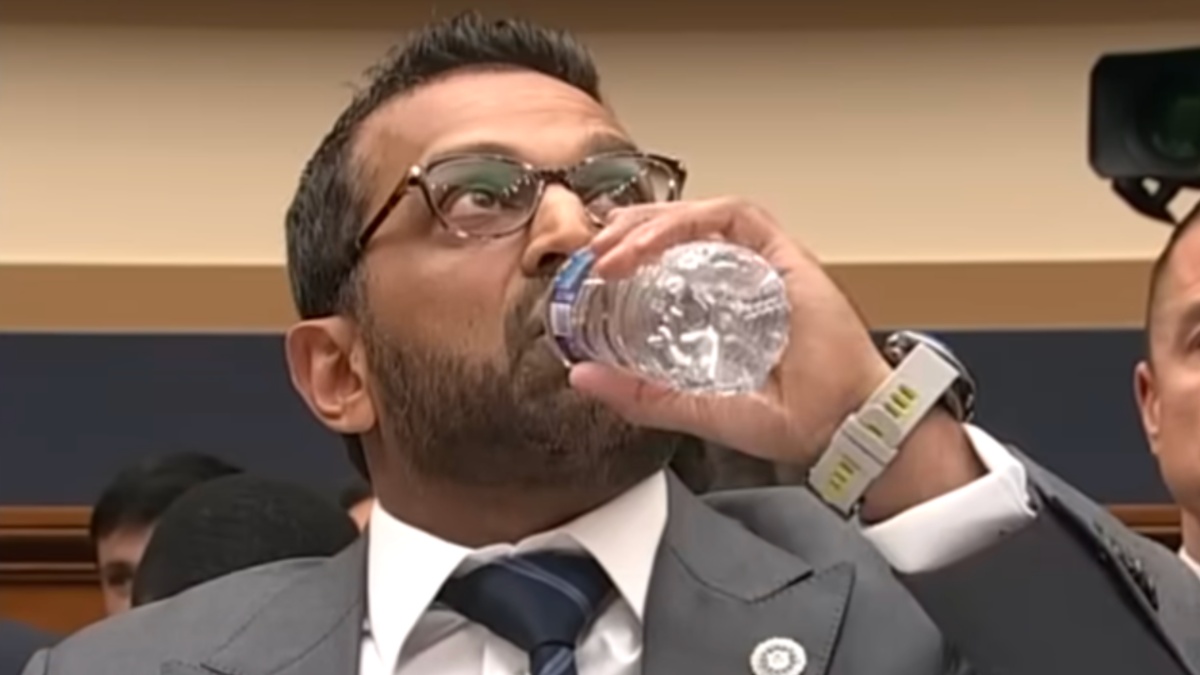
Former FBI agent Jacqueline Maguire says that FBI Director Kash Patel’s leadership is moving the bureau away from its counterterrorism work at a time when U.S. officials and outside experts believe the threat level has increased due to the war with Iran.
In an opinion piece published in the New York Times, Maguire, who served as an FBI agent for 25 years before leaving the bureau in 2025, described Patel as being “consumed by politically motivated revenge and conspiracy theories.” She warned that the FBI is diverting from its national security mission. She concluded with a stark statement, writing, “Let’s hope it doesn’t take another Sept. 11 to snap the F.B.I.’s leadership into action.”
Maguire’s criticism comes as the FBI and Justice Department face scrutiny over whether recent firings, resignations, and changing priorities have reduced the number of experienced national security personnel.
New reports reveal Kash Patel fired a dozen FBI agents specializing in Iranian counterintelligence operations days before Trump launched strikes on Iran.
Yesterday, Pete Hegseth warned of Iranian sleeper cells on American soil. pic.twitter.com/3R40kmYetd
— FactPost (@factpostnews) March 3, 2026
The Associated Press reported this week that the country is dealing with a heightened terrorism threat linked to the Iran war, while the counterterrorism system is struggling due to the departure of veteran officials.
The AP also mentioned that roughly half of the Justice Department’s counterterrorism prosecutors have left since the beginning of the Trump administration, along with about one-third of the division’s senior leadership, according to Justice Connection, a network of department alumni.
The same AP report noted that FBI Director Kash Patel has let go of dozens of agents, including around a dozen employees associated with the classified documents investigation involving Trump.
Matthew Olsen, who led the Justice Department’s National Security Division during the Biden administration, stated on the Lawfare podcast that the government has lost many of the most skilled agents and prosecutors who were addressing the Iran threat. Retired FBI official Frank Montoya told the AP that losing institutional knowledge and relationships can significantly undermine national security efforts.
A whistleblower just disclosed that FBI experts were delayed by AT LEAST A DAY in deploying to investigate Charlie Kirk’s assassination.
Why?
There was an FBI plane and pilot shortage… because Kash Patel was using them for personal flights. pic.twitter.com/HhIGGIBV6P
— Senate Judiciary Democrats 🇺🇸 (@JudiciaryDems) February 24, 2026
CBS News reported separately that many of the recently fired FBI personnel worked in counterintelligence, including on cases related to Iran. One source told CBS that the cuts were “devastating to the FBI’s Iran program,” noting that some of the dismissed agents had developed confidential informants within the Iranian community in the U.S.
Another source indicated that a section chief focused on espionage threats related to Iran and its proxies was among those removed. FBI spokesman Ben Williamson told CBS that the FBI “maintains a robust counterintelligence operation, with personnel all over the country,” and highlighted a 35% increase in counterintelligence arrests in 2025 along with multiple thwarted terrorism plots in December.
In comments reported by Fox News, Williamson also challenged the extent of the Iran-related impact, stating that only three of the fired employees were involved in Iran matters.
Patel, meanwhile, claimed this week that the FBI disrupted 640 planned terror attacks in 2025 and is investigating about 1,700 domestic terrorism cases. However, the threat level related to Iran remains disputed.
A report claimed that an FBI alert to California law enforcement regarding a possible Iranian drone attack was based on a single unverified tip, and White House Press Secretary Karoline Leavitt mentioned that there had never been a credible threat to the U.S. homeland, which led to questions about the motive of the Iran conflict.
Still, Maguire argues that the issue is not just one alert or a staffing problem; it is whether the bureau is focusing on the work needed to prevent disasters before they happen.