

The moment the Super Bowl becomes a political problem, you can almost hear the calculations. Not the “Should we go?” kind that most people make, but the cold, modern version: “Will there be a clip?” For Donald Trump, that question is apparently doing a lot of work this weekend.
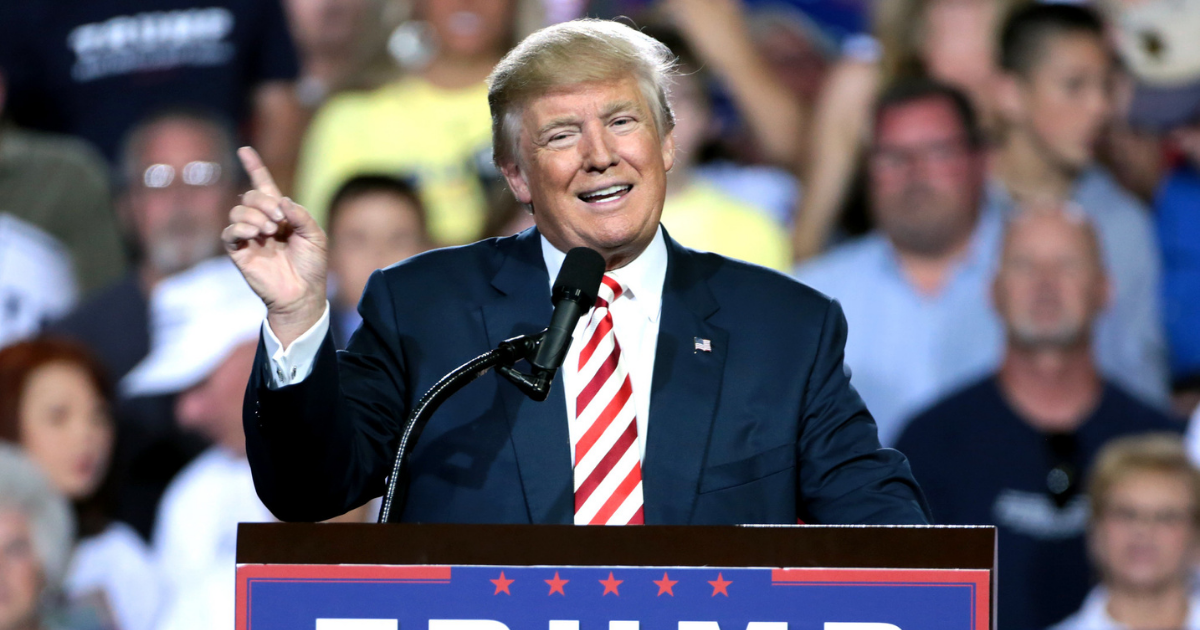
Publicly, the president has offered a familiar bundle of explanations. President Donald Trump has complained about the halftime performers—Bad Bunny and Green Day—and suggested the trip is simply too long, since Super Bowl LX is being played at Levi’s Stadium in Santa Clara, California. “It’s just too far away,” Trump said, adding, “I would. I’ve [gotten] great hands [at] the Super Bowl. They like me.”
Privately, though, a different rationale is being floated with less bravado and more dread. Zeteo reported that advisers warned Donald Trump he would likely be booed if he attended—an outcome that could quickly escalate into memes and viral videos. RadarOnline echoed that framing, saying aides and advisers believed the odds of a hostile reaction were high, and that the risk of “booed in HD” humiliation was the real deterrent.
BREAKING: As the Super Bowl gets ready to kick off in Las Vegas, someone just protected this video onto a building there!
It’s the “P-do Bowl” featuring the men who are in the Epstein files the most.
Hint: Donald Trump, Howard Lutnick and Steve Bannon are the all-stars of this… pic.twitter.com/ePQSUCJpKK
— Brian Krassenstein (@krassenstein) February 7, 2026
This is not about whether a crowd would boo. It is about whether the presidency can tolerate its own image.
Super Bowl audiences are messy by design. They are loud, drunk on spectacle, and uninterested in political messaging unless it can be chanted. That’s what makes them dangerous to a public figure who demands control of the narrative.
Zeteo’s reporting framed the concern bluntly: advisers did not want a viral moment of President Donald Trump being “aggressively booed,” especially in California. RadarOnline described the same anxiety, noting that the possibility of boos has already generated memes in anticipation.
The White House, for its part, tried to dismiss the idea. In a statement to RadarOnline, spokesperson Davis Ingle said, “President Trump is working hard on behalf of the American people,” and insisted, “If he did attend the Super Bowl, he would receive a warm welcome because America knows he has done more to help this country than any other President in history.”
President Trump will not be attending the Super Bowl this year because his advisors told him that he would be viciously booed and there was nothing they could do to stop it. https://t.co/T9EloespFA
— Turnbull (@cturnbull1968) February 8, 2026
It’s the kind of quote designed to sound like granite. It also sounds, to anyone fluent in political spin, like a response to a problem they desperately wish didn’t exist.
Donald Trump’s gripes about the halftime show are not subtle. “I’m anti-them. I think it’s a terrible choice. All it does is sow hatred. Terrible,” he said from the Oval Office, according to RadarOnline’s account. The phrasing is pure Donald Trump: sweeping, emotional, and oddly revealing in its assumption that entertainment choices are moral declarations.
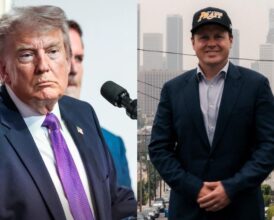
And if the Super Bowl stage is the NFL’s version of national unity, the conservative counter-programming is now ready to meet it head-on. Turning Point USA’s “All-American Halftime Show” is explicitly designed as an alternative, with Kid Rock headlining alongside Brantley Gilbert, Lee Brice, and Gabby Barrett, and it will stream live on YouTube, X, and Rumble.
Everybody is making their Super Bowl predictions today. Here’s mine:
Right before halftime, Donald Trump is going to do something heinous, post something insane, or declare war on Iran. He can’t handle Bad Bunny getting all the attention. If he can’t have it, nobody can.
— Paul Jacobs (@PaulJacobsMedia) February 8, 2026
TPUSA spokesperson Andrew Kolvet pitched it as “an opportunity for all Americans to enjoy a halftime show with no agenda other than to celebrate faith, family, and freedom,” adding that the group aimed to provide a “fun, excellent, and exciting” option for families.
Vice President JD Vance leaned into the branding too, praising the lineup on X: “Fantastic lineup for the TPUSA halftime show, including the great Bob Ritchie AKA KID ROCK.”
This is what makes the Donald Trump Super Bowl story feel so telling. It isn’t just a president skipping a game. It’s a president choosing between two Americas: one unpredictable stadium crowd and one curated ideological feed.
Are you getting sticker shock while shopping for your Super Bowl snack?
Well when Donald Trump plays games with our economy, American families are left paying the price. pic.twitter.com/MnH9w62LuX
— American Bridge 21st Century (@American_Bridge) February 7, 2026
Donald Trump says the commute is the problem. His advisers, if Zeteo is right, think the problem is a chorus of boos echoing into history. And that tells you something about modern power: it isn’t merely exercised. It’s performed—carefully—until the crowd threatens to rewrite the script.