

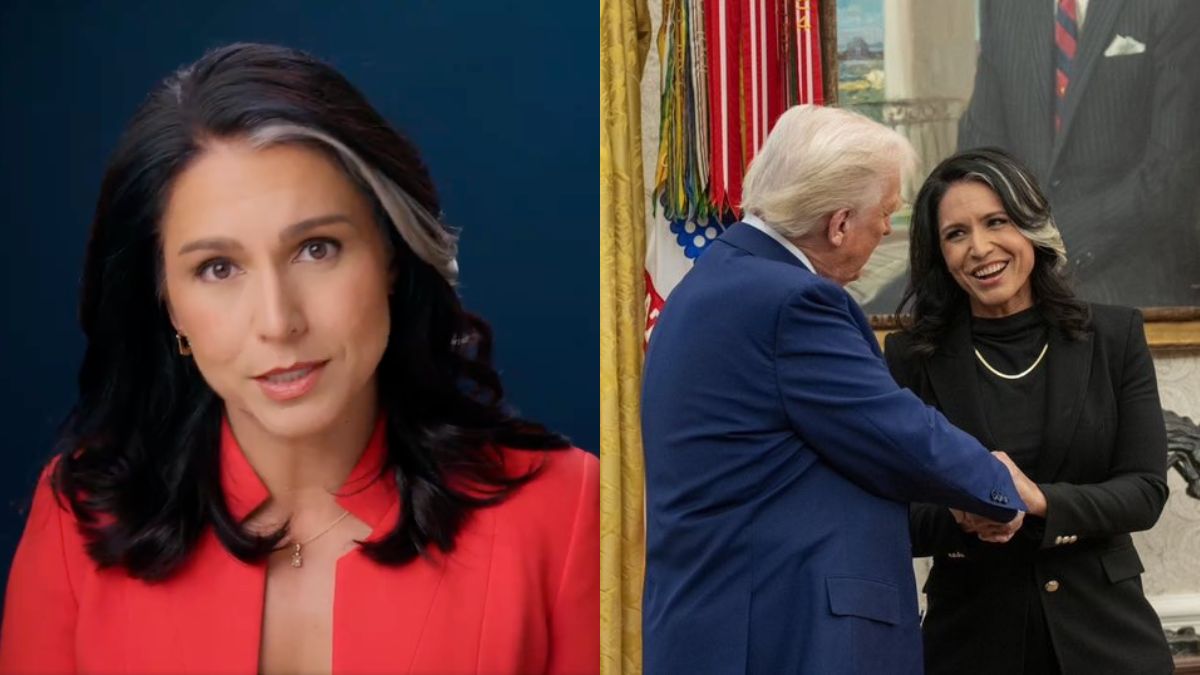
Tulsi Gabbard’s rise within Donald Trump’s political orbit was swift, but it also came with a cost. The former congresswoman from Hawaii once built her brand as an anti-war Democrat who challenged her own party on foreign policy. Then she left the Democratic Party in 2022 and joined the Republican Party. She later began supporting Donald Trump as he ran for president in 2024.
Trump later chose her to be Director of National Intelligence, and the Senate confirmed her in February 2025. After that, every time she spoke on major national security issues, some questioned whether she was speaking as the country’s top intelligence official or as someone still very close to Trump.
Tulsi Gabbard Releases Documents that PROVE it Was Barack Obama who Led the Russiagate Conspiracy and Coup Against Donald Trump – Documents Have Been Turned Over to the DOJ
Tulsi Gabbard: The evidence that we have found and that we have released directly point to President… pic.twitter.com/twlz30dhYP
— BelannF (@BelannF) January 30, 2026
That debate did not start with her White House role. Gabbard had been openly skeptical of U.S. military action in the Middle East for years. That included Iran. The president authorized a drone strike in 2020. Gabbard was quick to criticize the move on X.
That history made her later alignment with Trump raise questions among observers. She had spent years criticizing the kind of foreign policy his administration was known for, only to later become one of his top intelligence officials. That contrast became more visible after the conflict with Iran escalated in 2026.
According to a report by The List, Gabbard told the Senate Intelligence Committee on March 18, 2026, that Iran’s government appeared “intact but largely degraded” after weeks of fighting.
In written remarks, she said Iran’s nuclear enrichment program had been obliterated in U.S. and Israeli strikes and that Washington had seen no effort to rebuild it. But when she spoke to senators, she also said the intelligence community believed Iran was trying to recover from damage done to its infrastructure.
She would not say whether Iran had posed an “imminent” nuclear threat, instead saying that only the president can make that call. That answer provided critics with new grounds for criticism, because it sounded less like a firm intelligence judgment and more like a careful attempt to avoid crossing the president.
Tulsi Gabbard is the one who needs to address this CIA plot against Tucker Carlson.
She was a key figure in swinging Independents to vote Trump.
She promised radical reforms to root out the deep state.
And she’s now in charge of the intelligence community.
To state the… pic.twitter.com/NGY42xUieB
— Holden Culotta (@Holden_Culotta) March 16, 2026
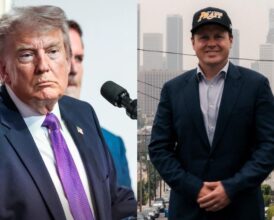
The fallout grew when Joe Kent, the head of the National Counterterrorism Center, resigned over the war. Reuters reported that Kent said he could not support the conflict because Iran had “posed no imminent threat” and argued the war was “driven by pressure from Israel and its powerful American lobby.”
At the same hearing, CIA Director John Ratcliffe strongly disagreed and said Iran had been a constant threat and remained an immediate one. The split inside the president’s own national security team made Gabbard look trapped between the intelligence she was supposed to present and the political line the White House wanted to sell. Her evolving positions are another reason why her credibility is now under such heavy scrutiny.