

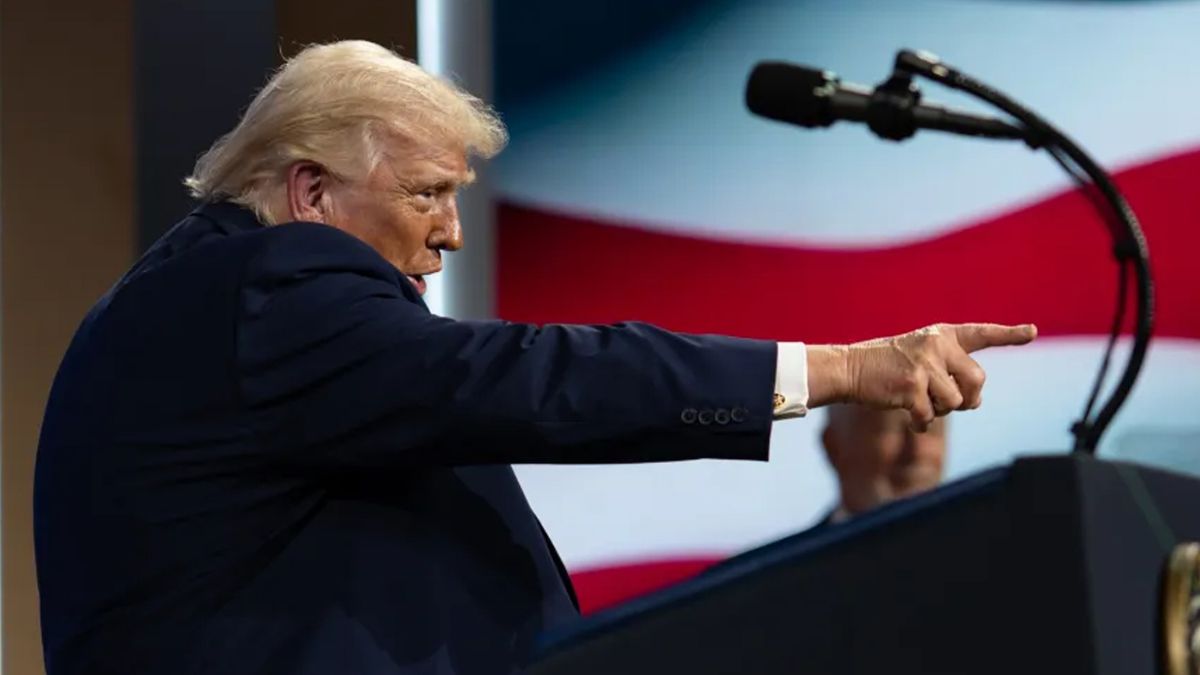
As President Donald Trump made his way out of the White House on Saturday, a reporter asked him a question: China is shipping weapons to Iran. Trump did not flinch, spin, or go for the diplomatic playbook.
“If China does that, China will have big problems, OK?” the president stated, before boarding his flight to Florida.
No briefing for the press. No well-crafted words. Beijing heard every word of the warning, which was given in plain sight.
🇺🇸🇨🇳🇮🇷 REPORTER: China is preparing to ship weapons to Iran
TRUMP: If China does that , China is going to have big problems. pic.twitter.com/ErBqhZ9yNt
— Megatron (@Megatron_ron) April 12, 2026
By Sunday morning, “big problems” had a price tag. Sitting down with Fox Business host Maria Bartiromo, Trump was asked directly: when he threatened a 50 percent tariff on any country supplying weapons to Iran, did he mean China?
“Yes,” Trump replied. “And other people. But yes, China too.”
After days of ambiguity about just who Trump was targeting, the exchange seemed to be the first time he had publicly mentioned China in relation to the tariff threat.
He wasn’t finished either.
“If we catch them doing that, they get a 50 percent tariff,” Trump said. “That’s staggering.”
The reporter’s inquiry was hardly idle guesswork either. According to CNN, China is preparing to deliver shoulder-fired anti-aircraft missile systems (MANPADs) to Iran in the coming weeks, with indications that the shipments will be routed through third-world countries to conceal their origin. These are the same weapons thought to have threatened low-flying U.S. military planes throughout the six-week conflict.
Trump responded to the reports while keeping one foot on the diplomatic brakes.
“Maybe they did a little bit at the beginning,” he said of China’s reported support for Iran. “But I don’t think they would anymore.” The doubt in his voice, however, didn’t quite match the thunder in his threat.
Beijing hit back with a flat denial.
President Trump: “As far as China’s concerned, China can send their ships to us. China can send their ships to Venezuela. We told them, ‘Buy from Venezuela.’ We have a lot of overcapacity, we’ll sell them, and we’ll probably sell [oil] for even less money.” ⁰⁰“We work together… pic.twitter.com/jxNdv82bnM
— RedWave Press (@RedWavePress) April 12, 2026
A Chinese Embassy spokesperson in Washington told CNN: “China has never provided weapons to any party to the conflict; the information in question is untrue,” urging the U.S. to “refrain from making baseless allegations, maliciously drawing connections, and engaging in sensationalism.”
However, the denial seems out of place in the larger context. A few days prior, Press Secretary Karoline Leavitt had confirmed that “conversations took place between top levels of our government and China’s government,” praising China’s contribution to the ceasefire that momentarily halted the Iranian confrontation. Trump himself told AFP that he thought China had assisted in persuading Iran to engage in talks, according to the South China Morning Post. Additionally, a face-to-face meeting between the two leaders is planned for Beijing next month.
Analysts believe China’s involvement in Iran is motivated more by material self-interest than ideology: Beijing purchases the majority of Iran’s sanctioned oil, and a lengthy U.S. naval blockade of the Strait of Hormuz would harm Chinese supply chains just as much as anybody else’s. The problem is that China has every reason to want peace while still keeping Tehran fighting fit.