


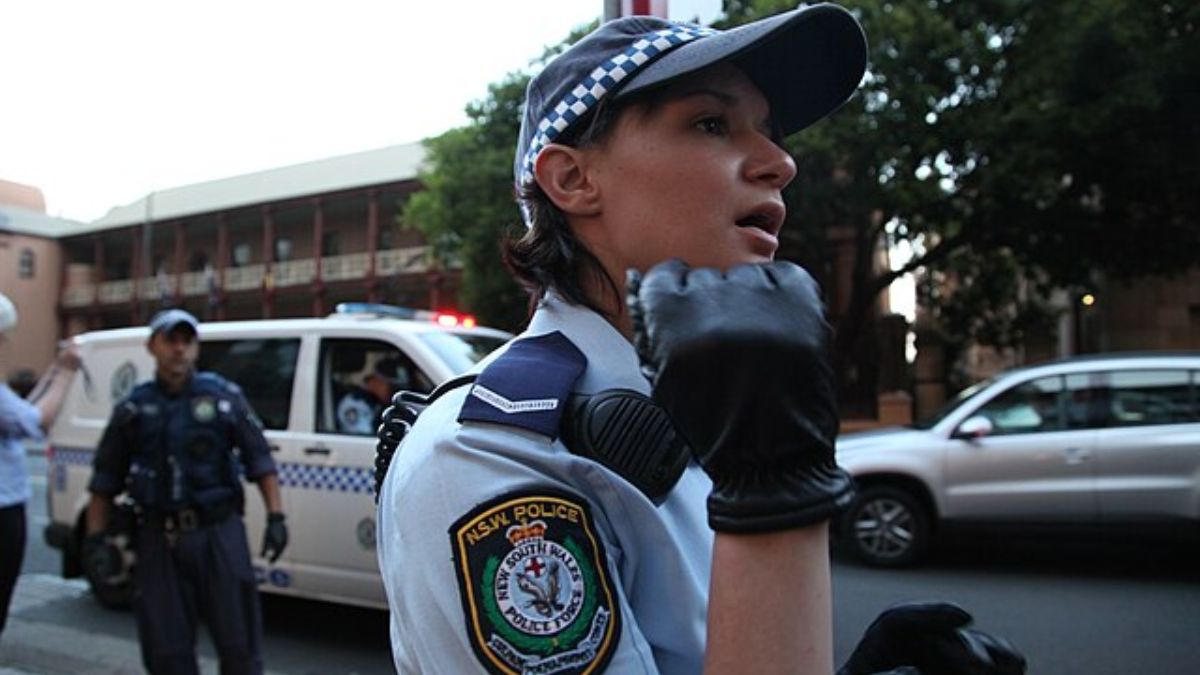
Officials from the New South Wales (NSW) Police Department have admitted an “unfortunate” mistake years after shooting and killing an innocent man. An inquest into the 2023 case has brought new information to light about the death of 41-year-old Steve Pampalian.
First, what is an inquest? It is an official legal inquiry conducted by a coroner or medical examiner, sometimes with a jury. It determines the circumstances of a violent, suspicious, or unexplained death.
In Pampalian’s case, an inquest was ordered after his unfortunate and sudden death on May 25, 2023. The incident took place in a suburb on Alexander Street in Sydney’s North Willoughby. It revealed some shocking information in the case, which has now led to an apology.
Major media are reporting on this week’s inquests for Krista Kach and Steve Pampalian, both of whom died following police action when they were experiencing mental health issues.
Check out these links to find out the latest.https://t.co/d35qoKc5NDhttps://t.co/jBh8hwhpsD— BEING – Mental Health Consumers (@BEINGMHC) March 3, 2026
The NSW Police apologized for falsely claiming that Pampalian had a criminal history. These false claims were made during the first press conference of the case. The statement was made by Assistant Commissioner Leanne McCusker. These claims were slammed after the inquest had ended, per The Guardian Australia.
Det. Insp. Trent Powers rejected the claims made earlier and confirmed that McCusker’s comments were incorrect. He also confirmed Pampalian had no criminal history but rather suffered from a mental illness.
The late victim suffered from anxiety, which would sometimes lead to panic attacks or, in this case, a psychotic episode. The family claimed that, before his sudden death, such an episode had never taken place and that his anxiety would often turn into panic attacks.
The family of a man shot dead by police in his own driveway at North Willoughby has spoken out – demanding answers.
Officers opened fire on 41-year-old Steve Pampalian, after he allegedly charged at police with two knives. @heinkealex #9News pic.twitter.com/cP5QPrYkxX
— 9News Sydney (@9NewsSyd) May 26, 2023
The Deputy State Coroner involved in the inquest, Kasey Pearce, also commented on the matter. The coroner noted it was “unfortunate” that Pampalian carried that false label. It was only cleared when the inquest ended.
This came after Pampalian’s family formally requested an inquest. They did so after their loved one was first labeled as a criminal. So what caused the police to deem him a criminal, leading them to later apologize to the victim’s family?
On the day of the incident, the victim was reportedly calm and normal. The trigger is unknown. Whatever caused it, he chased a woman down the street while talking to himself. A neighbor later saw him entering a home. They assumed Pampalian was breaking in. In reality, it was the late victim’s home. This also led police to believe that they were responding to a break-in.
Police say they shot a man on a North Willoughby street after he ran at officers with two large kitchen knives. The man has been identified as 41-year-old Steve Pampalian.. not sure what else they could do #auspol
pic.twitter.com/YfsJyHS5dz— 🎀𝕂𝔼𝕃𝕃𝕀𝔼🎀 𝕀 𝕊𝔼𝔼 𝔻𝕌𝕄𝔹 ℙ𝔼𝕆ℙ𝕃𝔼 ™ (@kelliekelly23) May 25, 2023
The inquest revealed what caused the on-scene officer Bryan to shoot Pampalian down. Apparently, the late victim had threatened the officer by coming at him with two knives. So, to defend himself, the officer shot Pampalian thrice. This resulted in the victim’s death.
The victim’s brother Danny Sullivan commented on the incident. Sullivan reportedly agreed with the police’s actions at the time. He mentioned they had no choice. Nothing could “mollify his (Pampalian’s) anxieties or distress.” Sullivan also claimed there was not enough information.
This would have helped the police handle the situation better. While Sullivan and the family do acknowledge the cop’s action. They slammed the police’s mistake in labeling Pampalian as a criminal.
Two New South Wales police officers recently pleaded guilty to several assault charges as well as unauthorised use of a prohibited weapon for brutalising a naked 48-year old mentally ill woman who was in the midst of a mental health episodehttps://t.co/au5I0s5jvf
— blakandblack (@blakandblack) July 14, 2025
The NSW Police have come a long way since then. They now use body cameras to gather evidence whenever a weapon is involved. Officers are told to turn on their body camera when a weapon is drawn. This includes guns and tasers. An officer within a 10-meter radius is also required to turn it on.
Additionally, they’ve added mental health training for all officers. This helps them handle cases like Pampalian’s and avoid similar outcomes. These changes came after NSW Police faced harsh backlash. Critics said they handled mental health cases poorly.