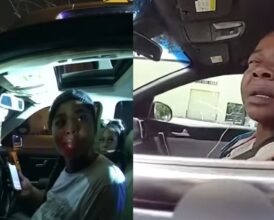


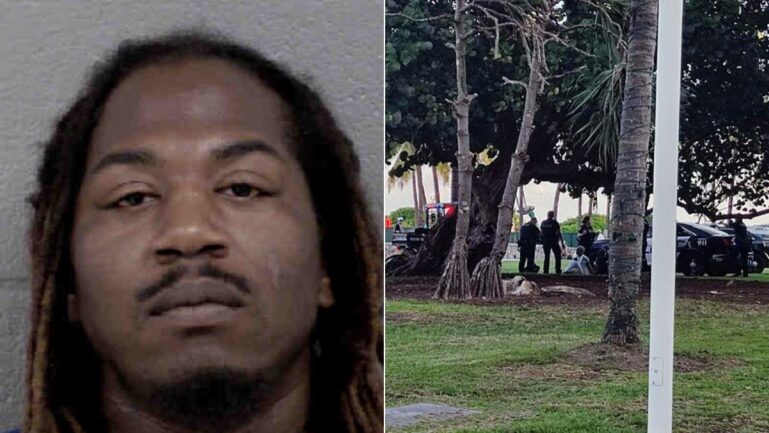
A North Carolina man claims a faulty facial recognition match led to months behind bars, costing him his job, housing, and custody of his two out of ten children. The Charlotte resident spent nearly three months incarcerated after Florida police identified him as a vehicle theft suspect through facial recognition technology, a case that prosecutors later abandoned after evidence showed he was not involved.
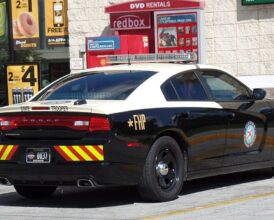
Jalil Richardson, a Charlotte resident, was arrested in connection with a Jacksonville car theft investigation that began on April 2, 2025, according to court records. Authorities accused him of selling a stolen vehicle in Florida after investigators used AI-powered facial recognition software to compare surveillance footage with identification records. Prosecutors dropped charges against Richardson in May 2026.
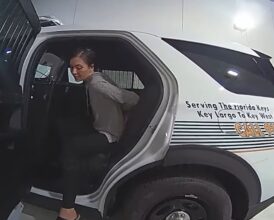
Authorities arrested him at his home in Charlotte. He spent about one month in custody in North Carolina before being transferred to the Jacksonville jail, where he remained for roughly 50 more days while the case moved through the court system. Richardson said police failed to adequately verify whether he was even in Florida when the alleged crime happened.
View this post on Instagram
The Charlotte man said, “There was no proper investigation done to even reach out to me or to see if I was even in Florida. He just automatically put a warrant out for my arrest. … And I sat in there for over 50 days in the most worst jail ever.”
According to his attorney, employment records showed the North Carolina man was working roughly 400 miles away from the location where the stolen car’s transaction occurred. His legal team maintained he had never been to Florida and attempted for months to present evidence supporting his alibi. Prosecutors ultimately dismissed the case about a year after the original investigation began.
By the time the charges were dropped, Richardson said the damage had already been done.
He had lost his job, home, and custody. He also said his mugshot remains online, creating problems as he searches for work and attempts to rebuild his life.
View this post on Instagram
He said, “I lost everything. … It’s overwhelming and it’s devastating and it’s outrageous. I’m not sure how I’m gonna bounce back from this one, you know. It’s a lot. I’m just taking it one day at a time and get any help and any resources that I can.”
The Jacksonville Sheriff’s Department defended its investigative process, saying facial recognition technology was only one component of the case.
The statement reads, “Facial recognition software is just one tool in a large toolbox for investigators. Our detectives and officers use any and all available resources to solve cases. It is incorrect to assume that facial recognition was the deciding factor in Mr. Richardson’s arrest.
Calling the arrest the result of ‘police AI misidentification’ is a catchy headline but does not provide accurate context. Facial recognition software was used to develop a possible suspect from surveillance footage. After that step, the victim chose Mr. Richardson out of a photographic lineup to include other potential suspects.
At a separate time, officers showed a photographic lineup to the victim’s brother, who was there for the transaction. That witness also identified Mr. Richardson as the perpetrator. Both the victim and witness spent approximately 30 minutes with the suspect in the case.With that and other information, officers were able to obtain a warrant for Mr. Richardson’s arrest.”
Richardson has also alleged that racial profiling played a role in identification. He told local media that witness descriptions did not accurately match his appearance and questioned how investigators selected him as a suspect.
He noted, “I want to say racial profiling. The guy said it was a guy with dreads and a big nose, and then they picked me out of a lineup of guys that look nothing like me.”