

Senior U.S. military leaders are reportedly concerned with China’s expanding undersea warfare capabilities. They believe it is hinting at the possibility that Beijing could soon challenge America’s long-held submarine advantage in the Indo-Pacific.
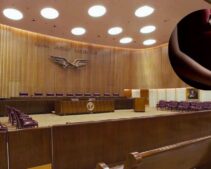
At a recent hearing before the U.S.-China Economic and Security Review Commission, Rear Admiral Mike Brookes, intelligence director at the Navy’s National Maritime Intelligence-Integration Office, warned that the People’s Liberation Army Navy (PLAN) is allegedly looking to capture dominance under the ocean’s surface.
“PLA navy submarine modernization, rising threats to undersea infrastructure, and the push for deep-sea resources are part of a broader effort to expand China’s power and influence,” Brookes told lawmakers.
He cautioned that “by 2040, the PLA navy’s undersea forces may credibly challenge U.S. regional maritime dominance, complicating crisis response, power projection, and allied defense.”
As per the Washington Times, he also said Beijing has drastically increased submarine production via major investments at three shipyards.
As a result, the output has now grown from less than one nuclear submarine per year to a much higher quantity. These upgrades have more than doubled production capacity and could be a part of long-term plans continuing into the 2030s.
China is in the middle of a major nuclear expansion WITH new missile silo fields, a larger ballistic missile submarine fleet & more advanced long-range systems. That’s a significant shift compared to where it was a decade ago.
— Sarah Adams (@SarahAdams35763) March 1, 2026
Furthermore, Vice Admiral Richard Seif, commander of U.S. submarine forces, told the commission that China is also allegedly working to weaken America’s traditional edge underwater.
“This advantage helps prevent conflict by raising uncertainty for potential aggressors’ ability to achieve their military and political objectives,” Seif said of U.S. submarines, which he called the military’s most survivable systems.
He added that China is working to erode that edge through “rapid growth and modernization” of its submarine fleet, stronger anti-submarine warfare tools, and new seabed sensor networks.
It is important to consider that China operates one of the world’s largest submarine fleets, with more than 60 boats. That force includes six nuclear-powered attack submarines known as the “offensive backbone” of the fleet, at least two nuclear-powered guided missile submarines designed for precision strikes, and six nuclear-powered ballistic missile submarines that provide a sea-based nuclear deterrent.
It also includes more than 50 diesel-electric submarines, including modern Yuan- and Song-class vessels equipped with air-independent propulsion, enhancing stealth and endurance.
Seif named Beijing’s effort an emerging “Underwater Great Wall.” He explained that this system of fixed and mobile sensors, unmanned platforms, and integrated data networks is designed to detect and track submarines in key maritime areas.
This might not help them with full transparency underwater, but it will be of great benefit at “a narrowing of the stealth margin.” It will particularly work near choke-points, operating areas, and approaches that matter most in crisis and conflict.
$1 for US military buildup like 1980’s! 15 carrier, 90 submarine fleet and major expansion of air power+ missile defense and expanded shipyards and defense plants. Take China seriously.
— Rob Russel (@RobRussel64816) February 28, 2026
“In a crisis, access to forward bases may be contested,” Seif said. “Submarines offer an option set that is both credible and resilient and enable combat actions at a time of our choosing,” he added.
The U.S. commanders argue that maintaining an upper hand undersea is essential. “The objective is not to seek conflict for its own sake,” Seif said, “but to ensure that China’s leaders do not miscalculate the United States’ capability or will to respond.”
Commission Vice Chair Michael Kuiken noted that Chinese President Xi Jinping has directed the PLA to prioritize submarine forces. These warnings are a result of the intense debate in Washington over defence strategy.