Trump says SEC's Paul Atkins will make 'Super Intelligence' mandatory
Trump made the claim while criticizing Fox News host Shannon Bream, though the SEC regulates markets and has little power over broadcasters.
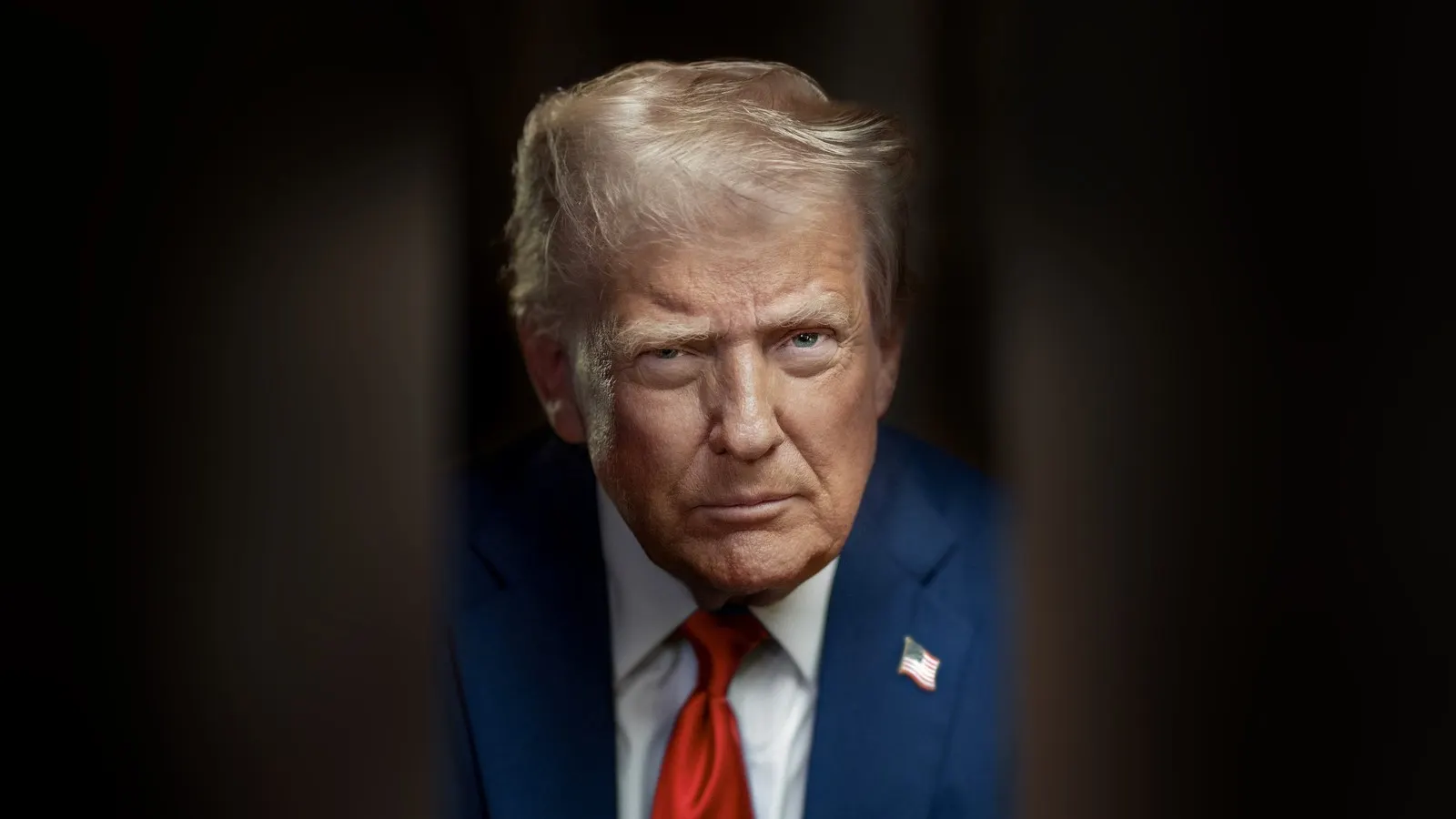
President Donald Trump said Saturday that Securities and Exchange Commission Chairman Paul Atkins will soon make the term "Super Intelligence" mandatory, in a Truth Social post criticizing Fox News host Shannon Bream for saying "Artificial Intelligence."
"Can someone please explain to her that it's Super Intelligence, not Artificial Intelligence, and our Great Chairman of the SEC, Paul Atkins, will soon be making that term mandatory," Trump wrote. "Like me, he likes ACCURACY in language!"
The SEC regulates the stock and bond markets, and how it would be able to require use of the term was not immediately clear. The agency has little or no power over broadcast networks, whose content, licensing and standards fall under the Federal Communications Commission.
Bream anchors Fox News Sunday, which featured a segment on AI the weekend before the post. Trump wrote that Bream "is having a show on what she calls Artificial Intelligence (AI)."
"She says, 'Artificial,' over and over again," he wrote.
Neither the SEC nor the White House immediately responded to a request for comment from The Hill. Fox News did not immediately respond to a request for comment from The Daily Beast.
What prompted Trump to publish the post on Saturday was not immediately clear. He was spending the Thanksgiving weekend at Mar-a-Lago, his residence in Palm Beach, Florida.
A second post targets Fox News and the Journal
Trump also went after Bream's network and The Wall Street Journal in a separate Truth Social post. He published it just before the post about the SEC, according to The Hill.
"Fox News and The Wall Street Journal never use Super Intelligence (SI)," Trump wrote. "They go out of their way to use Artificial Intelligence (AI), but that's OK, because Super Intelligence will always win out over Artificial Intelligence."
Both posts follow an executive order Trump signed on Sept. 29 directing the executive branch to use the new term. Its title was "Inaugurating the era of Super Intelligence."
Order covers federal agencies
The order, signed earlier, states that "to the maximum extent permitted by law, the executive branch shall use the terms 'Super Intelligence' and 'SI' in place of 'Artificial Intelligence' and 'AI.'" In making its case, it argues that "the extraordinary technologies being pioneered by American innovators far exceed what was envisioned when the term 'Artificial Intelligence' first came into use."
Its reach stops at government agencies' official correspondence and releases. The order does not affect what private companies or broadcasters can say.
Broadcasters answer instead to the FCC, which is chaired by Trump appointee Brendan Carr. The commission regulates broadcasters, but it cannot dictate speech protected by the First Amendment.
Trump has pressed the change before. In October, he wrote on Truth Social that "The White House considers anyone who uses the term, 'Artificial Intelligence,' as opposed to the highly accepted new and more accurate term, 'Super Intelligence,' THE ENEMY!" He has also formed a Super Intelligence Task Force chaired by Director of National Intelligence Jay Clayton, Hindustan Times reported.
Outside government, the new name has had less pull. The public and the AI industry still broadly use the term AI, and Super Intelligence has not caught on widely.
That pattern extends beyond technology. During his second term, Trump has used executive orders to rename technology, federal departments and bodies of water, though the changes have not come into wide use. He ordered the Gulf of Mexico and Lake Ontario renamed the Gulf of America and Lake America.
Another order adopted "Department of War" as a secondary title for the Department of Defense, whose official renaming would require an act of Congress.
For the SEC, two paths remain. The agency could ask for a rule change, which would require public comment and could be challenged in court, or require that the agency itself use the term, a step likely already covered by the existing executive order, The Hill reported.