Netanyahu offers rival Gadi Eisenkot first turn as prime minister in unity government
Eisenkot will assess the offer over 24 hours, and the two men meet Sunday in Herzliya; his bloc holds 36 seats, short of the 61 needed.
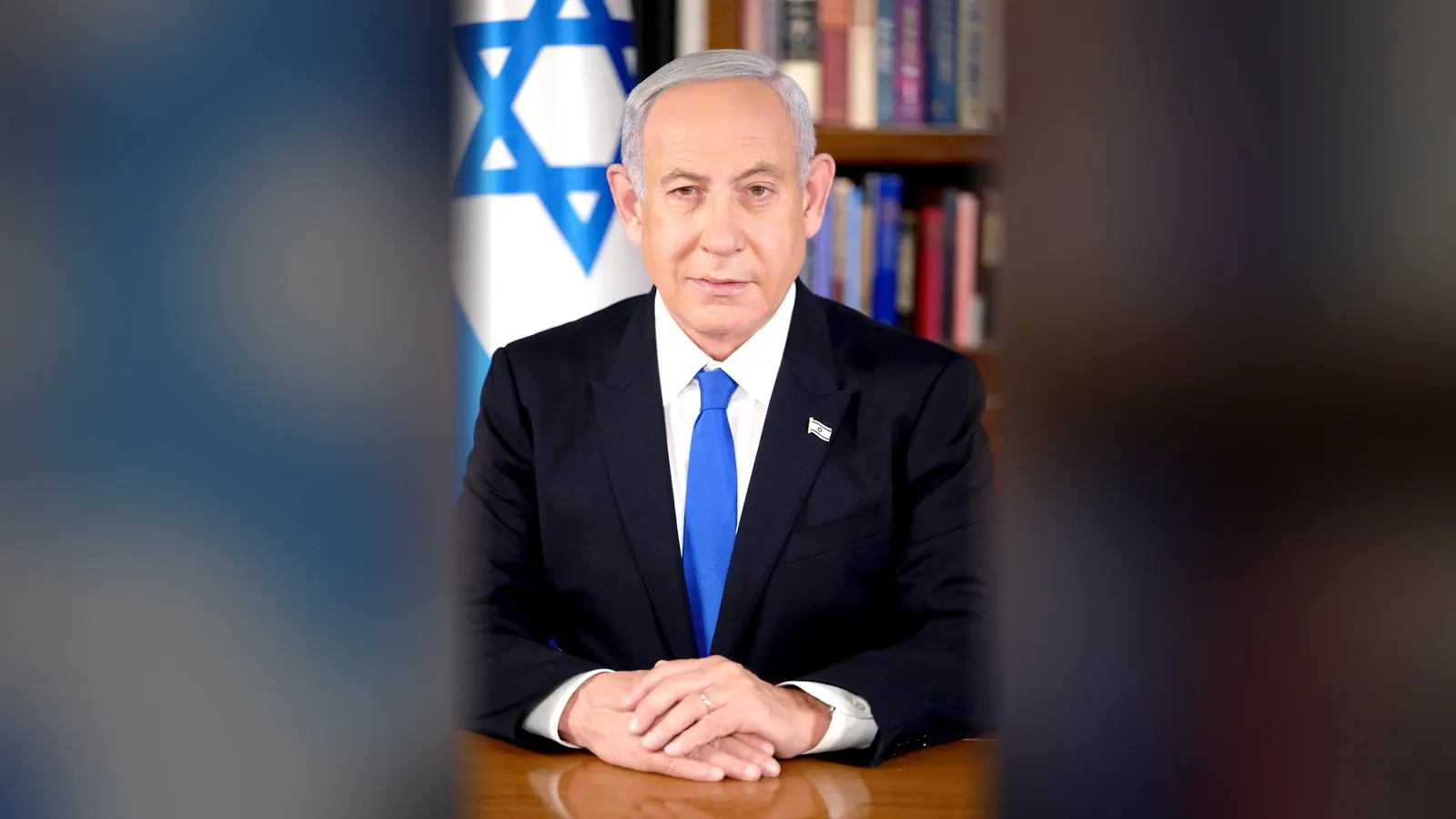
This is a developing story about Netanyahu's Saturday offer to Eisenkot.
Caretaker Prime Minister Benjamin Netanyahu offered Saturday to let his rival Gadi Eisenkot serve first as prime minister in a rotating unity government, with Netanyahu taking the post of alternate prime minister.
Eisenkot, the Yashar party chair, said that if Likud was ready for genuine unity, he would assess its seriousness over the next 24 hours. The two men later agreed to meet at 10 a.m. Sunday at the Dan Accadia Hotel in Herzliya, Likud said.
Netanyahu had held that as head of Likud, the largest party, he should lead any unity government or at least serve first. On Saturday he said the magnitude of an existential danger required him to set that principle aside. In return, he said he expected a "similar willingness to compromise and make concessions" from Eisenkot's side.
The numbers leave Eisenkot short. His signed deals with the Democrats and Yisrael Beytenu give the three parties 36 lawmakers, short of the 61 needed for a Knesset majority.
The terms of the rotation may matter as much as its order. Yahoo News reported that Netanyahu does not seek an immediate rotation and wants to resolve a sensitive security issue before it takes effect. The outlet said that could complicate a unity government and lead Eisenkot's bloc to reject the offer quickly.
It was not clear when the rotation would begin or whether Sunday's meeting would yield a deal within Eisenkot's 24-hour window. Nor was it known whether Yisrael Beytenu leader Avigdor Liberman and Democrats chair Yair Golan would approve any unity deal with Netanyahu.
That approval carries weight. Eisenkot has pledged to both men not to attempt such a government without their approval, The Times of Israel reported.
The offer came two days after B'Yachad chair Naftali Bennett said on Thursday that he favored a unity government involving Likud with Eisenkot serving first as prime minister. Bennett told Netanyahu that unless he offered Eisenkot the first turn by Sunday, B'Yachad would abandon its push for unity and sign a coalition agreement with Yashar, The Times of Israel reported, citing Channel 12.
Eisenkot, meanwhile, was accusing Likud of delay. On Friday, he said Likud had "refused to put a single concrete proposal on the table" over two weeks, and that Netanyahu's strategy was to run down the clock and drag Israel into another election.
"I do not intend to cooperate with such a charade," he said. He vowed to announce a government by his Dec. 6 deadline without using a 14-day extension.
The same day, Liberman warned that Netanyahu could make such an offer and dismissed it as a "ploy" to foil a change in government.
Saturday's offer went beyond the order of the rotation. Netanyahu said the government would include the ultra-Orthodox parties United Torah Judaism and Shas. He promised an agreement with them on army conscription, an issue on which his failure to reach a deal with them had prompted United Torah Judaism to drift toward Eisenkot.
He again portrayed the Arab-majority Joint List and Ra'am as terror supporters who would "establish a Palestinian state under Iranian sponsorship on the ruins of Israel."
Eisenkot replied that "this past Sunday, a detailed proposal was conveyed to Netanyahu through a secret channel established at his request," and that Likud had not responded. He said his team had met refusals and evasions for nearly three weeks.
האחדות לה ישראל זקוקה, לה אני נכון ועבורה אני מוכן לשלם מחירים פוליטיים - היא אחדות בין אזרחי ישראל על בסיס ערכים; אחדות של דרך חדשה ואחרת, שתוקיר ותעלה על נס את הסולידריות הישראלית אותה אני רואה כרכיב בסיסי בביטחון הלאומי של ישראל.
— Gadi Eisenkot - גדי איזנקוט (@gadi_eisenkot) November 28, 2026
לכן, ביום ראשון האחרון הועברה הצעה מפורטת
One Arab-led party signaled it was ready to join Eisenkot. Ra'am leader Mansour Abbas told Channel 12 on Saturday he would join Eisenkot's coalition from the start or at a later stage. Agence France-Presse described Abbas's remarks as implicit recognition of Hamas as a terror group, a precondition Eisenkot had set for Ra'am.
Reaction to Netanyahu's proposal split along familiar lines. Likud ministers and lawmakers backed the proposal, while Eisenkot's bloc was divided.
Finance Minister Bezalel Smotrich said, "Prime Minister Netanyahu's offer of unity is genuine and sincere," and offered to act as guarantor for any agreement.
Bennett welcomed the announcement but said, "The burden of proof now lies with Netanyahu to show that this is genuine intent and not lip service." He wrote on X that his party would proceed by the principle "Respect him, but suspect him — and then suspect him again."
His deputy took a harder line. Yair Lapid, B'Yachad's No. 2, called the proposal "yet another transparent con by a serial fraudster" and said an Eisenkot-led government must be sworn in before any talks on expanding it.
Golan wrote on X that Netanyahu has lost and that "it is our duty to respect the will of the voters and form a government of change." Joint List leader Youssef Jabareen said Netanyahu should be removed in the coming week.
United Torah Judaism was split. Lawmaker Meir Porush said he would prefer a unity coalition with Likud to one led solely by Eisenkot.
An anonymous senior party official told Hebrew-language media that Netanyahu was willing to take second place to push out Otzma Yehudit chair Itamar Ben-Gvir and the Haredim, The Times of Israel reported. Likud denied dropping the Haredi parties.
Alternate post dates to 2020 deal
The job Netanyahu would take first has a history. The alternate prime minister post was created in 2020 for a Netanyahu-Benny Gantz rotation that never materialized. Unlike ordinary ministers, who must step down if indicted on serious criminal charges, its holder need not resign, allowing Netanyahu to hold it despite his ongoing criminal proceedings, according to Yahoo News.
Netanyahu's coalition lost its majority in the inconclusive Oct. 27 election, in which Likud won 27 seats and Yashar 21. President Isaac Herzog gave Eisenkot the mandate on Nov. 8 after 67 lawmakers recommended him and 46 backed Netanyahu.
Both leaders now face trade-offs. The Jerusalem Post assessed that if Eisenkot accepts the plan and brings in the Haredi parties, Netanyahu would try to sabotage his efforts, and Eisenkot could lose Bennett, who has resisted sitting with them. Netanyahu also faces difficult choices, the Post wrote, over whether to give up the ultra-Orthodox parties and his right-wing partners Ben-Gvir and Smotrich.
If talks with the Haredi parties fail, Eisenkot could tell his allies to "form a government for a few months, just to get Bibi [Netanyahu] out of power," former Israeli peace negotiator Daniel Levy told Al Jazeera.
Analysts cited by Al Jazeera said he could instead ask allies to choose between keeping Netanyahu in office or accepting support from the Arab-led parties.
If Eisenkot reaches Dec. 6 without a government, those analysts said, Herzog could give the task to another lawmaker, including Netanyahu, for 28 days with no extensions.
Sources
- The Times of Israel: In major concession, Netanyahu offers Eisenkot first turn as PM in unity government
- Agence France-Presse: Eisenkot and Netanyahu to hold coalition talks Sunday after rotating PM offer
- BBC News: Netanyahu proposes Israeli unity government where rival Eisenkot becomes PM first
- Yahoo News: Netanyahu agrees to serve under Eisenkot as alternate prime minister in proposed unity deal
- The Jerusalem Post | JPost.com: Benjamin Netanyahu rotation offer puts Gadi Eisenkot, Naftali Bennett in political bind | The Jerusalem Post
- Al Jazeera: Israel unity government talks stall: What happens now?
- Gadi Eisenkot - גדי איזנקוט (@gadi_eisenkot) on X