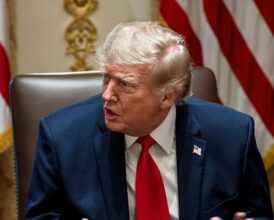


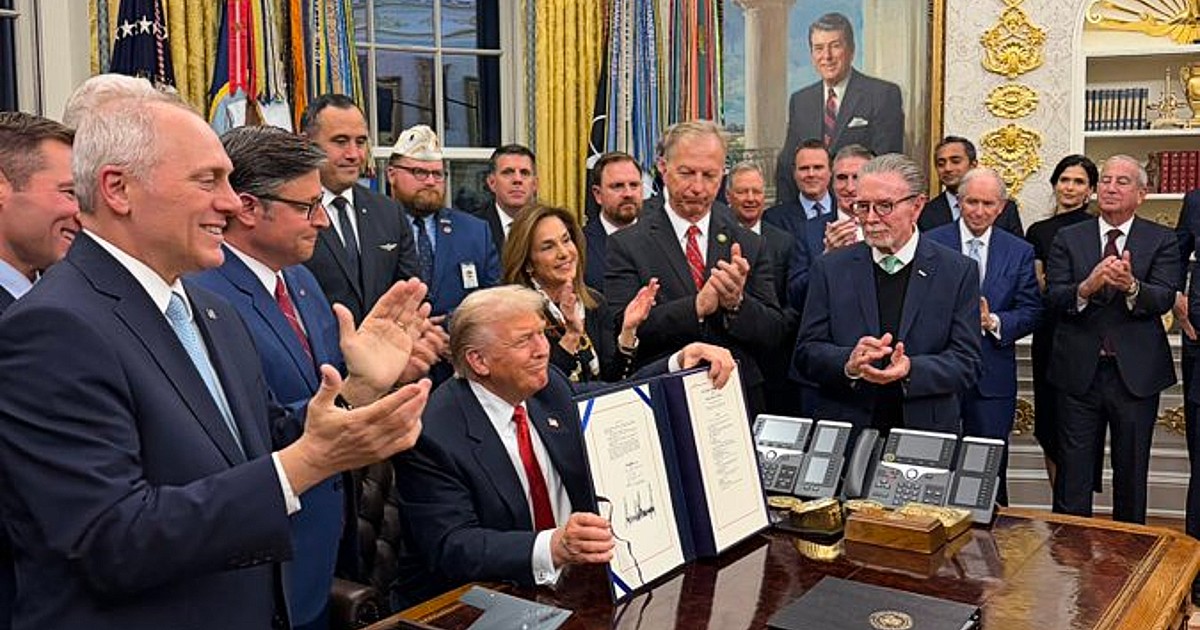
President Donald Trump signed a bipartisan funding package on Tuesday. The bill ends a record-setting 43-day government shutdown that left hundreds of thousands of federal workers unpaid and several key services frozen.
The impasse, which lasted from October 1, 2025, had far-reaching economic implications including the furlough of 650,000 workers and 4,000 government employees who faced layoffs. Add to that the cessation of food aid benefits of more than 42 million people, and we can see why CBS News reports that the shutdown threatened an excess of $7 billion.
Donald Trump has signed the bill to reopen the U.S. government after a 43-day shutdown, the longest in history.
The previous record-holder was 35 days, which occurred during his first term. pic.twitter.com/DJ3MVU15F0
— Pop Base (@PopBase) November 13, 2025
According to Reuters, Trump was emphatic when he declared, “We can never let this happen again.” Adding, “This is no way to run a country.” Of course, the president did not let the chance slip to blame the Democrats for the “unnecessary chaos.”
However, Leavitt also noted that “the president’s main priority was to reopen the federal government and get people back to work, and that’s what this deal accomplishes.”
The White House itself echoed this sentiment when they released a statement before Wednesday’s vote stating that the spending package would end the “disruptions to programs… and ensures the thousands of federal employees who have been forced to work without a paycheck… will be promptly paid.”
President Trump signs bill to reopen the government. The longest shutdown in US history is over, but it will take time for things to return to normal. https://t.co/wqqceeYUad pic.twitter.com/CCXkplBHYI
— CNN (@CNN) November 13, 2025
Officially, Government Executive confirms that federal agencies began reopening on Saturday, but recovery could take time. According to CNBC, government employees are expected to receive back pay as early as the beginning of next week. White House economic advisor Kevin Hassett said, “There really has been an aggressive effort to get people to get their checks as soon as possible.”
However, it must also be noted that some payments could be later depending on the agencies where workers are employed.
According to federal law, there are rules about furloughed workers during shutdown. The provisions state that government employees have to be paid for the time when they were out of work at their standard rate of pay. These payments are to be made “at the earliest date possible regardless of scheduled pay dates.”
The government shutdown is OVER.
Thanks to @POTUS, we are back and ready to deploy America First foreign policy that is both effective and efficient. Under President Trump’s orders, it’s time to get back to work 🇺🇸 pic.twitter.com/U9IYRGwaPe
— Department of State (@StateDept) November 13, 2025
Livemint reports that programs like the Supplemental Nutrition Assistance Program (SNAP) and WIC will be up and running as soon as possible. The USDA stated that for most states, the program would resume within 24 hours. Most beneficiaries could also expect a restoration of their account within hours after shutdown ended.
According to ABC Australia, the release of the food aid benefits will positively impact the economy at this time of the year. Household budgets will be on track just in time for the coming holiday season.
Air travel and national parks were two areas that were severely impacted by the shutdown. They are also struggling to resume normal operations. The FAA confirmed that air traffic staffing shortages had caused “hundreds of delayed flights” even after the shutdown ended.
Thanked the folks at @TSA today for working through this shutdown. Heroes are everywhere. #ThankYou pic.twitter.com/IetGE9CdWS
— Dean Cain (@RealDeanCain) November 12, 2025
The final agreement closely resembled proposals Democrats offered weeks earlier. Analysts at ABC News said the President’s approval ratings dipped during the standoff, raising questions about his strategy.
For millions of U.S. citizens, the end of the shutdown marks relief mixed with frustration. Sure, there is relief that paychecks will return, but frustration over how long recovery will take. And who is ultimately responsible for the wellbeing of the Americans.