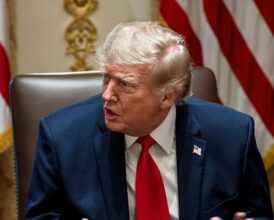


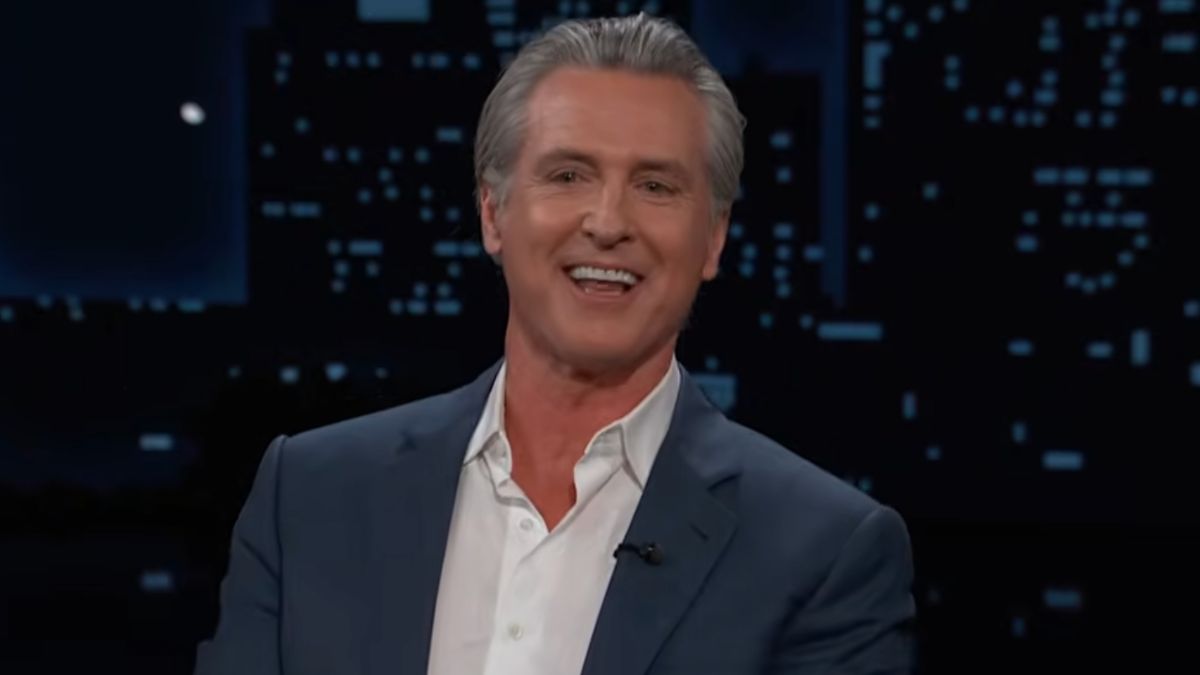
Gavin Newsom, the California governor leading the suit against Donald Trump, criticized Benjamin Netanyahu. Newsom said he is “one hundred percent a proud Zionist” but cannot support the direction Netanyahu is taking the country.
Three weeks ago, Newsom called Israel an “apartheid state.” He later backtracked in a recent Politico interview, where he criticized Israel’s current leadership.
When asked whether he regretted the statement, he said, “I do in this context. I said it, and I referenced why I used it—a Tom Friedman article—in that same sentence where Tom used it in the context of the direction that Bibi is going.”
“Bibi” is a common nickname for Benjamin Netanyahu.
Governor Gavin Newsom: “I revere the state of Israel. I’m proud to support the state of Israel.
I deeply, deeply oppose Benjamin Netanyahu’s leadership, his opposition to the two-state solution, and deeply oppose how he is indulging the far right…”
pic.twitter.com/q2kl7s2GNu— Republicans against Trump (@RpsAgainstTrump) March 24, 2026
Newsom’s original comments, in which he suggested Israel might be functioning like an apartheid state, were as follows: “He’s trying to stay out of jail. He’s got an election coming up. He’s potentially on the ropes. He’s got folks on the hardline that want to annex the West Bank. Friedman and others are talking about it appropriately, as sort of an apartheid state.”
His comments drew criticism from pro-Israel groups in the United States. The Israeli-American Civic Action Network said Newsom was indulging “narratives advanced by America’s enemies over the facts.”
The United States and Israel are engaged in escalating tensions with Iran, which have spilled into other parts of the Middle East. The conflict has pushed global energy prices higher, with analysts warning of further disruption. Public opinion in the United States is largely against military action in Iran, according to multiple polls.
NEW CNN-SSRS poll
View of the US decision to take military action in Iran:
• Approve: 41%
• Disapprove: 59%Does Trump have a clear plan for handling the Iran situation:
• Yes: 40%
• No: 60% pic.twitter.com/C9JT6Pf6w3— Republicans against Trump (@RpsAgainstTrump) March 2, 2026
Donald Trump has discussed potential negotiations with Iran, which Iranian officials have denied. There has been some movement in talks, but the Iranian government has said it would only negotiate with J.D. Vance and not diplomats selected by Trump.
As for Newsom, the Democratic governor is widely expected to launch a presidential campaign in 2028. Trump has already criticized Newsom in an effort to undermine a potential candidacy. Democrats have gained ground in some local elections, while Republicans face concerns about losing midterms amid shifting public opinion and a series of controversies affecting the administration.