



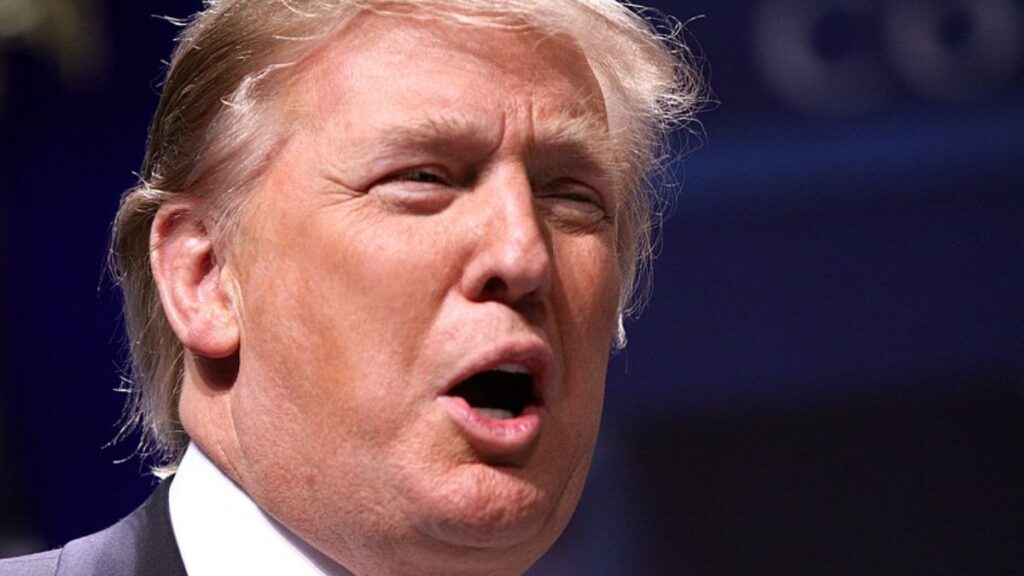
President Donald Trump’s approval rating has fallen to 36%, its lowest level since he returned to the White House, according to a Reuters/Ipsos poll completed on March 23.
This drop occurred as gasoline prices rose during the war in Iran. More Americans have expressed dissatisfaction with his management of the economy, the cost of living, and the military conflict. It’s an unprecedented low as Americans have historically rallied behind wartime presidents.
The four-day national poll found Trump’s overall approval rating declined from 40% a week earlier to 36%. Reuters noted that this decrease pushed him below the level he had maintained since last summer, though it remained above the low of 33% he reached during his first term.
Economic frustration drove much of this change. Only 29% of respondents approved of Trump’s management of the U.S. economy, and just 25% approved of his handling of the cost of living.
REUTERS/IPSOS – Trump Approval
Approve: 36% (-4)
Disapprove: 62% (+4)
——
Trump’s net approval on key issues
🟤 Immigration: -13
🔴 Foreign policy: -27 (new low)
🔴 Economy: -33 (new low)
🔴 Cost of living: -41 (new low)
——
U.S. strikes on Iran
Approve: 35% (-2)
Disapprove:… pic.twitter.com/geXMaysnTY
— InteractivePolls (@IAPolls2022) March 24, 2026
According to Reuters, both numbers were the lowest of either Trump presidency. The economic approval also fell behind any recorded rating for former President Joe Biden. The Ipsos topline showed similar weakness regarding inflation, with only 23% approving of Trump’s approach to rising prices.
The poll also revealed that most Americans view the economy unfavorably. Sixty-three percent described it as “somewhat weak” or “very weak,” which included 40% of Republicans, 66% of independents, and 84% of Democrats.
Reuters connected this decline to a significant rise in gasoline prices after the United States and Israel targeted Iran with coordinated strikes on February 28. This conflict disrupted oil shipments from the Middle East and raised fuel costs across the U.S. The average price of gasoline had increased by about $1 a gallon since the war began.
Trump also faced declining approval regarding the war itself. The Reuters/Ipsos poll showed that 35% of Americans approved of the U.S. strikes on Iran, down from 37% the previous week, while disapproval rose to 61%, up from 59%.
Analyst: We have reached the 1 year mark since Trump has had a net negative approval rating. Every day since March 12th 2025, Trump has been underwater. Really bad with Independents. Just downright awful with them pic.twitter.com/WlWEmCAY0r
— Headquarters (@HQNewsNow) March 11, 2026
Additionally, 46% believed the war would make the United States less safe in the long run, compared to 26% who thought it would make the country safer. Earlier polling, taken right after the initial strikes, indicated more uncertainty, but the latest survey did not offer respondents an “unsure” option on that question.
Trump’s support among Republicans remained relatively strong, but there were signs of decline regarding affordability. Reuters reported that about one in five Republicans disapproved of Trump’s overall job performance, which was little changed from the prior week.
However, disapproval regarding the cost of living increased to 34% from 27% a week earlier. The Ipsos topline indicated that 58% of Republicans still approved of Trump’s management of living costs, but this figure was significantly lower than his Republican approval on immigration, which stood at 82%.
Despite Trump’s ratings slipping, the poll did not show a clear advantage for Democrats. Among registered voters, 38% said Republicans were better at managing the economy, compared to 34% who preferred Democrats. Reuters reported that Republicans also held the edge on immigration and crime, while Democrats led on health care and women’s rights.
The Reuters/Ipsos survey was conducted online nationwide and gathered responses from 1,272 U.S. adults. The margin of error was 3 percentage points.


