

At the Grammys, politics didn’t just drift in through the side door—it walked the red carpet wearing enamel, and White House press secretary Karoline Leavitt scorched “elitist” celebrities slamming ICE from “gated” mansions.
Some of the industry’s biggest names arrived with “ICE Out” pins, a small accessory that managed to do what a lot of acceptance speeches only try to do: start an argument before anyone’s even found their seat.
✊🏻 Billie Eilish, winner of Song of the Year for “Wildflower”: “No one is illegal on stolen land”. #GRAMMYs | Feb. 1, 2026 pic.twitter.com/Zj39wTyXbU
— ʙᴇʟʟᴀᴅᴏɴɴᴀ🧣 (@Quatrehuit2neuf) February 2, 2026
A few moments later, Billie Eilish used her own time at the microphone to deliver a line that’s now ricocheting far beyond the Crypto.com Arena: “No one is illegal on stolen land.” She then added, bluntly, “And f— ICE, that’s all I’m gonna say, sorry.”
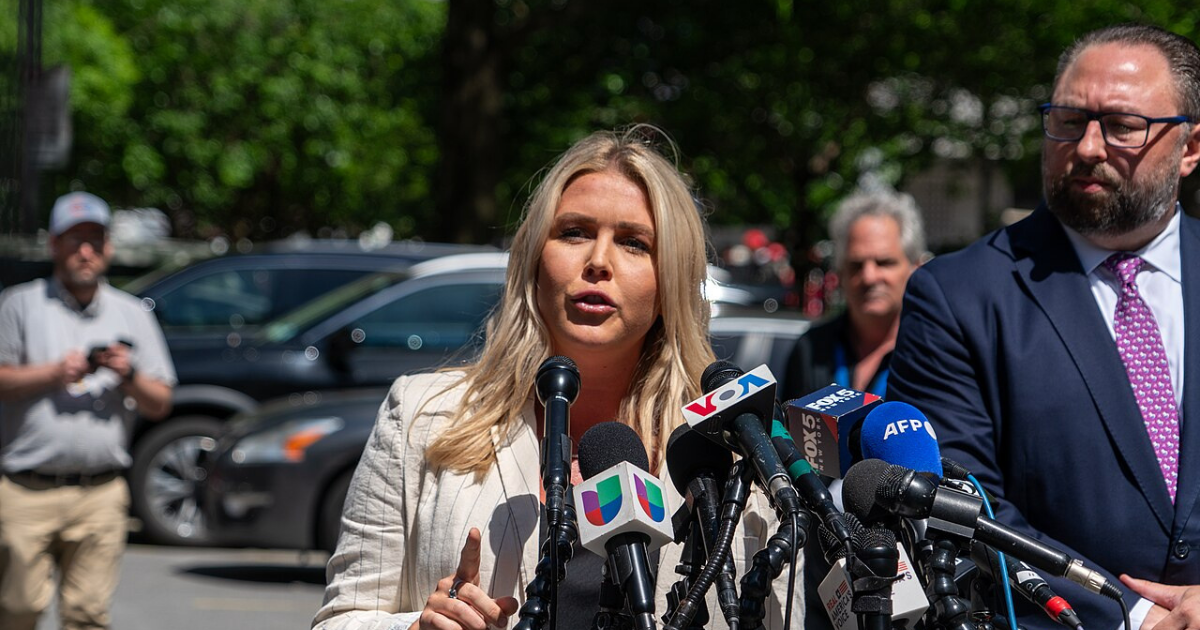
By Tuesday, the White House press secretary, Karoline Leavitt, was outside doing what this administration has made something of an art form: turning cultural outrage into a political foil.
.@PressSec: “It’s very ironic and, frankly, sad to see celebrities who live in gated communities with private security, with millions of dollars to spend protecting themselves, trying to just demonize law enforcement public servants who work for the U.S. government to enforce our… pic.twitter.com/PZqnA6nS9V
— Rapid Response 47 (@RapidResponse47) February 3, 2026
Karoline Leavitt told reporters she found it “very ironic and frankly sad” to see celebrities “who live in gated communities with private security, with millions of dollars to spend protecting themselves” demonize federal agents tasked with enforcing immigration law.
It was a neatly packaged critique—Hollywood as a protected class, law enforcement as a punching bag—and it landed because it leans into a suspicion many Americans already hold: that wealthy people love grand moral declarations right up until they have to live with the consequences.
Her message also drew a bright contrast with the Biden years. Leavitt argued that celebrities were notably quiet while, in her words, the previous administration “allowed an invasion of our nation’s borders,” and she invoked two highly publicized murder cases—Laken Riley and Jocelyn Nungaray—to argue that lax enforcement had lethal results.
The point wasn’t subtle: outrage, she implied, is selective when it’s directed at President Donald Trump and goes missing when it might inconvenience Democrats.
Of course, the celebrity backlash isn’t appearing out of thin air. The “ICE Out” pins have become a kind of shorthand protest against enforcement tactics, and Billboard published a photo roundup of stars—including Justin and Hailey Bieber, Billie Eilish and Finneas, Kehlani, and Brandi Carlile—wearing them at the 2026 ceremony.
That imagery does the work of a thousand tweets: smiling faces, designer clothes, and a slogan aimed squarely at an agency that has become a symbol of state power in America’s immigration fight.
Karoline Leavitt wasn’t alone in pushing back. DHS Secretary Kristi Noem, speaking to Fox News Digital, said she wished the artists understood “what wonderful, amazing people our ICE officers are,” adding that many officers live in the communities where they work and that their families are “their neighbors they are protecting.”
Kristi Noem framed ICE’s mission in familiar, hard-edged terms: going after “murderers and rapists,” drug traffickers, and people she described as dangerous criminals.
”The Trump administration has “saved hundreds of millions of lives.”
– Kristi Noem
What planet are these people living on. pic.twitter.com/PhfrbRxRwU
— Bricktop_NAFO (@Bricktop_NAFO) February 2, 2026
This is the rhetorical tug-of-war in its purest form. Celebrities talk about dignity and belonging; the administration talks about predators and protection. Each side picks the moral high ground it can defend fastest on live television.
But what makes this moment stickier than the usual awards-show scolding is the sense that it’s no longer just symbolic. Billboard noted that the Grammys arrived amid heightened tensions around ICE, pointing to January incidents in which immigration enforcement officers shot and killed civilians in Minneapolis, an episode that has fueled furious debate over accountability and the limits of federal power.
When that’s the backdrop, a pin isn’t just a pin. It’s a provocation.
Karoline Leavitt’s “gated communities” line also does something else: it invites everyday Americans to roll their eyes. Not at the policy details—most people don’t live in policy—but at the posture. In her framing, Hollywood gets to perform empathy without any exposure to the hazards it claims to understand.
The celebrities, meanwhile, would argue that, insulated or not, they’re using a platform to object to actions they see as cruel or dehumanizing.
And somewhere between those dueling narratives is the public, forced again to choose which kind of outrage feels more honest: the red-carpet denunciation or the White House counterpunch.