


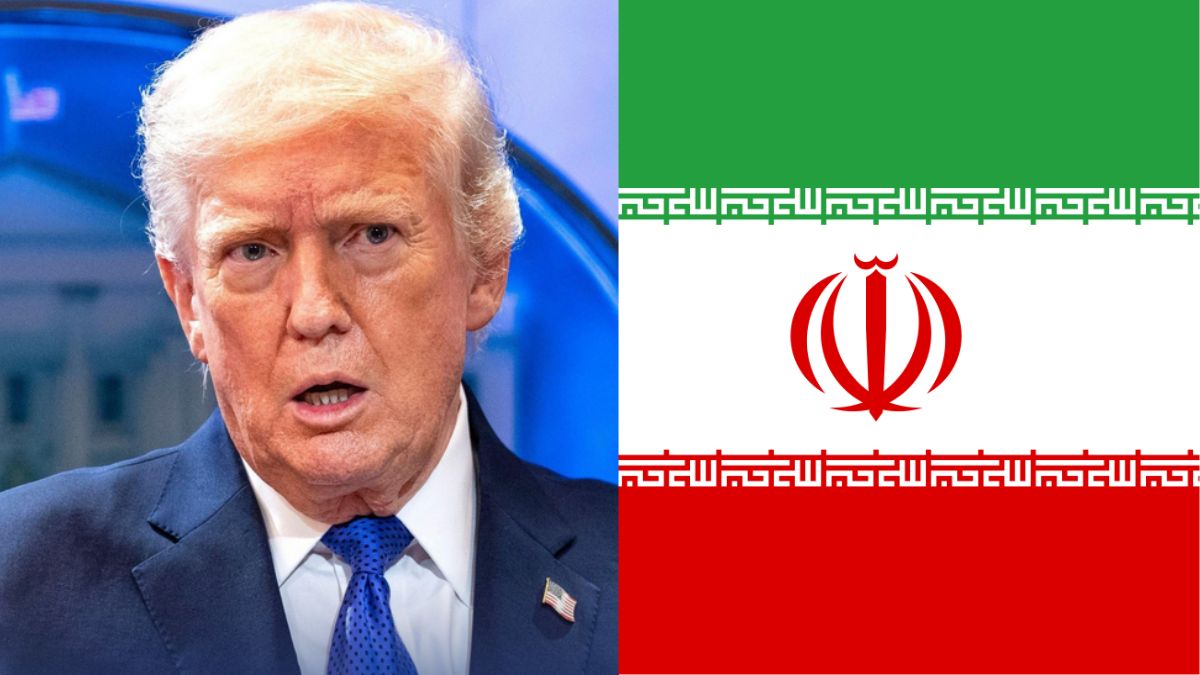
Following the joint US-Israel attack on Iran that killed the country’s Supreme Leader, Ayatollah Ali Khamenei, the financial aspects of the war are now coming into focus. It is well known that wars are expensive and the same goes for the ongoing US-Israel and Iran situation that President Trump has claimed might go on for weeks.
It was on February 28 that Trump confirmed U.S. strikes on Iran to “ensure that Iran does not obtain a nuclear weapon.” The President further added, “We’re going to destroy their missiles and raze their missile industry to the ground. It will be totally obliterated.”
As America’s attack marked the beginning of a war, it has now been estimated by Kent Smetters, director of the Penn Wharton Budget Model (PWBM) that the total financial cost of the strikes could go up as high as $210 billion. Talking to Fortune, Smetters mentioned that the lowest that Operation Epic Fury might cost taxpayers was $40 billion. He further added that this was the smallest estimation of direct budgetary costs that might go up to $95 billion.
Maybe it is just me, but is this a wise thing to advertise to adversaries?🧐
“US military’s top general laid out the risks to Trump of launching a major and extended attack on Iran, one of the issues he flagged was US stockpile of munitions.
If the war drags on and more… pic.twitter.com/uvvSA3Et5N
— Theresa Fallon (@TheresaAFallon) March 1, 2026
He then explained that PWBM expects the cost of this operation to increase further, and therefore, there is a possibility of taxpayers being hit with about $65 billion for military operations, replacement of equipment, and other war-related costs. Moreover, “if the war lasts more than two months, then this number goes up,” he added.
Besides the direct military expenses, Smetters also predicted another approximately $115 billion loss to the U.S. economy that has the possibility of stretching from $50 billion all the way to $210 billion. It should be noted here that these figures do not include the charges that come along with the Trump administration’s IEEPA tariff regime. That has been pegged by PWBM at a separate $179 billion.
Christopher Preble, a senior fellow at the Stimson Center also talked about the cost of war with Al Jazeera as he said, “The Pentagon has not published that information, and so we can only speculate…, but there’s a lot of moving pieces, and we can speculate on the cost of the individual weapons; we can speculate on the cost of the operations, the naval operations.”
View this post on Instagram
For a war that would be costing this much money, Trump has not yet been able to provide a consistent line of reasoning behind his decision to attack Iran. His claims of Iran developing missiles that could attack the U.S. has been proved to be false as both Intelligence reports and Pentagon staffers have confirmed that the country posed no immediate threat to America that required beginning a war.
Moreover, Trump also seems unclear regarding what to do with Iran following the regime change war that he started. The U.S. military lost four soldiers in the retaliatory attack by Iran, and Trump’s response to the same has been rather indifferent and nonchalant.
With no clear timeline regarding the ending of the war and the costs mounting up, it would be the U.S. taxpayers who would be bearing the major burden of this conflict.