Francesca Albanese reaches Mexico City after 2 nights barred at Costa Rica airport
Costa Rica barred the UN rapporteur over an unexplained terrorism alert, and its Constitutional Court is still reviewing the ban.
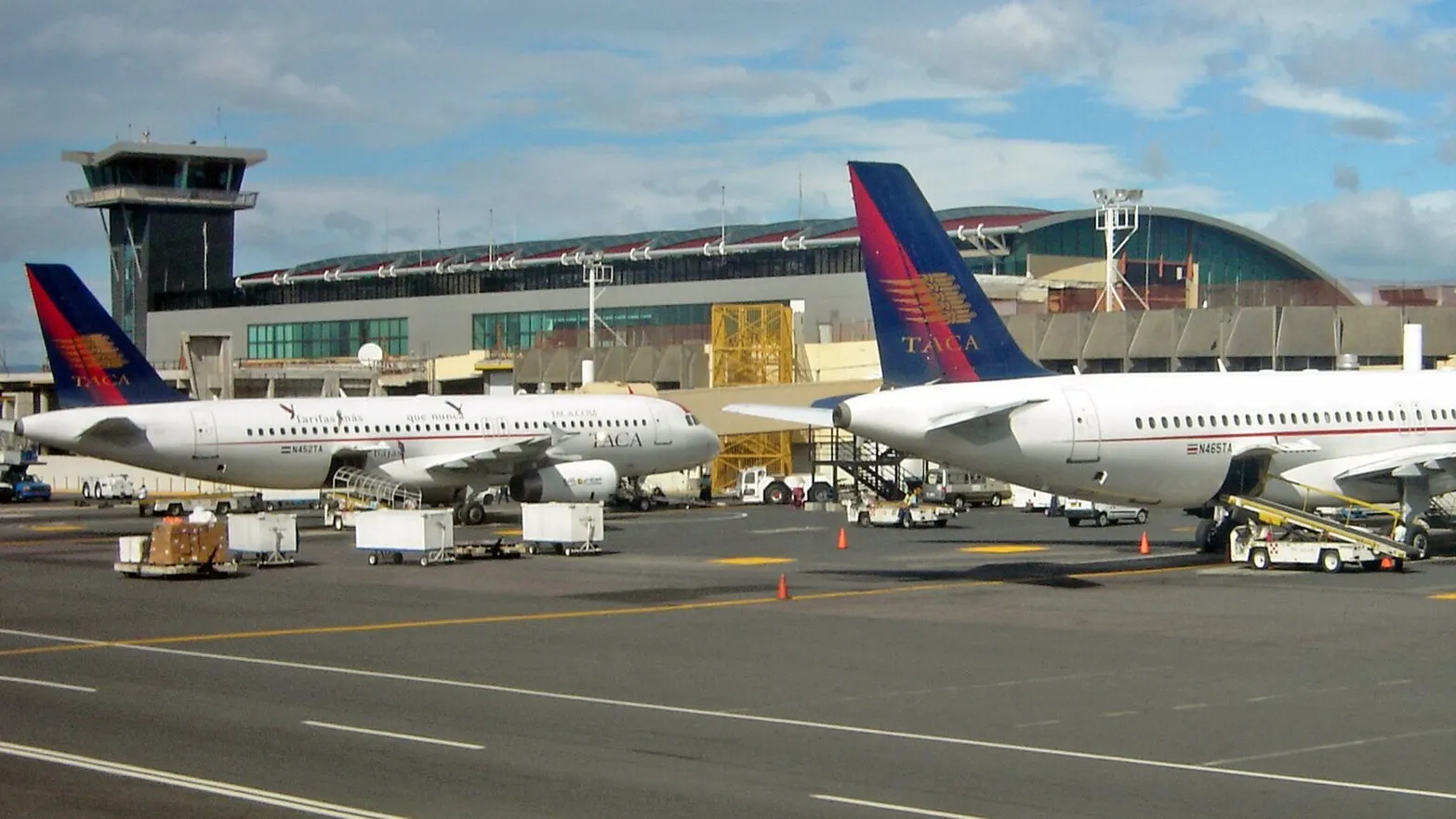
Francesca Albanese, the UN special rapporteur on the Palestinian territories, arrived in Mexico City on Saturday after Costa Rican immigration authorities barred her from entering, saying she posed a national security risk. She got there after two nights at Juan Santamaría International Airport in San José, where she was refused entry Thursday.
This is a developing story and will be updated.
Albanese had come to accept an honorary doctorate from the University of Costa Rica. By Friday, she was still in the terminal.
"Second night in the airport. Guarded by security at every step. Unconfortable chairs. Noise. Bright light," Albanese wrote on X on Friday.
Second night in the airport.
— Francesca Albanese, UN Special Rapporteur oPt (@FranceskAlbs) November 27, 2026
Guarded by security at every step. Unconfortable chairs. Noise. Bright light.
Counting the hours till my flight tomorrow.
Omer Badilla, Costa Rica's immigration chief, said in a video statement that she was denied entry because she was the subject of an "international alert over links to terrorist acts." Authorities gave no evidence for the alert and did not say who issued it.
It was not immediately clear what the alert contains or whether it is connected to US sanctions against Albanese.
As officials moved to send her back to Paris, the Constitutional Court stopped them from deporting her while it reviewed a legal challenge filed on her behalf. Rodrigo Chaves, Costa Rica's former president and now a Cabinet minister, called the court's move "yet another usurpation by an increasingly arbitrary judiciary."
Another former president came to see her. Óscar Arias, winner of the 1987 Nobel Peace Prize, visited Albanese at the airport and condemned the government's decision.
The university held its award ceremony Friday, and Albanese accepted the doctorate by video link while sitting on the terminal floor.
In her speech, Albanese said she was deeply indignant that the Costa Rican government had falsely linked her to terrorism. "Defending human rights is not terrorism and the government must answer for these insinuations," she said. She also accused the government of supporting what she called an Israeli "apartheid" regime, Agence France-Presse reported.
Late Friday, the court cleared her to leave the airport for a hotel while it considers the case, though it did not overturn the entry ban. The order did not get her out right away. Albanese wrote on X that immigration police would not let her go, asking, "Am I detained??"
She also wrote that "Air France staff are actively ignoring the ruling with excuses while I've been awake for 50hrs straight."
Immigration officials took about six hours after the order to let her go to the hotel. She left the airport shortly after midnight and boarded her flight to Mexico hours later. "I'm outside the airport. Finally," she wrote.
From the plane on Saturday morning, she posted a picture of herself holding up her Italian passport and promised to return when Costa Rica is free again. In a video from the plane, she spoke directly to Costa Ricans about their courts. "You have something extremely precious, an effective and independent judiciary," she told them.
A different reception waited in Mexico City. At the arrivals gate, a few dozen activists greeted her with flowers and drums and unfurled a large Palestinian flag at her feet, The Associated Press reported.
Albanese described her treatment in Costa Rica as "disgusting" and said the government never called her while she was stuck at the airport. "I know that in this region the pressure from the neighbors is felt strongly, but there is humanity," she said, in what The Associated Press described as an apparent reference to the US government.
Ties to Washington and Israel
Albanese's supporters saw the episode as showing how far Washington's reach extends in Latin America, AP reported. AP described the court rulings as pitting the judiciary against Costa Rica's right-wing government, which it called closely aligned with US President Donald Trump and Israeli Prime Minister Benjamin Netanyahu.
President Laura Fernández's government has cooperated with the Trump administration on security and immigration and strengthened ties with Israel, The Guardian reported.
The ban drew responses from abroad. UN human rights chief Volker Türk urged Costa Rica to reconsider. "This is difficult to reconcile with Costa Rica's longstanding commitment to human rights," he said. Italy's foreign minister said Italy had repeatedly asked Costa Rican authorities to let her in.
Israel's UN ambassador, Danny Danon, praised the decision, accusing Albanese of spreading "vile propaganda" about Israel and "legitimizing terrorist organizations."
At home, Costa Rica's ombudsman's office said holding her showed officials' "ignorance" of her immunity from detention and arrest as a UN expert. Amnesty International called the government's actions "shameful."
Jeff Bartos, a senior US diplomat at the UN, welcomed the ban, saying he was "grateful to Costa Rica for keeping this liar and lunatic out of their beautiful country."
Albanese, an Italian lawyer, was appointed by the UN Human Rights Council in 2022. Special rapporteurs are independent experts who do not speak for the UN.
Israel has barred her since early 2024, following comments she made about the Hamas-led attack of Oct. 7, 2023. She has accused Israel of committing genocide in Gaza, which Israel denies.
In 2025, the Trump administration sanctioned her and revoked her US visa, accusing her of working with the International Criminal Court to pursue cases against Israeli and American citizens. AP reported that the sanctions are of the kind typically used against terrorists and drug traffickers.
Secretary of State Marco Rubio accused her of antisemitism, which she has rejected. Critics have run several campaigns to remove her from her post, arguing she is biased against Israel.
Albanese has called for a probe into whether the ban was linked to the US sanctions. She is scheduled to spend five days in Mexico, including a Palestinian solidarity event, a talk at Mexico City's human rights commission and a university lecture on responsibility in times of genocide.
In San José, the Constitutional Court is still considering the legal challenge to her entry ban.
Sources
- Deutsche Welle: UN expert Albanese arrives in Mexico after Costa Rica denied her entry
- UPI: U.N. rapporteur Albanese in Mexico after being barred in Costa Rica - UPI.com
- Al Jazeera: UN rapporteur Albanese arrives in Mexico after Costa Rica saga
- Agence France-Presse: UN rapporteur arrives in Mexico after being barred from Costa Rica
- The Guardian: Costa Rica bars UN rapporteur on Palestinian territories from entering the country
- AP News: UN expert Albanese leaves Costa Rica after being denied entry, stuck at airport
- ABC News: UN expert Albanese leaves Costa Rica after being denied entry, stuck at airport for 2 days
- BBC News: Francesca Albanese: Costa Rica denies access to UN Special Rapporteur
- BBC News: Francesca Albanese: Costa Rica denies access to UN Special Rapporteur
- Francesca Albanese, UN Special Rapporteur oPt (@FranceskAlbs) on X