

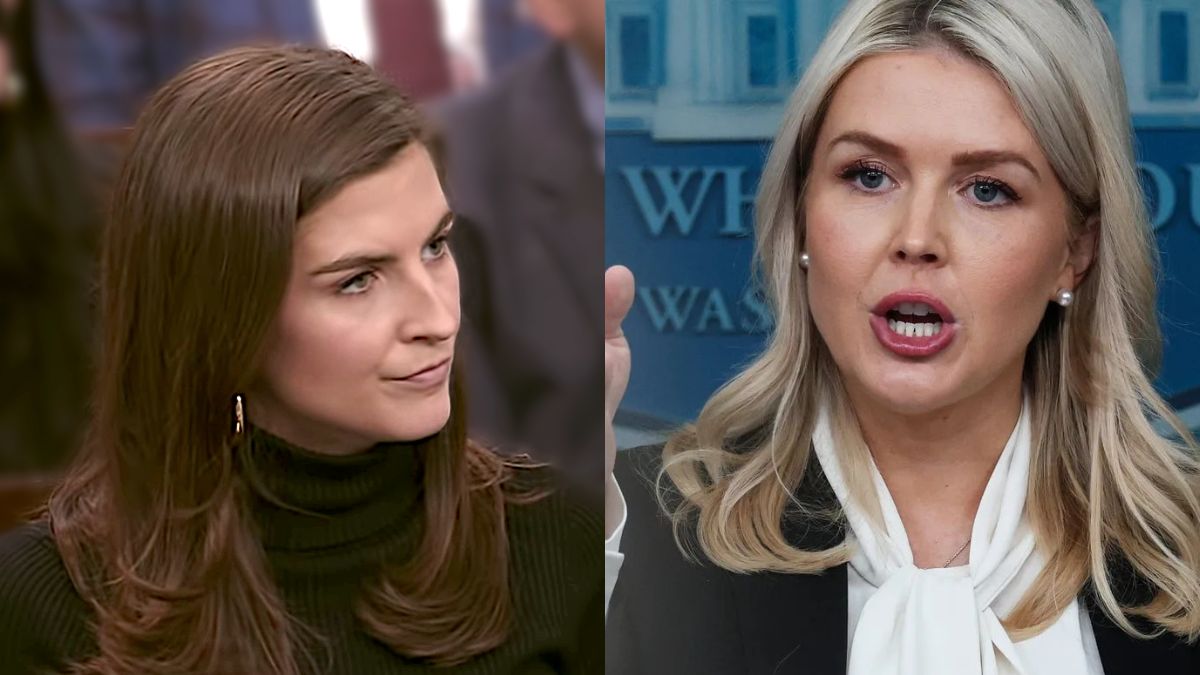
The back-and-forth between Kaitlan Collins and Karoline Leavitt has become one of the most explosive dynamics inside the modern White House briefing room.
Typically, when it comes to the White House Secretary and the reporter, the setup is familiar. Questions land and pushback follows. Some exchanges pass quickly. Others stretch for minutes and citizens witness their exchanges across television clips and social media by evening.
Between them, the tension built gradually.
Collins began covering the White House years earlier for CNN and rose to become one of the network’s most visible political reporters. Leavitt arrived later, serving in communications roles under Trump before becoming press secretary.
KAITLAN COLLINS: I have a follow up on something you just said.
KAROLINE LEAVITT: Kaitlan, I am not taking your follow up question. pic.twitter.com/gA24tRQ1SH
— Thomas Hern (@ThomasMHern) March 26, 2025
One early clash centered on the future of the North Atlantic Treaty Organization in March 2025.
The administration said some European allies were not paying enough toward defense spending. NATO countries had agreed to aim for military spending equal to 2 percent of national GDP. Some still lag behind that mark.
Collins asked whether describing allies as “freeloading” risked damaging relations.
Leavitt pushed back. The United States, she said, spends far more on defense than most NATO partners and had the right to demand higher commitments. The exchange stretched longer than usual before the next reporter stepped in.
Karoline Leavitt lashes out at Kaitlan Collins for asking the obvious: is Tulsi Gabbard accusing Obama of “treason” just to stay in Trump’s good graces? pic.twitter.com/GlBFsu3PmV
— The Vivlia (@TVivlia) July 24, 2025
A few months later, in mid-summer, the discussion turned to foreign policy again, this time involving Tulsi Gabbard.
Questions had surfaced about comments Gabbard made regarding international conflicts. Collins asked whether the president had undercut her position publicly.
Leavitt pushed back immediately. She said the question relied on a misreading of the president’s remarks. The briefing room got quiet for a moment. Collins apparently scoffed at Leavitt’s comments. Then the conversation moved on.
My full exchange with Karoline Leavitt on what officials in Portland, including the police chief, are saying about whether the National Guard is needed versus what President Trump is claiming. pic.twitter.com/i4C3iSkkil
— Kaitlan Collins (@kaitlancollins) October 6, 2025
The fall brought another argument, this time about events in Portland. A federal judge had blocked part of a plan involving National Guard deployment. Collins asked whether the administration would challenge the ruling or change course.
Leavitt said the reporting behind the question leaned on partisan interpretations. She suggested the journalist should “go out there and see for yourself.” A few reporters shifted in their seats. Cameras kept rolling.
Karoline Leavitt Fires Back at CNN, Press For Inflation Double Standard
At today’s White House press briefing, CNN’s Kaitlan Collins claimed that “nobody reported on [inflation] being high under Biden” when asking about Trump’s economy. White House @PressSec Karoline Leavitt set… pic.twitter.com/P76Ni6ccp8
— The Daily Signal (@DailySignal) December 11, 2025
By December, the economy was the main focus. Collins pressed Leavitt on mixed messaging. In one speech, the president described the economy as booming. In another, he suggested families might cut back on holiday spending.
Leavitt accused Collins of trying to “push narratives.” The clip circulated widely that night across cable networks.
Another dispute followed over press access inside the Oval Office in February 2026. A reporter from the Associated Press had been blocked from an event.
Collins asked whether restricting entry affected press freedom. Leavitt answered quickly. Access to the Oval Office, she said, is “an invitation, not a right.”
Not every moment between the two unfolded that way.
CNN’s Kaitlan Collins Says Karoline Leavitt Defended Her Free Press Rights
“The Saudi Royal Guard freaked out because I dared to ask a question … and said, you can’t come into the next event … Karoline, to her credit said, no Kaitlan’s coming in with the rest of the U.S.… pic.twitter.com/uhB9al4GVX
— Chief Nerd (@TheChiefNerd) February 12, 2026
During a diplomatic visit to Saudi Arabia, later that month, security guards briefly tried to prevent Collins from entering a press area with other reporters. Collins said Leavitt told the guard she should be allowed through.
The rare moment drew notice among members of the traveling press pool.
Testy exchange between Karoline Leavitt and Kaitlan Collins after Collins quoted Hegseth directly on the death of 6 service members:
Leavitt: “The press only wants to make the president look bad. Especially you and especially CNN. Hegseth cares deeply about our men in uniform.” pic.twitter.com/BFKwtPCvCa
— The American Conservative (@amconmag) March 4, 2026
The most recent confrontation came during a briefing tied to U.S. military action connected to Iran in early March, per Irish Star. Collins asked about coverage of American service members killed during the operation after comments from Defense Secretary Pete Hegseth criticizing how some outlets reported the deaths.
Leavitt’s said CNN coverage just tried to make the Trump administration look bad. Collins got her own back when she replayed their spat on her program later that evening.