


European leaders are standing strong with Denmark after Donald Trump revived his interest in incorporating Greenland into US territory.
The US president has revived his ambitions, citing national security, but European leaders say, “Greenland belongs to its people – and Denmark is its guarantor.” One year after Trump first announced his intention to take Greenland into US territory on the grounds of “national protection,” he is now back.
Donald Trump has just appointed Governor of Louisiana, Jeff Landry, as the new US special envoy for Greenland. His stated objective of the appointment is “integrating Greenland into the United States” and he has repeated that the US needs the territory for its “national security.”
Meanwhile, EU heads of state and government are taking the president’s comments seriously. They are now presenting a united front against what they term American expansionist ambitions towards the autonomous territory, which forms part of the Kingdom of Denmark.
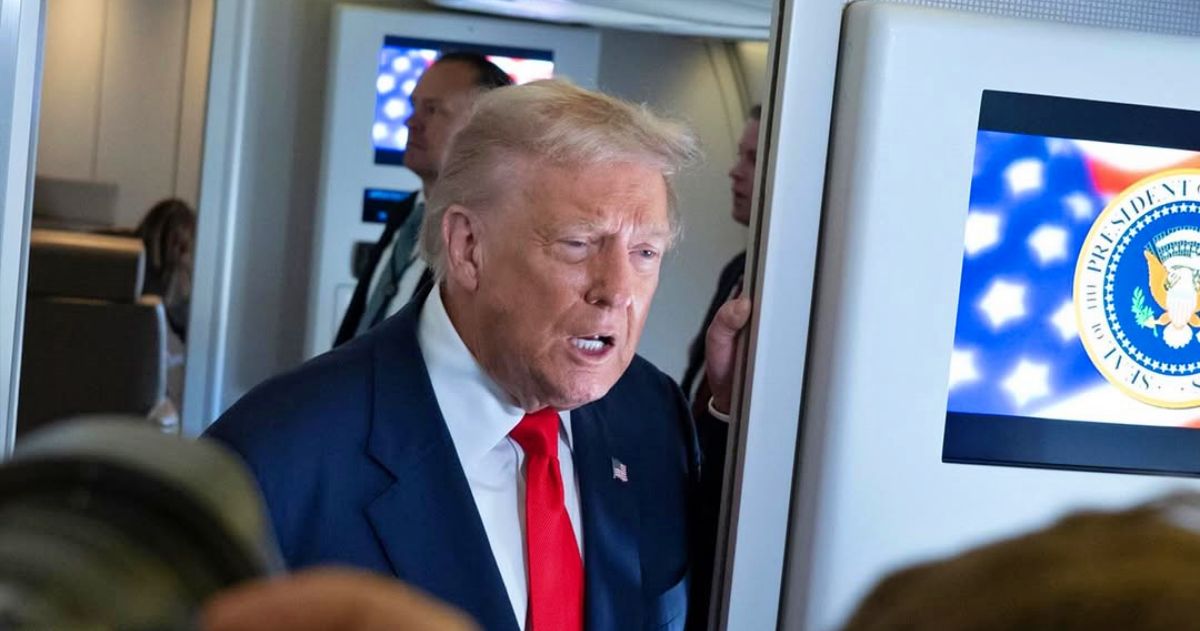
Tuesday saw Trump telling reporters that the US “needs Greenland for national security, not for minerals or oil, but national security. And if you take a look at Greenland, there are Russian and Chinese ships all over the place. So, we need this for protection.”
Donald Trump chastised Denmark for what he describes as neglecting the territory, saying, “they have spent no money, they have no military protection, they say Denmark arrived there 300 years ago with boats – we were there with boats too, I’m sure. We’ll have to work it all out.”
According to the New York Times, officials in Denmark and Greenland are furious that Trump had appointed a special envoy to Greenland, as part of his continuing efforts to take over the semiautonomous Danish territory.
Meanwhile, the EU is fighting back, with President Emmanuel Macron of France and his Minister for Europe and Foreign Affairs, Jean-Noël Barrot, both responding to the announcement by reaffirming their support for the integrity of Denmark’s territory. In their statement, they wrote, “Greenland belongs to its people. Denmark stands as its guarantor. I join my voice to that of Europeans in expressing our full solidarity.”
In Nuuk, I reaffirmed France’s unwavering support for the sovereignty and territorial integrity of Denmark and Greenland.
Greenland belongs to its people.
Denmark stands as its guarantor.I join my voice to that of Europeans in expressing our full solidarity. pic.twitter.com/W3EUn3dAME
— Emmanuel Macron (@EmmanuelMacron) December 23, 2025
Adding more European voices against US ambitions, Commissioner Ursula von der Leyen stated that “territorial integrity and sovereignty are fundamental principles of international law. Despite the tone, she appears to refer to the US as an ally in Arctic security.
Spanish Prime Minister Pedro Sánchez added to the commentary, saying, “Respecting sovereignty and territorial integrity is central to the EU and to all nations of the world,” he wrote on X, adding, “Security in the Arctic is a priority in which we seek to work with allies and partners.”
Respetar la soberanía e integridad territorial es central para la UE y para todas las naciones del mundo.
La seguridad en el Ártico es una prioridad en la que buscamos trabajar con aliados y socios.
Trasladamos nuestra plena solidaridad con Dinamarca y el pueblo de Groenlandia.
— Pedro Sánchez (@sanchezcastejon) December 23, 2025
Meanwhile, the US and Denmark are both part of NATO, a group that is supposed to ensure mutual defense in the event of aggression against one of its members. That principle has never previously been tested by conflict between NATO members if one were to seize territory from another.
Despite Trump insisting that he only wants Greenland for national security, it has critical minerals that have grabbed the interest of top officials in the Trump administration. Moreover, Greenland served as a base for American military operations in World War II and the Cold War, and there is still a remote US base on the northern side of the island.
Meanwhile, the US and Denmark are both part of NATO, a group that is supposed to ensure mutual defense in the event of aggression against one of its members. That principle has never previously been tested by conflict between NATO members if one were to seize territory from another.