

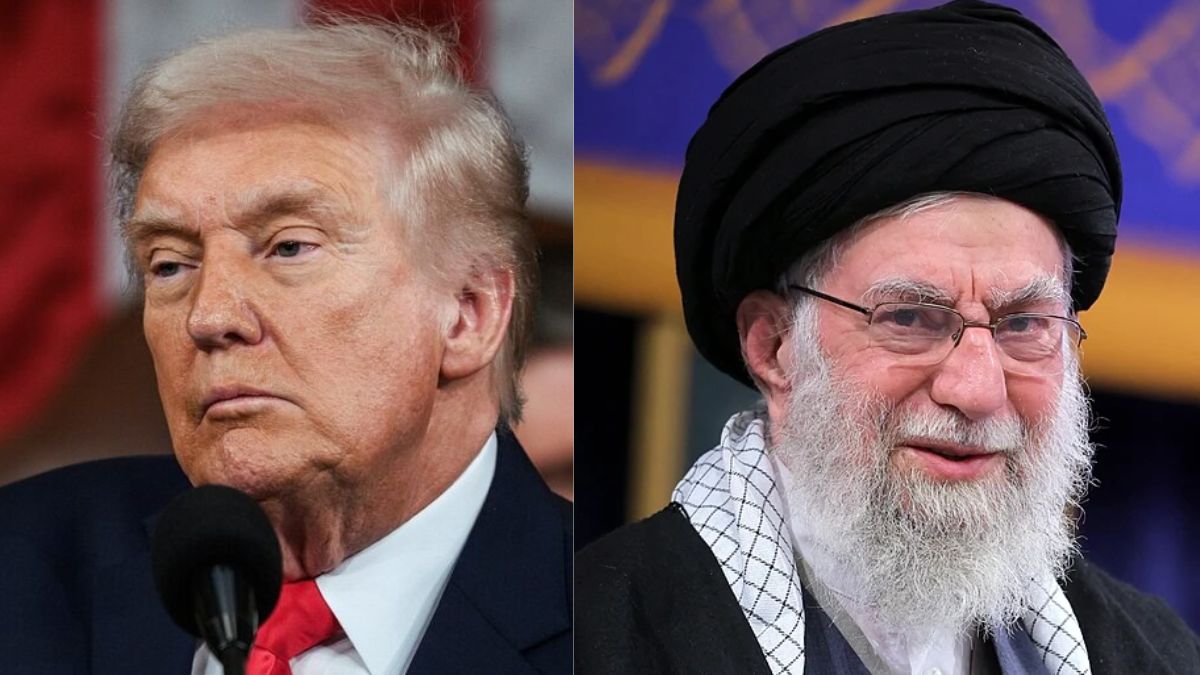
Donald Trump delivered one of the longest State of the Union addresses on Feb. 24. Lasting approximately 1 hour and 48 minutes, it was the longest speech before a joint session of Congress in at least 60 years.
During his address, Trump discussed tariff policies and described Iran’s missile ambitions as a significant threat to the U.S. Few anticipated the administration’s subsequent actions on Saturday, which heightened concerns about escalation into a broader conflict.
Trump later ordered large-scale military strikes against Iran, coordinated with Israeli forces. On Feb. 28, the United States and Israel launched what officials described as one of their deadliest attacks on Iran. The operation, dubbed “Operation Epic Fury,” resulted in the death of Ayatollah Ali Khamenei, Iran’s supreme leader.
Israeli Prime Minister Benjamin Netanyahu said Khamenei’s compound had been destroyed. Iranian state media later confirmed his death. Mohammad Pakpour, commander of the Islamic Revolutionary Guard Corps, was also killed during the joint operation.
Trump called Khamenei “one of the most evil people in history” as thousands protested in the capital following his death.
The attack comes amid long-standing tensions between the U.S. and Iran dating back to the 1979 Iranian Revolution and the 444-day hostage crisis that affected the presidency of Jimmy Carter.
Amid widespread reactions, the 79-year-old president addressed the media in a video message. He said Iran must never acquire a nuclear weapon, citing intelligence that indicated Tehran was attempting to rebuild its nuclear capabilities following earlier U.S. strikes.
“Just imagine how emboldened this regime would be if they ever had and actually were armed with nuclear weapons as a means to deliver their message,” he said on the day of the attack.
While Trump’s claims about Iran’s nuclear ambitions were not accompanied by publicly released intelligence, some reports have alleged that Tehran is developing a missile capable of striking the United States.
Trump clarified America’s position on the attack, stating, “It is to defend the American people by eliminating imminent threats from the Iranian regime, a vicious group of very hard, terrible people.”
View this post on Instagram
In his public video address, Trump urged the Iranian people to rise up against their government, using language that suggested “regime change” could be a goal of the U.S.-led military operation.
Trump called on “the great proud people of Iran” to rise up and take power from their current rulers.
“I say tonight that the hour of your freedom is at hand,” he said. “When we are finished, take over your government. It will be yours to take. This will probably be your only chance for generations,” he added.
According to Fox News, former President George W. Bush used similar language before the 2003 invasion of Iraq, when the U.S. sought to remove Iraqi leader Saddam Hussein from power.
Several lawmakers have expressed concern about deeper U.S. involvement in another overseas conflict, arguing that the focus should remain on domestic priorities.
Others have supported Trump’s operation, calling it “necessary” to confront Iran’s leadership under Ayatollah Ali Khamenei.
Democratic leaders, including Senate Majority Leader Chuck Schumer, have raised questions about congressional authority under the War Powers Act, which grants Congress oversight of military action. However, previous administrations have seen presidents take military action before congressional debate.
View this post on Instagram
Meanwhile, Iran responded by launching retaliatory strikes against Israel and U.S. military installations in several Middle Eastern countries, raising concerns about a broader regional conflict.
Explosions were reported across parts of the Gulf, including the United Arab Emirates, Qatar, and Kuwait. Several missiles targeting locations in the UAE were reportedly intercepted, though one strike allegedly hit the Fairmont hotel in Palm Jumeirah. Authorities have not yet provided full confirmation of the extent of the damage.
Several Gulf countries temporarily closed their airspace following reports of the attacks, leaving travelers stranded as officials worked to assess the situation