

Dallas County officials have posthumously declared Tommy Lee Walker innocent, more than 70 years after the state of Texas executed him in the electric chair.
Walker was just 19 years old when he was arrested in 1954 for the rape and murder of Venice Lorraine Parker, a white store clerk killed while waiting for a bus in Dallas. He was executed in 1956, before his 22nd birthday.
On January 21, the Dallas County Commissioners Court formally cleared Walker of all charges, ruling that his arrest, prosecution, and execution were fundamentally compromised by false evidence, coercive interrogation tactics, and racial bias, according to court findings released alongside the decision.
BREAKING: 70 years after his wrongful execution, Tommy Lee Walker is declared innocent.
“The court’s declaration today provides some semblance of belated justice to Mr. Walker’s legacy, and to his son, our client Edward Smith,” said Chris Fabricant. https://t.co/3ND3qfImLl
— Innocence Project (@innocence) January 21, 2026
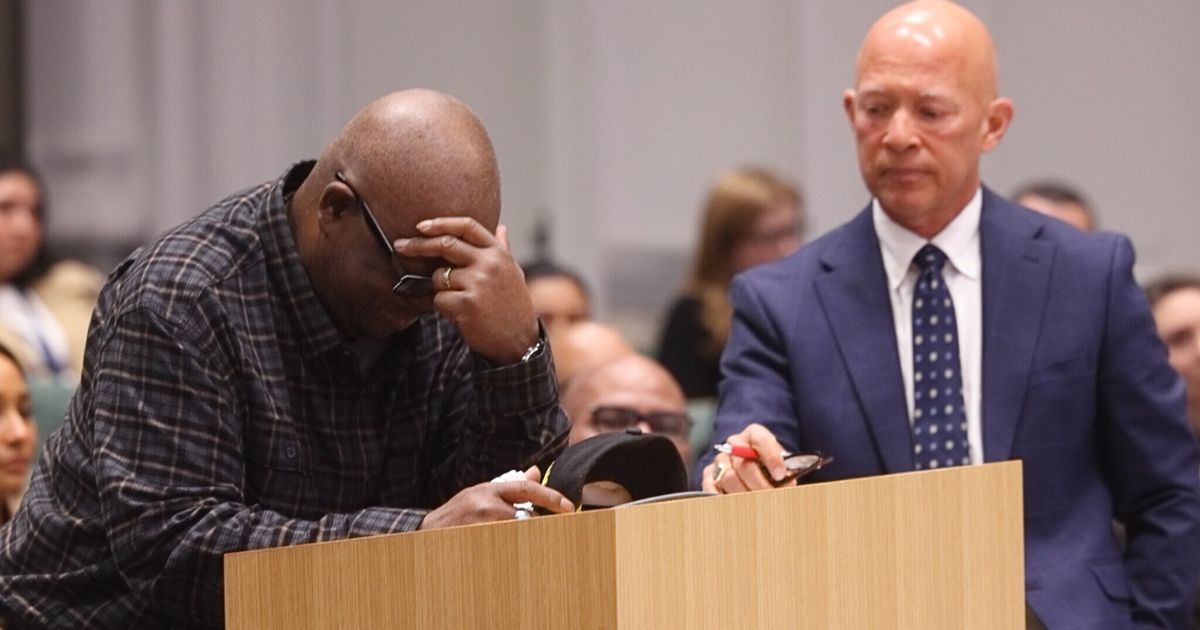
Walker’s son, Edward Smith, attended the hearing. So did Joseph Parker, the son of the woman Walker was accused of killing. The two men met for the first time that day and embraced afterward, photos released by the Dallas County District Attorney’s Office show.
Walker had a corroborated alibi.
On the night Parker was attacked in September 1953, Walker was at the hospital with his girlfriend as she went into labor with their only child. Ten witnesses later confirmed his presence there. His son was born just hours after the crime occurred, according to records reviewed by the Innocence Project.
History in Dallas this morning where county leaders are expected to pass a resolution exonerating Tommy Lee Walker who was executed in 1956 for a murder that evidence shows he didn’t commit. Walker’s now 72-year-old son addressed county commissioners and broke down while reciting… pic.twitter.com/uUxqjMTGNP
— J.D. Miles (@jdmiles11) January 21, 2026
Despite this, Walker was arrested months later after what court documents describe as an unsubstantiated tip. With no forensic evidence tying him to the crime, police relied almost entirely on a confession Walker later recanted.
“The only direct evidence connecting Tommy Lee Walker to this offense is a confession obtained through the use of coercive tactics,” the court declaration stated.
Walker was interrogated by Dallas homicide officials who threatened him with execution and falsely claimed they had evidence proving his guilt, according to reinvestigation findings. He signed two confessions. One contained factual errors. The second was altered to match details of the crime and was immediately withdrawn.
The case unfolded during a racially charged period in Dallas history, amid widespread fear of a so-called “Negro prowler.” Police detained and interrogated hundreds of Black men after Parker’s killing, court records show.
🚨Tommy Lee Walker was declared innocent by a Dallas court on Wednesday, 70 years after he was executed for the rape and murder of Venice Parker. The court said his 1954 conviction and 1956 execution were
profound miscarriagesThe eye witness should server 70 years too for lying pic.twitter.com/oSg9kWR92n
— Martin Luther king (@theViraldave) January 23, 2026
Walker was tried before an all-white jury, despite being entitled to a jury of his peers. Prosecutors withheld evidence that could have absolved him of the crime, and instead made inflammatory statements during trial, the court said.
The district attorney at the time, Henry Wade, later became known for a documented pattern of excluding nonwhite jurors. He personally told the jury he would “pull the switch” himself, a remark the court said would warrant a mistrial today.
Walker was convicted and sentenced to death in a matter of hours.
Dallas set to exonerate Tommy Lee Walker, who was wrongfully executed for murder 70 years ago despite *9* alibi witnesses saying he was with his pregnant girlfriend: https://t.co/vMUd1WmiXG
— Colin Miller (@EvidenceProf) January 20, 2026
“I feel that I have been tricked out of my life,” Walker said at sentencing. His final words before execution proclaimed his innocence.
At the January hearing, Smith testified about growing up without his father. “When I was in school, kids talked about their dads, and I had nothing to say,” he said in a statement. “This won’t bring him back, but now the world knows what we always knew.”
“I’m 72 years old, and I still miss my daddy,” he also stated.
Chris Fabricant, one of Smith’s attorneys, said the ruling acknowledged “the unspeakable burden” Walker’s family carried for decades and formally recognized that misconduct and racism led to the execution of an innocent man.
Dallas County officials described the declaration as a moral obligation, affirming that justice applies to the living and the dead alike.