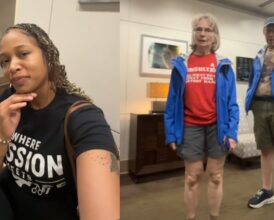


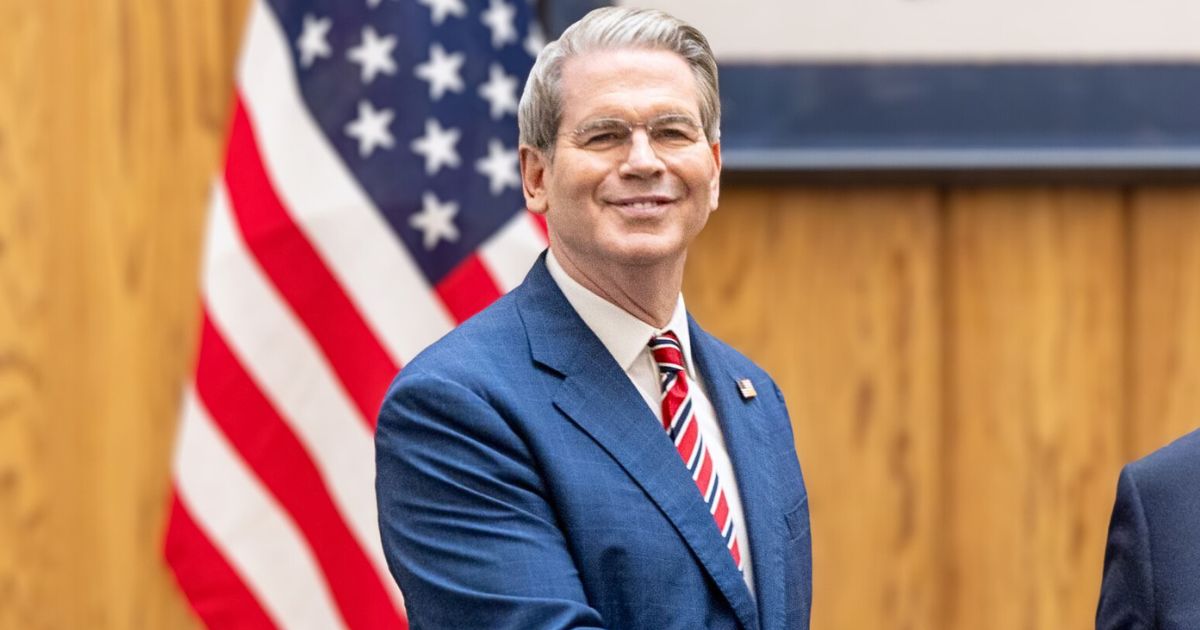
A quiet dinner in Washington, DC, turned confrontational this week after Code Pink activists approached Treasury Secretary Scott Bessent inside a downtown restaurant and publicly accused him of fueling global harm through US economic policy.
Video shared by Code Pink shows activist Olivia DiNucci standing near Bessent’s table, raising a glass in a mock toast and calling him out for what she described as “blood on your hands” over US sanctions and tariff policies, per Code Pink’s own statement and footage.
“So let’s give it up for the man who is eating in peace as people starve across the world based on his sanctions, which are economic warfare,” DiNucci said.
Scott Bessent getting some treatment….
Activists confronted US Treasury Secretary Scott Bessent at a Washington, D.C. restaurant, toasting him for “eating in peace as people starve across the world” under US sanctions.#Trump #USA pic.twitter.com/XMe4JwbUeX
— Mjrocksss (@Mritunjayrocks) December 19, 2025
In the clip, DiNucci tells Bessent that US-led economic pressure campaigns amount to “international economic war crimes,” referencing the human cost of sanctions, disrupted supply chains, and trade restrictions. Other diners appear visibly uncomfortable as staff and security move in.
According to Fox News, the confrontation escalated quickly, with activists cornering Bessent as they demanded accountability for policies they say disproportionately hurt civilians abroad. Bessent did not engage in a drawn-out argument and soon exited the restaurant.
Code Pink later confirmed DiNucci as the activist leading the interaction, saying the goal was to confront senior officials directly in public spaces where “policy makers can’t hide behind press releases,” according to the group’s website.
Treasury Secretary Scott Bessent claims that “Many of the exporters are eating the tariffs in terms of they’re lowering prices by as much or more than the tariffs.”
However, US import prices over the past year are flat, not down, according to Laura Curtis, writing in Bloomberg. pic.twitter.com/LJmA3HhSVU
— Lead-Lag Media (@LeadLagMedia) September 29, 2025
The incident spread rapidly online, amplified by clips posted to X and TikTok. Supporters praised DiNucci for what they called a direct and human challenge to economic power, while critics accused the group of harassment and theatrics.
Bessent responded hours later with a sharp remark of his own. According to the New York Post, the Treasury secretary brushed off the protest and said the restaurant experience was poor, adding that “the food wasn’t very good anyway.” The comment would quickly became part of the online backlash story.
The Daily Mail reported that Bessent appeared calm as he left, with sources close to the dinner saying the interruption caught staff and guests off guard but ended without physical confrontation.
Treasury Secretary Scott Bessent laughs and takes a video of a deranged leftist protesting outside the restaurant he’s dining at. 😭
Total patriot move. pic.twitter.com/A0phSfpxuY
— johnny maga (@_johnnymaga) November 21, 2025
At the center of the protest is a long-running argument made by Code Pink and similar activist groups. They say that sanctions, tariffs, and financial pressure can cause widespread civilian suffering, particularly in developing countries. DiNucci’s comments echo criticism previously raised by humanitarian organizations and some UN officials about the indirect effects of economic warfare.
However, under international law, “war crimes” are narrowly defined and typically relate to armed conflict, not trade policy. Generally, war crimes are classified sanctions and tariffs as political or economic tools, not criminal acts.
Code Pink has repeatedly challenged that distinction, arguing that intent and outcome matter more than legal categories. In its statement following the incident, the group said economic policies that “starve populations or destabilize societies” should be judged by their real-world effects, not their labels.
“Why does he keep doing this to himself? It’s like masochism.”@Timodc and @BillKristol on Scott Bessent’s latest attempt to cosplay as a soybean farmer. pic.twitter.com/ZteFFIXyu2
— The Bulwark (@BulwarkOnline) December 9, 2025
Bessent, who has defended tariffs and sanctions as tools to protect US interests and pressure adversarial governments, has not addressed DiNucci’s specific claims beyond his brief public response. The Treasury Department did not issue a formal statement following the confrontation.
The disrupted dinner highlights how economic policy has led to direct-action activism, with officials increasingly confronted outside traditional political venues. For DiNucci and Code Pink, the restaurant protest was part of a broader strategy to personalize policy decisions they say are often discussed in abstract terms.
For Bessent, it was an unexpected reminder that trade, tariffs, and sanctions are no longer just debated in hearing rooms or press briefings, but increasingly in public, unscripted spaces.