


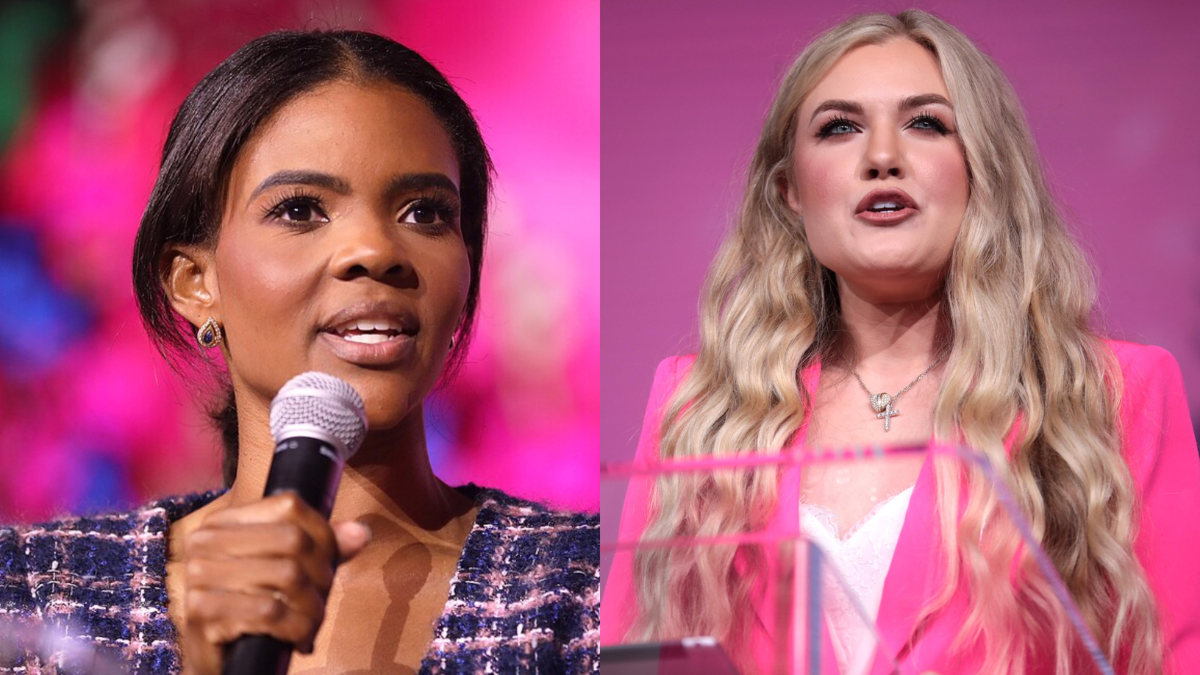
The camera doesn’t linger on Charlie Kirk. It lingers on Candace Owens and Erika Kirk, two women now locked in a very public argument over what grief should look like when the whole movement is watching.
In the now‑infamous clip, Erika Frantzve Kirk stands beside her husband’s open casket, sobbing, while someone close by films the scene vertically for social media. It is intimate and glossy at the same time — a private farewell staged in unmistakably public language. For some conservatives, it was moving. For many others, it felt like branding at a wake.
Erika Kirk postes Charlie Kirk DEAD in his casket. Reveals everything to the world. #charliekirk in his casket + more. pic.twitter.com/dWDJmDM2zy
— Trent Out Loud (@Trentoutloud) September 13, 2025
Candace Owens, never one to mute her instincts, landed firmly in the second camp.
The latest flare‑up began with a viral post on X, where one user imagined their own funeral and drew a line in the sand: “Alright, if I die, and my wife has her friend record her doing this over my casket for a social media moment, I hereby grant you permission to criticize her for it. Everyone was rooting for Erika Kirk and TPUSA after Charlie died. They are the ones who turned everyone off…”
The worst part is that it wasn’t her friend recording it. It was the head of fundraising at Turning Point USA. Erika did not bring a single personal friend or family member to Utah with her.
There is no amount of propaganda that will ever make that normal.
Mind you, the Vice… https://t.co/ZYkk2KS4yQ— Candace Owens (@RealCandaceO) February 16, 2026
Candace Owens — who has turned herself into a kind of self‑appointed ombudsman of the right’s treatment of Charlie Kirk’s death — quote‑tweeted and decided the original criticism didn’t go far enough. This wasn’t, she claimed, a shattered friend with an iPhone.
“The worst part is that it wasn’t her friend recording it,” Candace Owens wrote. “It was the head of fundraising at Turning Point USA. Erika did not bring a single personal friend or family member to Utah with her.”
That detail, if accurate, is doing a lot of work. “The head of fundraising” is not a neutral phrase; it conjures donor lists, strategy memos, the ever‑present need to keep the machine running. Candace Owens was tapping into an unease many on the right have been skirting around: the sense that even in death, Charlie Kirk is being processed through the apparatus he built.
She pressed the point harder a moment later. “There is no amount of propaganda that will ever make that normal,” she wrote, turning what some had defended as an unconventional expression of faith into, in her view, a calculated piece of political messaging.
🚨 WATCH HER FACE CLOSELY 🚨
The moment the reporter brings up Candace Owens, Erika Kirk’s entire expression shifts instantly.
What does her face tell you? pic.twitter.com/sAtSzOEIIr
— HustleBitch (@HustleBitch_) December 12, 2025
Candace Owens also argued that Erika had other options and turned them down. “Mind you, the Vice President offered to fly people in aboard Air Force 2,” she claimed. “Charlie’s entire family flew in. Erika chose to be comforted by Stacy Sheridan, recording her crying.”
That invocation of the vice president is not a throwaway flourish. It underlines how thoroughly Charlie Kirk’s death has become a political event — and how, even at a funeral, proximity to power and content strategy hover over the widow’s shoulder.
Once Candace Owens weighed in, criticism of Erika Kirk snowballed across right‑wing social media. Whatever deference people usually extend to a new widow is eroding in real time.
“Yeah… that’s what makes it feel off,” one user wrote. “When the people around you in a raw moment are political staff and donors instead of actual friends or family, it stops feeling personal and starts feeling staged.”
Another was even more blunt: “That’s so sad and weird. Her own ‘support’ was a fundraising boss filming her tears instead of real friends or family. Even the VP offered flights, but she went solo. No spin can make that feel normal or healthy.”
Erika Kirk SLAMS deranged conspiracy theorist Candace Owens:
“This is a mind virus. Yes, I believe in our judicial system, I do. We have a hell of a team working on this, excuse my French, but this is not okay”
pic.twitter.com/MK4jmCaTwK— Republicans against Trump (@RpsAgainstTrump) December 10, 2025
“Embarrassing” shows up again and again in replies. So do words like “staged” and “for show.” One commenter distilled the discomfort into a single line: “Mourning shouldn’t need branding, lighting, or a social media handler.”
Candace Owens herself has labeled the whole thing “propaganda,” which is a loaded charge even by her volcanic standards. Coming from someone who once thrived in the same ecosystem as Turning Point USA, it stings more than if it came from a liberal critic. This is family business, aired in public.
And underneath the sniping is a broader, less petty anxiety. People are exhausted by politics as performance. To see a young widow weeping over an open casket, with a professional staffer apparently behind the lens, feels to many like the logical — and nauseating — endpoint of a culture that monetizes every emotion it can reach.
As ugly as it is, the Candace Owens–Erika Kirk feud didn’t materialize out of nowhere. Since Charlie’s sudden death, Erika has become the public face — and, controversially, the chief executive — of Turning Point USA almost overnight. That meteoric elevation means nearly everything she does is now read as both personal and political.
Critics on the right have been cataloguing what they see as “red flags” in her public mourning. A heavily produced eulogy that involved fireworks. Polished stage sets. Now, the casket video. Each episode becomes another tile in a mosaic that, for detractors, looks less like raw loss and more like a rebrand.
Erika Kirk confirms Candace Owens was right “the night everything happened” pic.twitter.com/N9jvZxx6aQ
— Sword Truth (@SwordTruth) February 7, 2026
The scrutiny has veered into the domestic, too. Online sleuths have compared two images from what appears to be the same office used on The Charlie Kirk Show. In an older shot, a framed wedding photo of Charlie and Erika sits prominently on a shelf behind him. In a newer image with Erika in the chair, the frame is gone. Some viewers also noticed she wasn’t wearing her wedding ring.
On their own, those details prove nothing. Anyone who has walked through grief knows how strange and nonlinear it is; sometimes you take a ring off for an hour just to breathe. But stitched together with the casket footage and Candace Owens’ drumbeat of criticism, they’re being woven into a darker story: that Erika shifted almost instantly from grieving wife to polished power broker, and invited the cameras along for the pivot.
Candace Owens has said openly that Erika “should never” have become Turning Point USA’s CEO “overnight,” arguing that the role muddies the line between widow and political operator. She has also knocked Erika for not throwing herself into murder conspiracies around Charlie’s death that some on the right obsess over, faulting her for treating those theories as distractions rather than a crusade.
Strip away the personalities, and what’s left is an uncomfortable truth about the movement Charlie Kirk helped build. The same social media machinery that amplified his rise is now chewing over his funeral, frame by frame. A man who urged young conservatives to live online is being mourned, marketed, and fought over in the same feeds he once dominated.
In an open letter to Erika Kirk, Candace Owens says that despite knowing how much she genuinely cared for Charlie Kirk, Erika “allowed” and “authorized” influencers to try and discredit her. “Every evil thing done to me was done with your blessing,” she says, “It was so cruel,… pic.twitter.com/AjSrx7nxyQ
— Ground Intel (@TheGroundIntel) February 6, 2026
Whether Candace Owens is bravely calling out something rotten or simply escalating a feud for clicks depends largely on where you already stand. But one thing is hard to deny: when a widow’s farewell is captured by her late husband’s fundraiser and then litigated in quote‑tweets, the border between public life and private grief doesn’t just blur — it almost disappears.