



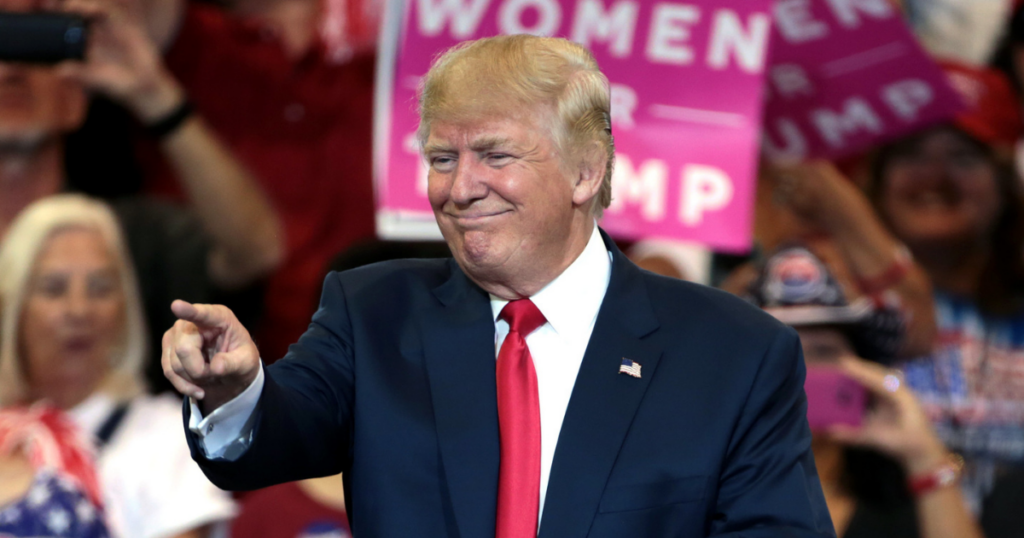
The House gym is not glamorous. It smells like disinfectant and ambition, the kind of place where lawmakers in branded quarter-zips do the grim, repetitive work of trying to feel in control of something—anything. And according to Rep. Eric Swalwell, it’s also where the Republican Party’s real conversations about President Donald Trump happen, away from microphones, away from the cameras, away from the public performances that have become their default setting.
Swalwell, a California Democrat with a talent for needling the GOP where it hurts, says Republican lawmakers “quietly trash” Donald Trump during workouts, then snap back into loyalist mode the second they step out of that room. He compared the routine to WWE: personas shifting, rhetoric tightening, spines softening—politics as scripted theater with a weight rack in the background.
It’s an ugly claim, but not a shocking one. What makes it sting is how plausible it sounds in a second Donald Trump term that has turned fear into a governing tool—fear of being targeted, fear of being primaried, fear of being turned into tomorrow’s villain on a social feed that rewards cruelty and punishes nuance.
FACT: DONALD TRUMP IS IGNORANT BULLY!
TRUTH: MAGA KNOW BETTER.
Why?
Because All Bullies In My Life:
“*KNEW BETTER*”
It’s HATE, Not KNOWLEDGE That DRIVES BULLIES.#KNOWLEDGEIsNOTMAGAsBase
HATE Is Base Of MAGA.
HATE Is Base Of MAGA.
World Leaders Know Donald Trump Ignorant. pic.twitter.com/SaVsWMtPbl
— Dr. Tom Martin (Ph.D.) (@DrTomMartinPhD) February 4, 2026
Swalwell’s account landed via TMZ, which is an absurd sentence on its face—congressional dynamics delivered with a tabloid wink—but the details were specific enough to travel. He said these gym confessions happen “more often than people think,” and that Republicans privately vent because they’re “too scared” to say it publicly, worried Donald Trump will “clap back with threats.”
And, frankly, you don’t have to like Swalwell to recognize the anatomy of the behavior. In public, many Republicans treat Donald Trump as inevitable, as if opposing him is not just politically risky but somehow unnatural. In private, they allegedly revert to the language most politicians actually speak: frustration, resentment, and the occasional burst of honesty—always with a quick glance over the shoulder.
The point isn’t whether every last GOP member is secretly complaining between sets. The point is the incentive structure. If you believe your political survival depends on Trump’s approval—or at least on avoiding his wrath—then silence becomes a strategy and flattery becomes a shield.
Even as a Republican, l see Trump as a cruel, narcissistic, evil man. The saddest thing of all, is l know my party’s elected officials see it too. But, power, greed & ambition took away any decency they had. Watching them embarrass themselves questioning Jack Smith was a new low! pic.twitter.com/phQak2JHuh
— REPUBLICANS AGAINST MAGA (@michaelt5656) January 23, 2026
There’s also a more cynical layer here, one that has nothing to do with gym gossip and everything to do with self-preservation. Republicans don’t uniformly stay quiet. They pick their moments, and those moments often correlate with hometown economics.
Consider the flare-up over Donald Trump’s comments suggesting the U.S. could buy beef from Argentina. Sen. Deb Fischer, a Nebraska Republican, went public with an unusually direct rebuke on X: “Bottom line: if the goal is addressing beef prices at the grocery store, this isn’t the way.”
Her reasoning wasn’t abstract. She argued that “government intervention in the beef market will hurt our cattle ranchers,” warned that Nebraska ranchers “cannot afford to have the rug pulled out from under them,” and urged the administration to focus on trade deals that benefit U.S. producers. That’s what an actual constituent tether looks like: not ideology, but an industry with names and mortgages attached.
Then there’s the matter of Donald Trump allegedly seeking $230 million from his own Justice Department —a report that, if nothing else, captures the strange moral geometry of this era. When Speaker Mike Johnson was asked about it, he didn’t roar with outrage or demand answers; he played dumb, then leaned into sympathy. “I know he believes he’s owed that reimbursement,” Johnson told reporters, adding that he’d “just read it.”
Don’t be surprised if you see swing district Republicans running away from Donald Trump in 2026. It’s already happening on healthcare, Venezuela and the Epstein files. Trump is so unpopular that even Republicans are shunning him. pic.twitter.com/LWnWXvSDlH
— Meghan Hays (@meghan_hays9) January 23, 2026
This is the part that can’t be ignored: the contrast between how quickly some Republicans can find their voices when a policy threatens their voters’ bottom lines, and how carefully they tiptoe when the story is about Donald Trump himself—his grievances, his appetites, his desire to turn the machinery of government into a personal claims office.
Swalwell’s gym story, in other words, isn’t really about dumbbells. It’s about the split-screen reality of today’s GOP: private doubt, public devotion. And the uncomfortable implication that a lot of elected officials—people who love to tell the rest of us to be brave—have built careers on refusing to do the same.
Inquistr has reached out to President Donald Trump’s reps for comments.


