



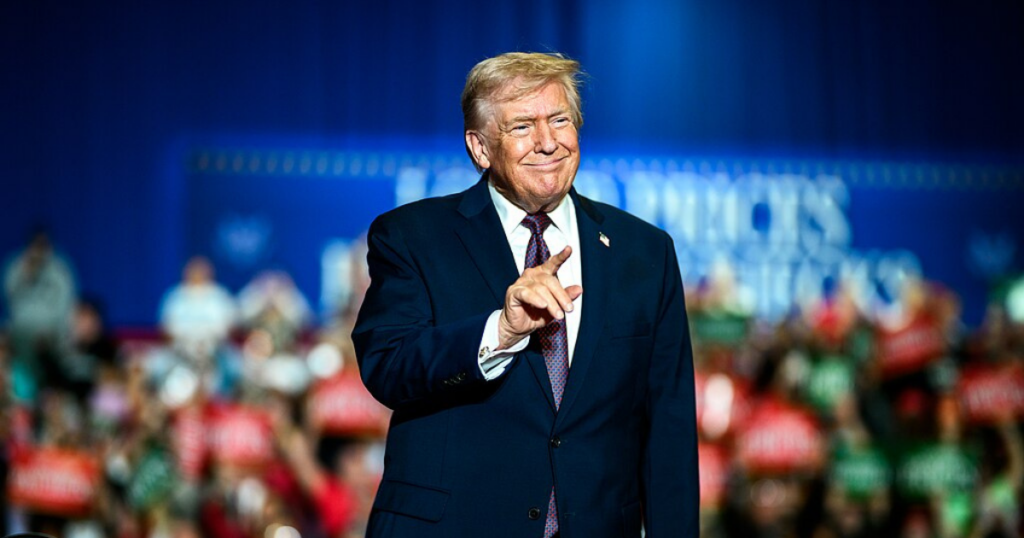
When President Donald Trump’s hands appeared marred by unexplained bruises during high-profile events, the White House dismissed them as minor irritations from relentless handshaking. But a recent Wall Street Journal profile has peeled back the layers, revealing a far more defiant—and potentially risky—medical reality.
At 79, the oldest president in American history is not just weathering the inevitable toll of age; he’s actively defying it, ignoring doctors’ advice in favour of his own “very good genetics.” This candid admission raises uncomfortable questions about health transparency at the highest levels of power.
Trump’s most startling confession centers on his daily 325-milligram aspirin regimen—a dose his physicians recommend reducing, but one he refuses to alter after 25 years.
“They say aspirin is good for thinning out the blood, and I don’t want thick blood pouring through my heart,” he told the Journal. “I want nice, thin blood pouring through my heart. Does that make sense?” The result? Prominent bruising that now requires “makeup that’s easy to put on, takes about 10 seconds” to conceal.
The Wall Street Journal publishes an explosive story on DOZY DON’S Trump’s failing health with stunning revelations about his disgusting diet and extremely dubious medical choices! pic.twitter.com/auP40wgeiq
— BigDaddy (@strujillo075) January 2, 2026
Dr. Jonathan Reiner, a former cardiologist to Vice President Dick Cheney and a CNN medical analyst, called the explanation “nonsense.” Speaking on CNN’s The Lead with Phil Mattingly, Reiner emphasized that anticoagulants like aspirin don’t literally “thin” blood; they prevent clotting.
“That actually makes nonsense,” he said. “It’s not like changing something from gumbo to chicken soup.” For those over 70, the risks of significant bleeding outweigh any primary prevention benefits, he added.
This revelation ties into a series of concerning health episodes. In July 2025, Trump visited Walter Reed for “mild swelling” in his lower legs, diagnosed as chronic venous insufficiency—a common but telling condition where veins struggle to return blood to the heart.
Doctors prescribed compression socks, but Trump ditched them after a trial run. “I didn’t like them,” he admitted plainly.
The bruising made headlines at last year’s Republican National Convention when Attorney General Pam Bondi‘s ring nicked his hand during a high-five, drawing blood. “The ring hit the back of my hand, and, yes, there was a slight little cut,” Trump recounted.
The people who covered up Biden’s cognitive impairment want you to be very concerned about Trump’s health pic.twitter.com/tKeVTTObRd
— Breitbart News (@BreitbartNews) January 2, 2026
White House physician Sean Barbabella attributed it to “minor soft tissue irritation from frequent handshaking and the use of aspirin,” a “benign side effect.”
Yet, the picture grows murkier. Trump’s April Walter Reed physical was billed as routine. Still, an October round of “advanced imaging”—later revealed as a cardiac CT scan, not the MRI he initially claimed—suggests acute concerns arose.
“Something happened in the fall,” Reiner noted, questioning the euphemistic language. This contradicts 2018 findings from Dr. Ronny Jackson, who reported elevated coronary calcium scores indicating atherosclerosis.
Aides report him nodding off in cabinet meetings and raising voices to compensate for hearing issues—claims Trump denies, crediting his stamina to superior genes. “Genetics are very important,” he insisted. “And I have very good genetics.” Late-night texts reviewing Fox News segments underscore his irregular sleep patterns.
For the American public, these disclosures transcend celebrity health gossip. They force a reckoning with what fitness for office looks like at an advanced age, especially when the leader opts for superstition over science.
Trump regrets publicizing his scans—”In retrospect, it’s too bad I took it because it gave them a little ammunition”—but transparency is the presidency’s burden. As bruising hands become a metaphor for a leader’s vulnerabilities, voters must decide if defiance equals strength or recklessness.