



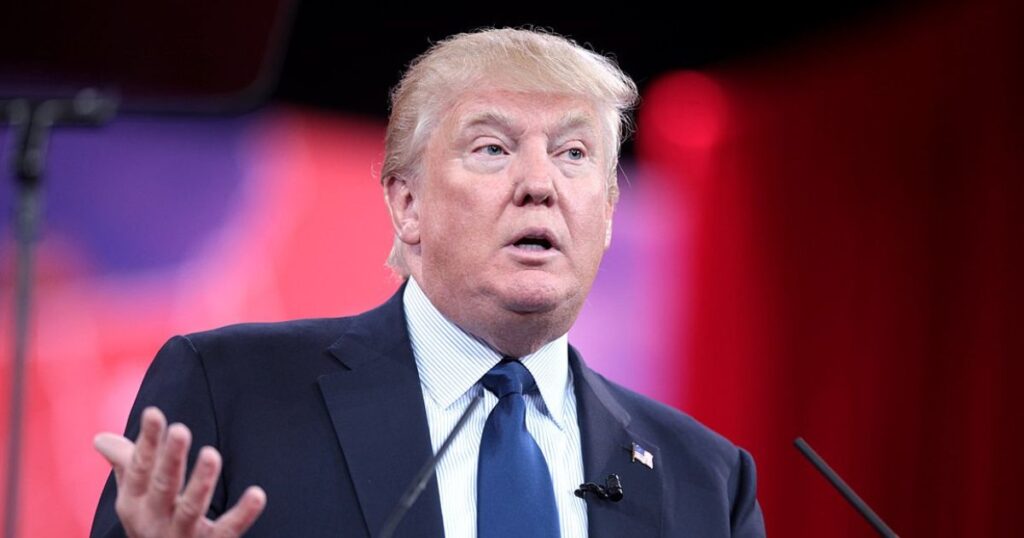
President Donald Trump returned from his controversial appearance at an NFL game on Sunday and immediately weighed in on the Senate’s push to end the 40-day government shutdown. Speaking to reporters outside the White House, Trump sounded optimistic as he mentioned it “looks like we’re getting very close” while talking about the shutdown ending.
His comment came just as the Senate prepared for a crucial vote later that evening. According to Politico, the agreement already had “more than enough” Democratic votes to move forward.
Senate Majority Leader John Thune sought to reassure Democrats by promising a December vote to extend key health care subsidies under the Affordable Care Act before their expiration at year’s end. That pledge had been the main hold-up preventing Democrats from agreeing to a deal. But just before the vote, several leading Democrats warned that Thune’s promise was not ironclad and pressed their colleagues to remain firm until Republicans formally agreed to extend the health care credits.
Trump says that the democrats are starting to realize that there will be no money for illegals/prisoners, and that that the shutdown is likely coming to an end.
“You’ll know very soon.”
— Clandestine (@WarClandestine) November 10, 2025
House Minority Leader Hakeem Jeffries made his position clear in a strongly worded statement: “We will not support spending legislation advanced by Senate Republicans that fails to extend the Affordable Care Act tax credits. We will fight the GOP bill in the House of Representatives, where Speaker Mike Johnson will be compelled to end the seven-week Republican taxpayer-funded vacation.”
Sen. Bernie Sanders joined the chorus of frustrated Democrats, condemning what he described as the dire consequences of letting the health care subsidies lapse. Moments before the vote began, Sanders warned that millions of Americans could face premiums that “double, triple, or even quadruple” without an extension of the subsidies.
Despite repeated calls for him to participate in the talks, Trump stayed away from the negotiations over the past several weeks. Earlier in the day, Trump appeared more interested in celebrating military pageantry than addressing the shutdown’s human toll.
When asked about the impact on federal workers and SNAP recipients, he did not address them at all. Instead, he praised the military flyover he witnessed at the football game, calling it “the greatest flyover ever.” He added, “The country is doing well,” before quickly walking away from reporters.
Trump is absolutely DESPERATE to turn around his PLUMMETING approval rating. SAD!
He is the first sitting president to attend a regular-season NFL game since 1978.
He appeared at the Lions vs Commanders game and got massive boo’s and jeers.
Trump is done. pic.twitter.com/MpokggSZld
— MAGAtard 🇺🇦🇨🇦 🇦🇺 🇬🇧 🇺🇸 (@RealMAGAtard) November 10, 2025
Meanwhile, California Governor Gavin Newsom blasted the tentative agreement in a fiery post on X. “Pathetic. This isn’t a deal. It’s a surrender,” he wrote. “Don’t bend the knee!”
Trump’s aides, however, continued their aggressive campaign to pin blame for the shutdown on Democrats. Since October, the administration has pushed anti-Democrat messaging through official channels, an approach critics say may have run afoul of the Hatch Act. Reports surfaced that government employees were pressured to insert partisan talking points into their email signatures and federally funded videos shown in U.S. airports.
The shutdown has quite evidently affected the Republican vote. Several state and local elections last week saw the Republican candidates lose. Democrats scored major victories in Virginia, New Jersey, and California, while New York City voters overwhelmingly elected Democratic socialist Zohran Mamdani as mayor despite pointed threats from Trump during the campaign.
Adding to the turmoil, the Trump administration ordered states to “undo” Supplemental Nutrition Assistance Program (SNAP) benefits that had been issued under court orders. The directive followed a Supreme Court decision that stayed lower court rulings requiring those payments. The move affects roughly 42 million Americans who rely on the program, according to the Associated Press.