Trump threatens 'tremendous tax' on companies building data centers abroad
Trump gave no details on how he would impose the tax or what legal authority he would use to penalize companies.
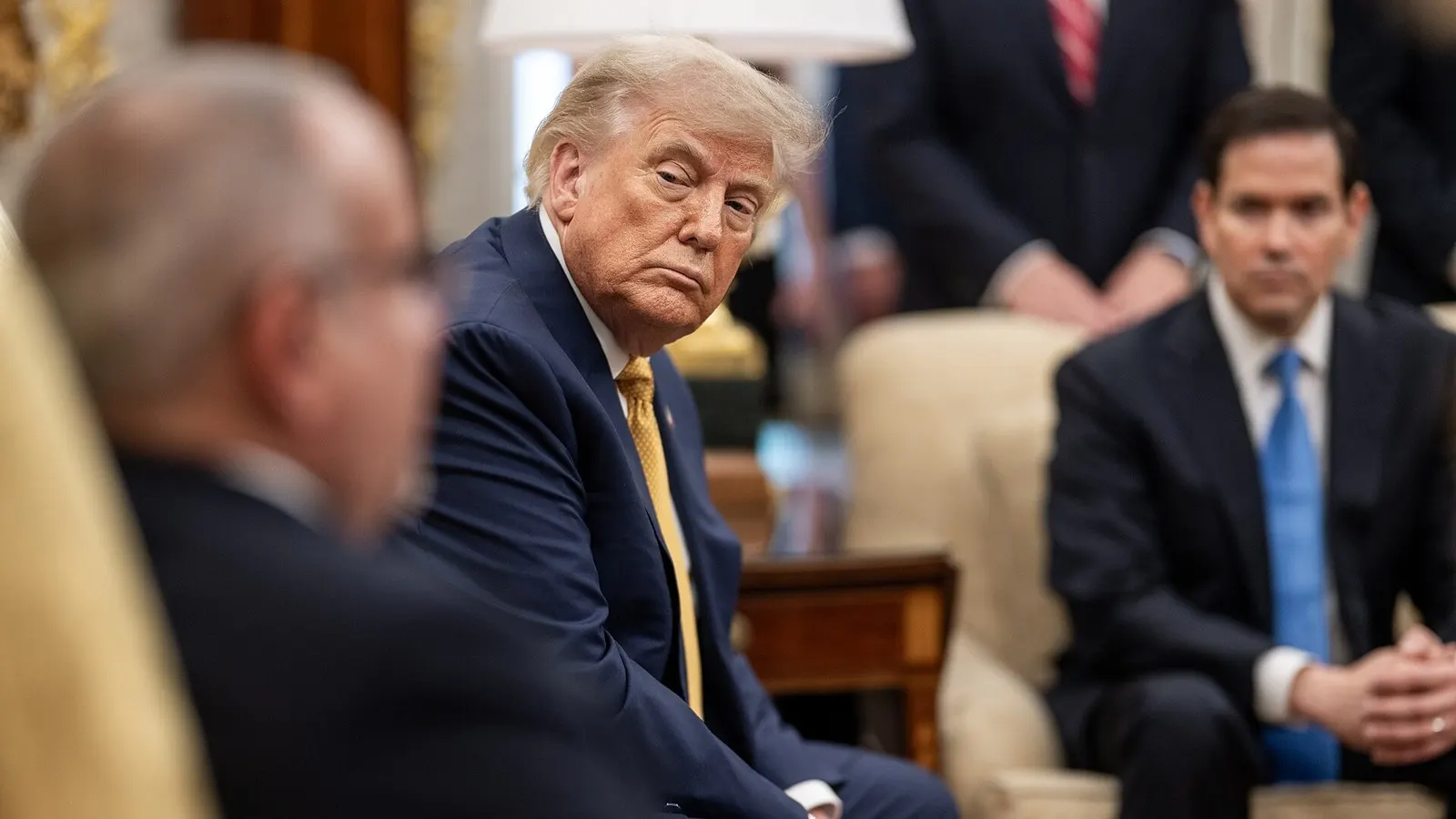
President Donald Trump said Friday that U.S. companies constructing artificial intelligence data centers overseas will face a "tremendous tax," a plan he said he had not yet shared with his officials.
At a White House press conference, Trump appeared alongside Vice President JD Vance and Secretary of State Marco Rubio. "I haven't even said that to my people, but I'm telling them now," he said, adding that "many of them are here."
Trump gave no details on how the government would impose the tax or what legal authority it would use. Microsoft, Alphabet, Amazon and Meta already run data centers overseas, and Oracle has built facilities in foreign countries too.
Trump outlined a tax, rather than a complete ban on overseas construction. "We're not going to allow companies to build data centers in other countries," he said. "If they do that, they can, but we're going to put a tremendous tax on them," he added.
China cited as reason
"We're not allowing data centers to go into other countries because China will take all of them, and we're not allowing that to happen," Trump said.
"You know, they allowed that to happen with chips and everything else, and it was very destructive to our country," Trump said. "It's where we started going behind," he said. He added, "Whoever wins SI wins."
A day before those remarks, Trump met Chinese President Xi Jinping and Russian President Vladimir Putin at the Asia-Pacific Economic Cooperation summit in Shenzhen, China. Trump said Xi "congratulated me on how well we're doing" in artificial intelligence, which he calls "super intelligence," a term he said Xi prefers too.
On Monday, the Commerce Department restricted remote access to advanced U.S. computing chips and servers, seeking to limit China's use of them in training AI models.
Trump left open whether he would ask Congress for approval or rely on existing executive powers to penalize companies building abroad, Axios reported. Congress has constitutional authority over federal taxation.
According to Axios and CNBC, companies often need data centers overseas to provide reliable, responsive service to nearby clients and comply with laws requiring local data processing.
Voters wary of data centers
Trump urged Americans to accept data centers locally and seek payments from developers. "Make them pay you, make them pay your community, but don't shut them off," he said.
Of the companies, he said, "They have plenty of money." He said the facilities were "making so much money they don't know what to do with it," and predicted that expanding them would reduce Americans' costs and taxes.
A CNBC All-America Economic Survey found 64% of registered voters opposed an AI data center within 10 miles of home, while 13% would support one.
Expansion of the facilities became a midterm election flashpoint weeks before Trump's remarks, as voters raised environmental and financial concerns. Anger over data centers and higher electricity prices helped elect a wave of Democrats who pledged to restrict them, The Associated Press reported. States and cities are imposing moratoriums and restrictions on applications for new facilities.
Google and Meta officials told the AP they are working to address mistrust by being more transparent with communities where they want to build.
The Verge reported that Trump's promise could be harder to fulfill once a Democratic-majority Congress is sworn in within a couple of months.
On Thursday, the Republican-led Senate passed bipartisan legislation to accelerate permitting reviews for power plants, transmission lines and other energy infrastructure. The bill would speed up major energy projects and require data centers to cover the cost of their energy use and transmission upgrades.
"It's going to cause tremendous amounts of new building," Trump said of the bill, which now goes to the House.
Sources
- The Verge: Trump threatens ‘tremendous tax’ for moving AI data centers outside the US
- Axios: Trump floats major tax on U.S. companies constructing data centers overseas
- CNBC: Trump vows to stop U.S. companies from building data centers abroad, threatens 'tremendous tax'
- AP News: US tech companies that build AI data centers in other countries will be penalized, Trump says
- news.bloomberglaw.com: Trump Threatens to Tax Firms Building Data Centers Abroad (1)