



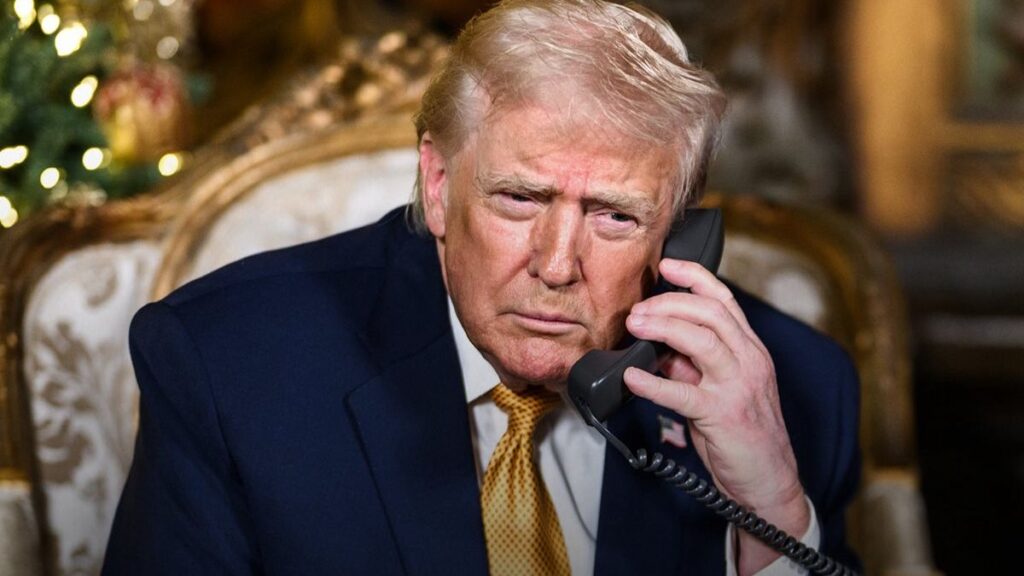
President Donald Trump set aside a plan requiring U.S. banks to collect customers’ citizenship information after Wall Street firms and community lenders opposed the idea, according to reports released on Friday.
The measure, which had been discussed for weeks, would have linked banks more closely to the administration’s immigration enforcement by requiring new customer documentation beyond current anti-money-laundering regulations.
The Washington Post reported that administration officials had considered an executive order that could have mandated both new and existing bank customers to verify their citizenship with documents like passports. The Daily Beast, citing the Post and sources familiar with the discussions, reported that the proposal was dropped after bank executives indicated it would be difficult to manage and could exclude millions of people from the financial system.
Under current “know your customer” rules, banks typically collect a customer’s name, date of birth, and address, often verified with a driver’s license or a similar form of ID. The proposed order would have required proof of citizenship, which industry officials warned would create additional compliance burdens and involve immigration enforcement in regular banking practices.
Exclusive: The Trump administration has delayed an executive order that could have required banks to collect and report more information on the immigration status of their customers, after Wall Street and small community lenders pushed back on that plan.https://t.co/37wWkHxRYR
— The Washington Post (@washingtonpost) March 20, 2026
The practical challenge for lenders was clear: many Americans do not have passports. State Department data shows that 27.3 million passports were issued in fiscal 2025, up from 24.5 million in fiscal 2024, while nearly 170 million valid U.S. passports were in circulation as of early 2025. This suggests that a significant number of Americans still do not have one. Bank industry officials contended that a system based on passports could prevent lawful customers from opening or keeping accounts.
The proposal had already faced backlash when it first emerged in February. The Post reported then that officials were considering whether banks should gather citizenship information from all customers, both new and existing, as part of a broader immigration agenda. Critics argued that this approach might turn the banking system into a tool for political enforcement rather than its intended purpose.
Jeremy Kress, an associate professor of business law at the University of Michigan, told The Washington Post last month, “This is a way to weaponize the banking system to achieve political ends.”
Jonathan Gould, the comptroller of the currency, had previously dismissed concerns about the workload the policy would create for banks. During his Senate testimony in late February, he stated, “I think the additional burden would be minor.”
The Trump administration is weighing a new requirement for US banks to verify citizenship information of current and future customers as part of the president’s aggressive immigration crackdown, sources told CNN. https://t.co/ktDS6fhSyf pic.twitter.com/RAAj0tqSzx
— CNN (@CNN) February 25, 2026
That viewpoint did not resonate with the industry. Banking groups and compliance experts had a different perspective. According to American Banker, many in the sector welcomed the White House’s decision to drop the draft order. They argued that the proposed citizenship checks would have added significant operational strain and possibly driven some customers out of the traditional banking system entirely.
Even a scaled-down version, which would have applied only to new customers, still faced opposition from lenders, as reported by The Daily Beast.
The White House informed The Washington Post that it had worked on a draft but emphasized that the idea of requiring banks to audit existing customers was not seriously considered.
No executive order has been issued. Reports on Friday indicated that the idea might resurface in a narrower form, but for now, the administration has stepped back after an uncommon clash with an industry that argued the plan would be costly, disruptive, and challenging to enforce.