



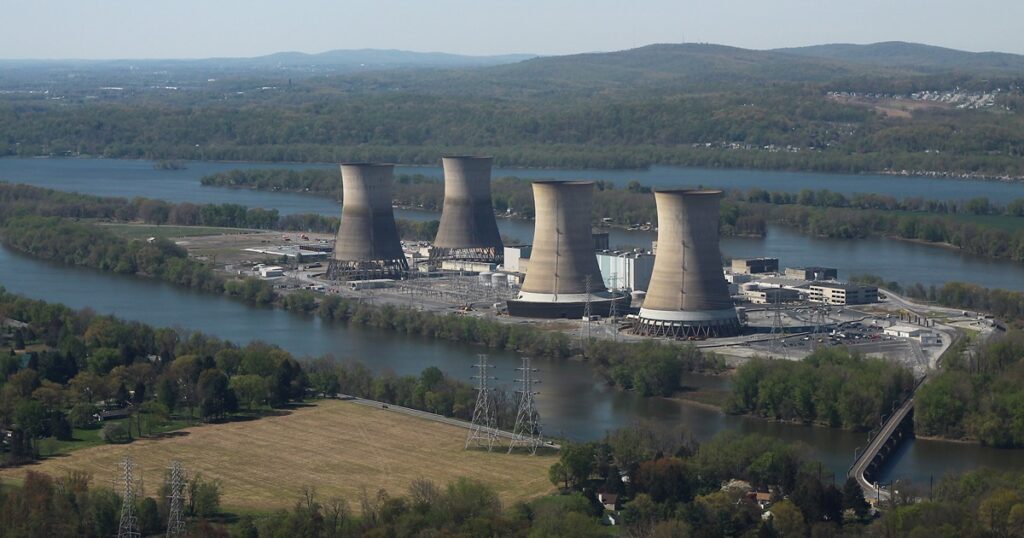
The U.S. Department of Energy announced that it will loan $1 billion to help restart the unit at Three Mile Island in Pennsylvania — a plant that has been offline since 2019. According to ABC News, the reactor’s owner, Constellation Energy, says the facility will supply power under a 20-year contract with Microsoft and could be back online by 2027.
Constellation estimates the cost of the project at around $1.6 billion and says the federal loan under the Trump administration will help lower financing costs and draw private investment. Datacenter Dynamics reports that Greg Beard, head of the DOE’s Loan Programs Office, said the funding “will lower the cost of capital and make power cheaper for those PJM ratepayers.”
The 835 MW nuclear reactor has been renamed the Crane Clean Energy Center. https://t.co/N0ISFACvYx pic.twitter.com/lbl9jMTSB7
— Interesting Engineering (@IntEngineering) November 19, 2025
The plant in question, often still referred to by its old name, was the site of a serious nuclear accident in 1979. Unit 2 melted down, and though no major casualties occurred, the event left a lasting mark on U.S. nuclear history. Today, the focus is on Unit 1, which was shut in 2019 for economic reasons and is now being renamed the Crane Clean Energy Center.
When the loan was announced, Energy Secretary Chris Wright said, per The Guardian, “Constellation’s restart of a nuclear power plant in Pennsylvania will provide affordable, reliable, and secure energy to Americans across the Mid-Atlantic region. It will also help ensure America has the energy it needs to grow its domestic manufacturing base and win the AI race.”
U.S. Backs $1 Billion Loan to Restart Three Mile Island Nuclear Plant in Pennsylvania – WSJ https://t.co/st6MBjzDyv
— PGG (@PilarGGranja) November 18, 2025
From a practical point of view, this is a big deal. The reactor is rated at about 835 megawatts — enough to power the equivalent of roughly 800,000 homes.
And with Microsoft’s data centres hungry for stable, clean energy to support artificial intelligence infrastructure, the timing seems deliberate. In 2019, Constellation and Microsoft have signed a 20-year purchase agreement for the power that it needs generated.
As Beard stated, “What’s important for the [Trump] administration is to show support for affordable, reliable, secure energy in the US.”
Based Microsoft just signed a 20-year deal to revive Three Mile Island’s nuclear power plant by 2028 to provide 837MW of power for AI data center needs pic.twitter.com/GbShNIXZMI
— NIK (@ns123abc) September 20, 2024
However, there are still concerns about the deal. While the federal loan and the Trump administration supports this nuclear revival, critics point to the fact that nuclear plants carry risks around waste disposal, regulatory delays, and high upfront costs. The restart will need approvals from the U.S. Nuclear Regulatory Commission and other state permitting bodies.
Local communities and watchdogs are also watching closely. Some residents living near Three Mile Island recalled the 1979 incident and are nervous about a restart turning into another problem. On the flip side, supporters argue the project will create jobs, strengthen the grid and boost the local economy.
The average U.S. nuclear reactor is 42 years old
• Oldest: Nine Mile Point Unit 1 (NY), operational since 1969
• Newest: Vogtle Unit 4 (GA), began service April 29, 2024
• Vogtle Unit 3 started in July 2023
• NRC licenses reactors for 40 years, extendable up to 80 years… pic.twitter.com/MtDpbcbkXu
— DA Sails (@da_sails) November 8, 2025
The Trump administration is betting big on nuclear again, not just for clean energy but to support the rise of AI and big data.When you hear about a $1 billion loan to bring back a reactor that powered hundreds of thousands of homes, there’s been a shift in the framework. It’s tech, climate, jobs and national strategy rolled into one.
In short, the restart of Three Mile Island is more than just about flipping a switch. It’s about how America plans to power its future — and whether that future will include nuclear energy back in center stage.


