

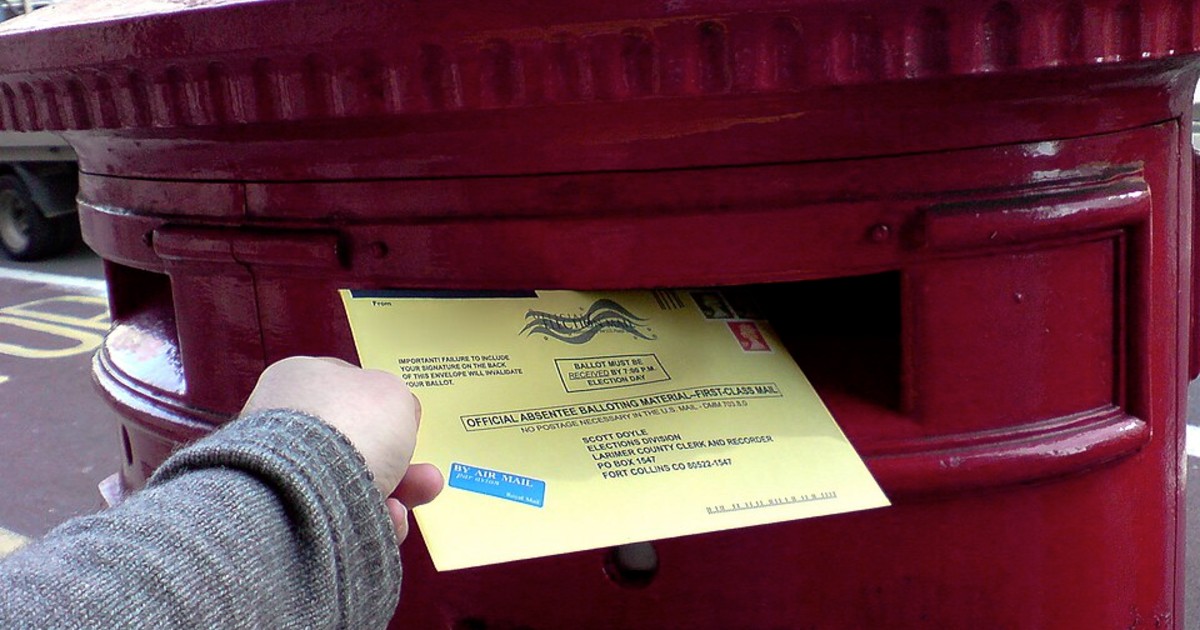
The U.S. Supreme Court will settle the issue for once and for all about whether states may count mail-in votes that arrived after election day.
Millions of Americans make their mark on ballots that are then mailed in. They rely on a system where they can cast their vote safely and on time. However, rules differ for various states.
According to CNN, the majority of states only count ballots that are received by Election Day. Only 15 states, including the hotly-contested Nevada, allow voters’ mail ballots to be counted after Election Day.
A Republican-led lawsuit is asking the Supreme Court to decide whether states can count ballots that arrive after Election Day but were postmarked before it. And in this case, it’s Mississippi’s laws that have the lawmakers in a frenzy.
The Magnolia State first allowed postal votes, postmarked by election day, to be valid as long as they were received within five days of the vote. It was introduced during COVID-19 but was later officially adopted as part of the law.
Mississippi justifies their practice by saying, “Voters make that choice by casting – marking and submitting – their ballots by election day. The election has then occurred, even if election officials do not receive all ballots by that day.”
However, the Republican National Committee point out that the votes need to be received by election day. However, some states, like Mississippi “have deviated from that practice by permitting at least some ballots to be received after election day.”
Now, CBS News notes that legislators are trying to define the meaning of “Election Day.”
Mississippi officials also point out, “Less than 18 months remain before the next federal election, and state electoral processes start much sooner.”
Report: The Supreme Court will decide if federal law prohibits states from counting the mail-in ballots that arrive after Election Day pic.twitter.com/p4xpNAWdfX
— The Calvin Coolidge Project (@TheCalvinCooli1) November 10, 2025
States need to know whether federal law permits post-election-day ballot-receipt laws, and thus whether they must change their laws to comply with federal law or whether they may change their laws on policy grounds. The stakes are high: ballots cast by, but received after, election day can swing close races and change the course of the country.”
Voting by mail has becoming increasingly popular since COVID, so it is very important to have clearly defined rules about the practices. Democracy Docket reported that the official federal Election Administration and Voting Survey 2024 Comprehensive Report revealed that over 100,000 ballots were rejected for arriving too late.
Late ballots have become a lifeline for voters, especially during tight elections. Disqualifying them could suppress votes. However, it could also be argued that counting late ballots opens the door to fraud.
President Donald Trump has made no secret of his dislike for mail-in votes. Per BBC, he has said, “mail-in ballots are corrupt” and that it was “the only way” Democrats could “get elected.” This is despite the fact that mail-in ballots helped him to win the 2024 elections.
“This is about ensuring every legal vote counts and every illegal vote does not,” said one Republican election lawyer involved in the case. Meanwhile, voting rights groups caution that ruling against late ballots could tilt elections unfairly.
Social media is buzzing. Hashtags like #EveryVoteCounts are trending as voters debate what the ruling could mean for 2026. People are genuinely confused, unsure if their ballots will even be counted.
Voters watching this unfold are anxious. Many fear their ability to participate fairly in elections could be threatened. With 2026 approaching, the Court’s ruling could be one of the most consequential in recent history, shaping how Americans vote for years to come.