SpaceX launches Northrop Grumman cargo ship to ISS with about 11,000 pounds
The Falcon 9 booster landed beside the pad less than eight minutes after liftoff, and Cygnus is set to stay at the station until May 2027.
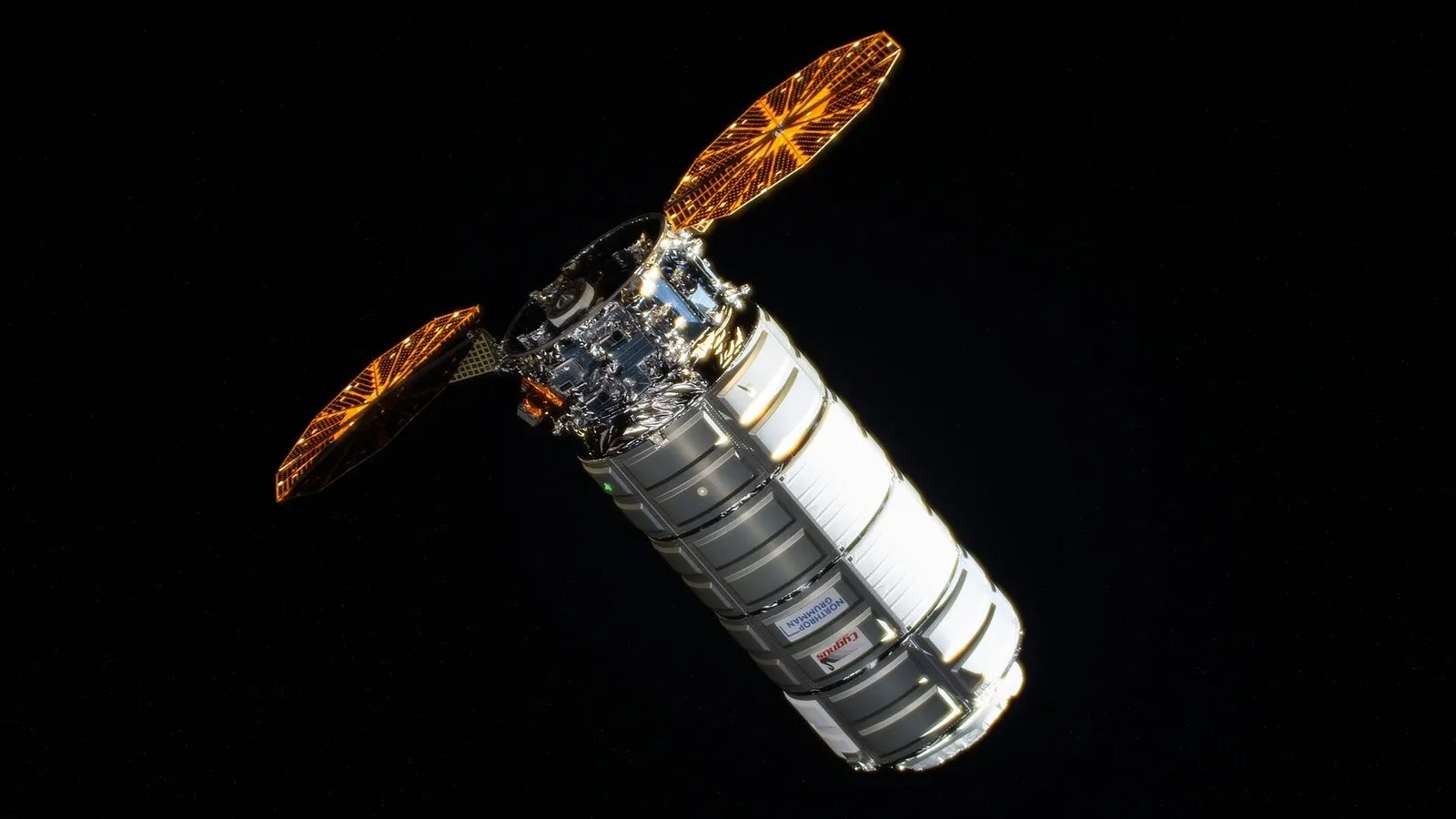
SpaceX launched Northrop Grumman's Cygnus XL cargo ship from Florida on Sunday, sending about 11,000 pounds of supplies, experiments and holiday food toward the International Space Station.
A Falcon 9 rocket lifted off at 10:47 a.m. EST from Space Launch Complex 40 at Cape Canaveral Space Force Station. The flight is Northrop Grumman's 25th Cygnus resupply mission to the station for NASA, known as CRS-25 or NG-25.
If all goes to plan, the ship will reach the station early Tuesday after a roughly two-day flight, NASA said. Waiting there is a seven-member crew, and part of the load is fresh food.
"The Cygnus XL has on board a number of fresh food items for the crew to enjoy, especially ahead of this holiday season," said Gaurang Patel, NASA's ISS operations integration manager.
"We've got some apples, carrots, sweet peppers, grapefruit, oranges, tomatoes, blueberries, gingerbread house kits, holiday cookies, and (high school-contributed) recipes for spicy carne asada street tacos and Rasta pasta," Patel said.
The shipment also includes pizza kits, candy and a selection of international foods.
The ship is loaded with some 3,500 pounds of crew supplies and more than 4,000 pounds of research equipment, CBS News reported.
It also carries more than 2,500 pounds of spare parts, spacewalk gear and computer equipment.
The research load includes experiments "with goals of improving drug delivery for cancer and osteoarthritis, predicting cancer spread, advancing treatments for muscle loss," Patel said. Other studies aim at "improving radiation sensing, and advancing food production on future, long-duration missions," he said.
Booster lands beside the pad
The Falcon 9 first stage, booster B1096, was making its ninth flight. It landed at Landing Zone 40, next to the launch pad, less than eight minutes after liftoff.
As the booster came down, sonic booms rattled windows along Florida's Space Coast. SpaceX later confirmed that the Cygnus XL had been deployed from the rocket.
NASA said the ship was expected to unfurl its solar arrays about 1 hour and 45 minutes after reaching its preliminary orbit. It was not immediately known whether the array deployment went as planned.
Northrop Grumman names each Cygnus after a spaceflight pioneer. This one honors astronaut Jim Lovell and is called the S.S. James "Jim" A. Lovell. Lovell was a NASA astronaut who flew four space missions, including Apollo 8, and commanded the Apollo 13 moon mission.
Sunday's launch was the fourth flight of the Cygnus XL, which can carry about 30% more cargo than the earlier version of the vehicle. It is one of four robotic resupply ships now serving the station, along with Russia's Progress, Japan's HTV-X and SpaceX's Dragon. Only Dragon is reusable.
Capture planned for early Tuesday
When Cygnus arrives, NASA astronauts Jessica Watkins and Luke Delaney will capture it with the station's Canadarm2 robotic arm at about 2:35 a.m. EST Tuesday. Flight controllers at Johnson Space Center in Houston will then operate the arm remotely to pull the ship in, CBS News reported.
Cygnus will be berthed at the Earth-facing port of the Unity module for unloading. NASA's live coverage of the arrival begins at 1:10 a.m. Tuesday, the agency said, though it will not broadcast the spacecraft's installation.
The ship is scheduled to stay until May 2027. At the end of its stay, it will be packed with thousands of pounds of trash and sent to burn up in Earth's atmosphere, Space.com reported.