




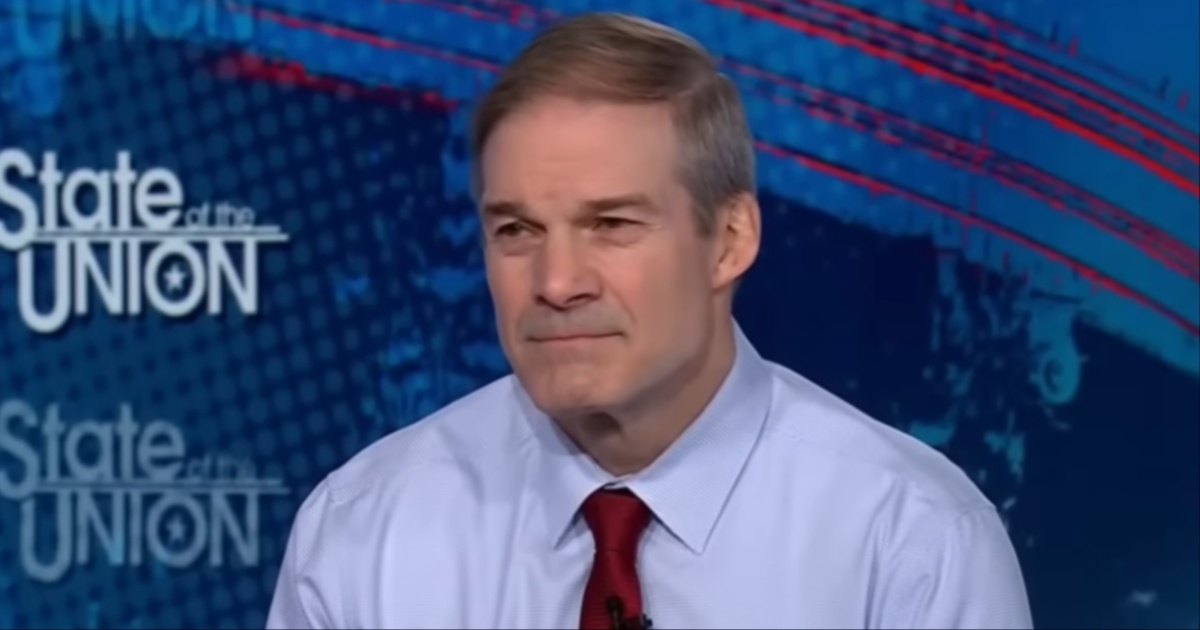
Republican Rep. Jim Jordan found himself in a tough spot after he tried to explain the U.S. invasion of Caracas during a televised exchange. He struggled to maintain his argument when faced with facts.
Jordan, a longtime MAGA ally of Trump and a vocal supporter of the administration’s foreign policy, was asked how the capture of Venezuelan president Nicolás Maduro fit into an “America First” framework. He focused on drugs, particularly fentanyl, which has harmed communities throughout the country, including parts of his Ohio district.
“Helping deal with that, helping deal with that, I think is a good thing,” Jordan said, presenting the Venezuela operation as a way to keep fentanyl off American streets. He claimed the action would be seen as “decisive” and would help both U.S. communities and Venezuelans.
However, this explanation did not last long.
CNN’s Dana Bash issued a correction in the interview, noting that fentanyl does not come from Venezuela as U.S. government data shows that the synthetic opioid mostly comes from Mexico’s land border, often using chemical precursors from China, not South America.
Faced with this reality on air, Jordan did not back down from his support for the invasion. Instead, he modified his argument and stated that Venezuela’s increasing connections with countries like China and Iran definitely affect the larger fentanyl issue, even if the drug itself is not made or shipped from Venezuela.
Jordan’s appearance came as the administration continued to portray the Maduro capture as a significant blow against international crime and corruption. Trump has repeatedly cited drug trafficking charges against the Venezuelan leader, presenting the operation as an overdue act of justice rather than a conventional military intervention.
Meanwhile, the White House has heavily relied on messaging that connects foreign threats to domestic issues such as drugs, immigration, and national security. Fentanyl, in particular, has become a common topic for Republican lawmakers wanting to link international actions to voters’ everyday concerns.
However, federal reports have consistently shown that the fentanyl supply chain follows different paths than the one Jordan suggested. U.S. law enforcement agencies have identified Mexican cartels as the main distributors, with precursor chemicals coming mainly from China and, to a lesser extent, other parts of Asia.
This exchange shows the delicate position Republicans find themselves in as they defend Trump’s tough foreign policy while facing real-time fact-checks. For Jordan, the correction did not lead to a withdrawal from supporting the invasion, but it did cause a noticeable change in how he presented his argument.
As the fallout from the Venezuela operation continues, it is yet to be seen how events unfold with the attempt at regime change. The move to pump oil out of Venezuela will likely take many years with American military stationed in the country.
The potential consequences could include a rebellion against U.S. presence or the militarization of other nations in South America. Whatever the case, Trump made it clear the U.S. is in it for the long haul.
“We’re going to run the country until such time as we can do a safe, proper and judicious transition,” he said, adding: “We’re going to have our very large United States oil companies, the biggest anywhere in the world, go in, spend billions of dollars, fix the badly broken infrastructure, the oil infrastructure, and start making money for the country.”