

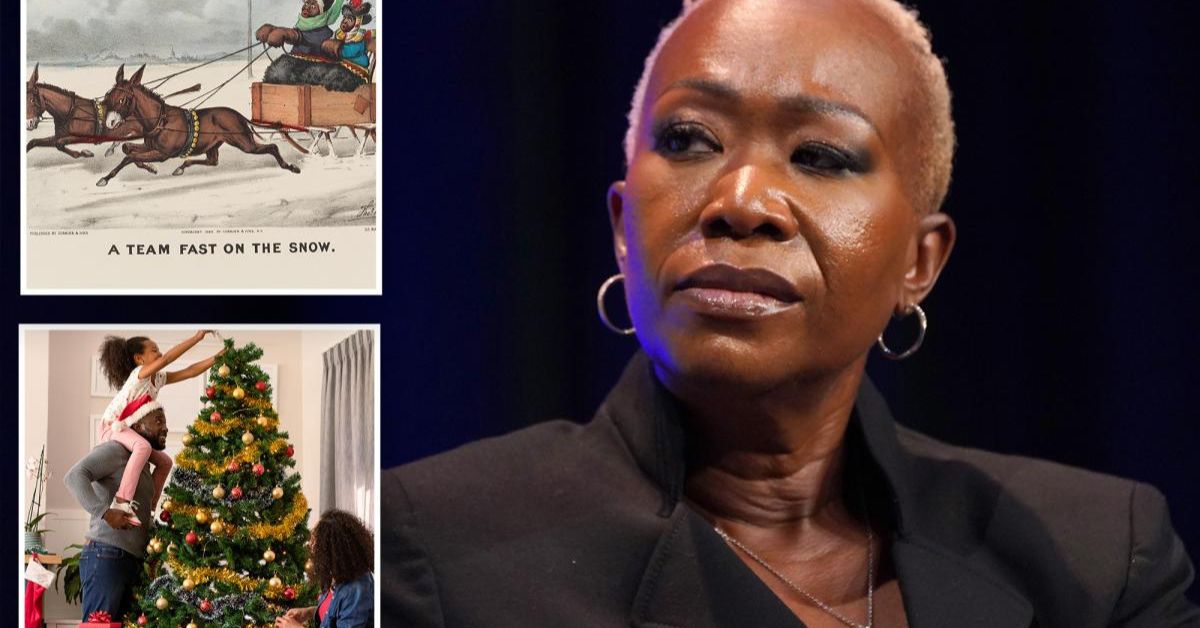
Fired MSNBC host Joy Reid sparked a fresh round of cultural controversy this week after sharing a video with her podcast followers that claimed the classic holiday song “Jingle Bells” is racist.
The Jingle Bells shared by Joy Reid video rapidly circulated across several online platforms. It argues that the Christmas song’s earliest performances were tied to 19th-century minstrel shows, a claim that has surfaced periodically in academic circles and liberal activist discussions.
Joy Reid did not explicitly say she agreed with the Jingle Bells is racist video’s conclusions. However, Reid’s decision to share it with a large podcast audience immediately prompted critics to ask whether the act of amplification suggested endorsement of the racism accusation of the beloved holiday tune.
🇺🇸 JOY REID SHARES VIDEO CLAIMING “JINGLE BELLS” WAS WRITTEN “TO MAKE FUN OF BLACK PEOPLE”
They really can’t let people enjoy Christmas.
Fired MSNBC host Joy Reid shared a video to her 1.3 million Instagram followers claiming the beloved Christmas anthem “Jingle Bells” was… pic.twitter.com/EM4NaVjZPW
— Mario Nawfal (@MarioNawfal) December 10, 2025
The Jingle Bells song is racist video claim that has reignited national debate about whether public figures bear responsibility for the narratives they help spread — especially in a cultural environment where Christmas traditions have become increasingly politicized.
“Learning the history behind our traditions doesn’t stop anyone from celebrating them,” Reid said on her podcast in response to the backlash. “People can enjoy the season and also understand where some of these cultural elements came from.”
Conservatives seized on the Joy Reid Jingle Bells is racist video repost as the latest example of liberal commentators “sucking the joy out of Christmas,” arguing that even lighthearted, universally recognized traditions are now treated as political territory. Several commentators said Reid’s choice to elevate the video contributed to what they view as a broader trend of turning the holiday season into a partisan battleground.
“ JINGLE BELLS” is not a Christmas Song But a Slavery Song pic.twitter.com/Tiy6Zc3Z3W
— Kobe Boujee (@kobe_boujee88) December 3, 2024
Christmas, once considered a rare moment of unity, now routinely features debates about holiday greetings, school programs, store displays, religious symbolism, and the alleged “War on Christmas.”
Joy Reid’s role in this year’s Christmas skirmish is particularly striking given her professional transition. Once a primetime cable news host, she was fired from MSNBC earlier this year following internal restructuring and criticisms surrounding past online posts. She has since rebuilt her platform independently, and her podcast maintains a large and politically active audience. That reach is a key reason her reposting of the Jingle Bells video drew such swift national attention.
Historians continue to debate the accuracy and significance of claims linking the Jingle Bells song to minstrel shows. While some research has documented early performances in racially problematic contexts, others argue that the song’s later popularization and cultural use bear little connection to those origins. Still, the dispute often matters less for its historical content than for its symbolic role in modern political identity.
Critics of Reid argue that raising such issues during the Christmas season fuels resentment and distracts from the holiday’s spirit. Supporters counter that cultural examination is not an attack on tradition but an opportunity for deeper understanding.
Yet the broader question lingers: Does sharing a controversial cultural argument with millions of followers imply agreement — or simply spark discussion? In the hyper-polarized climate of 2025, both sides interpret the act differently.
As political tensions continue to shape how Americans interact with even the most familiar traditions, Christmas remains both beloved and battleground. And as Joy Reid’s repost demonstrated, in today’s media landscape even a sleigh bell can become a flashpoint.