



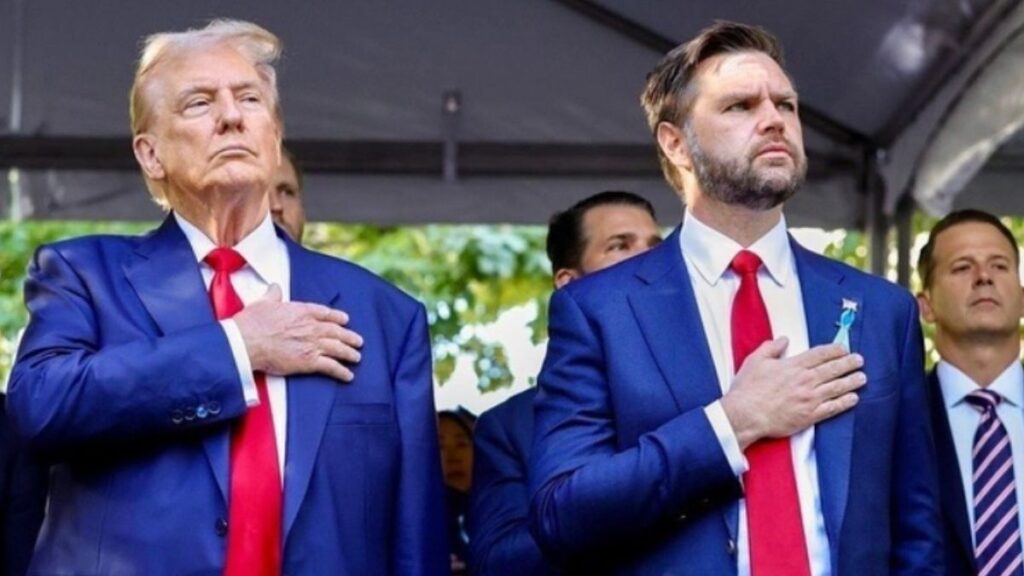
With the US and Israel’s joint war with Iran entering its second month now, it has come to light that Vice President JD Vance was one of the most skeptical members in President Trump’s Cabinet regarding the war. Unlike Secretary of State Marco Rubio, Vance has appeared to be a more reluctant supporter of the war.
As reported by the NY Times, Vance described the war as “a huge distraction of resources” and “massively expensive.” His political stance has long opposed large-scale military operations like those the US is currently conducting, and he sought to apply that position to the Iran war.
On February 26, two days before the United States and Israel jointly attacked Iran, a final meeting regarding the war was held. Vance stayed true to his stance and told Trump, “You know I think this is a bad idea, but if you want to do it, I’ll support you.” While he opposed the large-scale attack the president had planned against Iran, once he realized Trump was determined to proceed, he urged that any strike be decisive to achieve objectives quickly.
View this post on Instagram
It should be noted here that Vance has not been against all attacks on Iran. However, he was not on board with this regime-changing attack on the country. Instead, he favored a more compact and limited attack, similar to the strike Trump ordered against Syria in 2017 following the use of chemical weapons against civilians.
In this case, while Vance opposed large-scale attacks, he knew that the President would be hard to convince. Therefore, he allegedly tried to convince him of a quicker resolution, according to The NY Times. Vance reportedly warned that war with Iran could destabilize the Middle East, cause heavy casualties, and alienate Trump’s base.
Vance apparently highlighted the fact that the war would break Trump’s no-new-war promise, which might further enrage his political allies and supporters, leading to a less favorable position for Trump among them.
The Vice President also focused on America’s munitions problem and explained how the war on the Iranian regime could lead to America struggling to engage in any other conflicts over the coming years. Vance further pointed out that there was no certain way of knowing how Iran would respond, as a war of this scale could go in any direction.
View this post on Instagram
The President, however, held his ground firmly and said, “I think we need to do it.” The next day, he approved the mission, saying, “Operation Epic Fury is approved. No aborts. Good luck.” Hence began the US and Israel’s joint attack on Iran, which has escalated significantly since the time it started.
Iran’s move to take control of the Strait of Hormuz, which analysts say has contributed to rising fuel prices in the United States. President Trump had previously threatened Iran multiple times to open the strait but the country has remained adamant.
On Tuesday evening, a few hours before Trump had vowed to wipe the entire Iranian citizenship out, the President took to Truth Social to announce that a two-week ceasefire had been achieved between the US and Iran with the intervention of Pakistan.
Iranian authorities also confirmed the same, as Iran’s Minister of Foreign Affairs Abbas Araghchi said, “For a period of two weeks, safe passage through the Strait of Hormuz will be possible via coordination with Iran’s Armed Forces and with due consideration of technical limitations.”


