



The affordability crisis just became worse for students.
Donald Trump’s ‘One Big Beautiful Bill‘ was passed by Republicans in Congress, causing a slew of sectors in America to be hit. One of the main platforms on which Trump positioned his election campaign was affordability. However, things are not looking up for students, who might end up paying more each month on education loans.
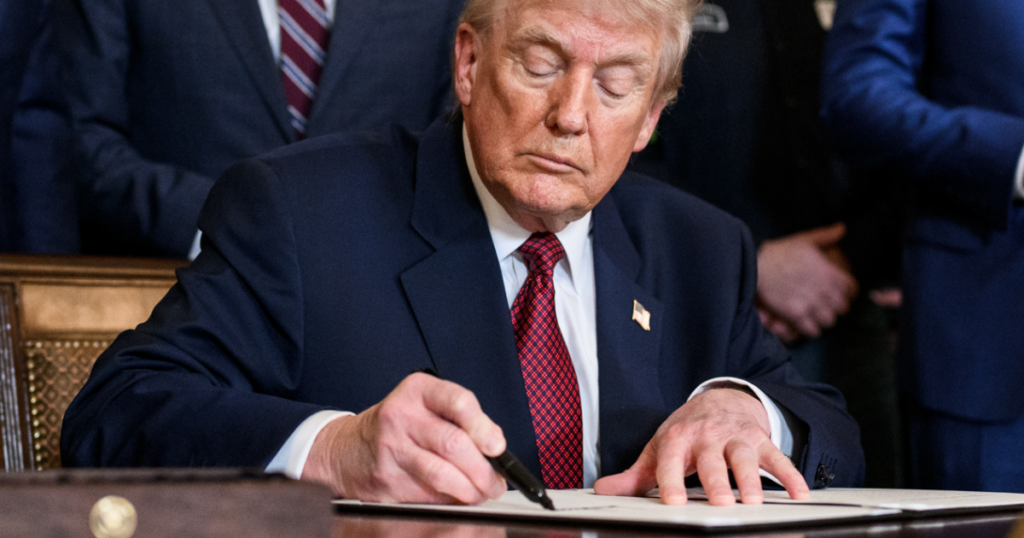
As reported by The Mirror, Under Secretary of Education Nicholas Kent issued a press release that looked at how Trump’s efforts were to make higher education more affordable for average Americans. It said, “President Trump’s Working Families Tax Cuts Act offers a once-in-a-generation opportunity to lower tuition costs and improve the student loan system to better support borrowers.”
However, organizations like Protect Borrowers are saying that that might not be the case. Protect Borrowers issued a fact sheet, pointing out that students might be slapped with about $3425 more per year in education loan payments under Trump’s initiative. Starting July 1, the effects of the Act might be more damaging to students and their families.
Protect Borrowers has also stated that Trump’s sweeping removal of federal financing in education might lead to parents and students opting for private loans instead.
A new report from Senate Democrats, spearheaded by @SenWarren, @SenSchumer, and @SenSanders, analyzes how the One Big Beautiful Bill Act will lead to a significant expansion of the private student loan market: https://t.co/8hjcdeDb2a pic.twitter.com/ilRTCwnkID
— NASFAA (@nasfaa) February 13, 2026
As per The Atlantic, Donald Trump’s affordability agenda might not survive the policies that the president is putting forward. Not only did Trump want to lower prices, but he also wanted more purchasing power in the hands of the American people. Trump’s tariff dividend idea seemed promising, but it would have similar consequences to the post-pandemic Biden-era stimulus checks. With too much purchasing power and not enough goods, inflation would be set to skyrocket, making the entire situation worse.
Donald Trump has also issued a direct order to tackle the housing crisis, taking a page from left-wing talking points. He stated that families could not be expected to compete with corporations when it came to owning starter houses. While institutional investing accounts for less than 0.5% of the housing stock in the country. However, while fewer houses are in the buying market might drive up prices; more houses in the rental market mean more options to rent. This automatically drives rental prices down.
Trump has also suggested that he would cap interest on credit cards, but that would just mean that higher-risk borrowers would lose out on credit opportunities. Banks often charge the interest rates that they do to absorb the losses that are incurred by non-payment and other borrower defaults. An interest cap would definitely make them reluctant to lend if the borrower does not have a stellar credit record.