



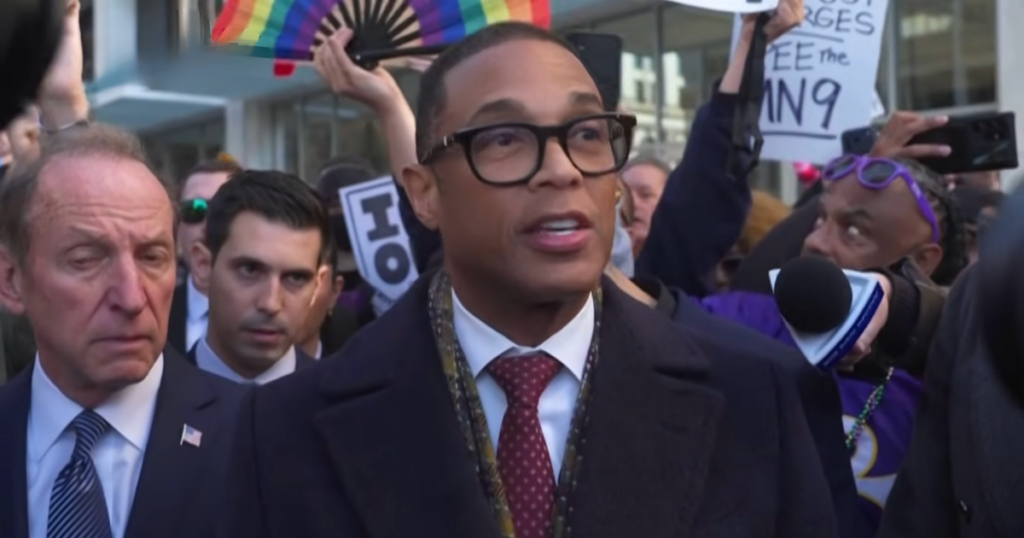
Snow needled across the marble steps of the federal courthouse in St. Paul, turning TV lights into a haze, when Don Lemon stepped into the crush of microphones. No network anchor desk, no polished studio backdrop. Just a 59-year-old former CNN star in a black coat, facing a Justice Department that now has his name on a charging document.
“The process is the punishment with them,” he said, each word measured, as if he’d tried the line out in his head a few times—and then discovered, over the last month, just how true it felt.
A few minutes earlier, Don Lemon had been inside, pleading not guilty to a pair of federal conspiracy counts tied to a raucous protest inside a St. Paul church in January. Coming out of court, he did what he’s always done: looked straight down the lens and tried to control the narrative. Only this time, he wasn’t covering the story. He was the story.
The charges against Don Lemon are serious and, to many press freedom advocates, deeply ominous. Federal prosecutors accuse him of conspiracy against the rights of religious freedom at a place of worship, and of injuring, intimidating, and interfering with the exercise of that right.
Dozens of Don Lemon supporters gathered outside a St. Paul courthouse as the journalist pleaded not guilty to federal criminal charges tied to his coverage of Trump’s immigration crackdown in Minnesota https://t.co/QWOmadcd25 pic.twitter.com/XVgT8kPYtp
— Reuters (@Reuters) February 14, 2026
Translated out of legalese, they’re essentially claiming that Don Lemon helped trample worshippers’ rights by going into the sanctuary.
The government’s version of events goes like this: on January 18, Don Lemon followed a group of protesters into Cities Church in St. Paul as they confronted a pastor they believed was quietly cooperating with Immigration and Customs Enforcement during a sweep of immigration raids across Minneapolis. By filming and live-streaming the confrontation, prosecutors say, he stepped over a protected threshold.
Don Lemon’s account is more straightforward—and, frankly, far more believable to anyone who has ever seen how journalists actually work.
He says he went in as a reporter, full stop. On his own YouTube footage from that day, his voice cuts through the din of chanting and shouted prayers.
“I’m just here photographing. I’m not part of the group … I’m a journalist,” Don Lemon can be heard saying, as protest echoes bounce off the church’s high ceilings.
DON LEMON, JUST NOW, after pleading not guilty in Minnesota church protest case:
“I will NOT be intimidated.
I will not back down.
I will fight these baseless charges and I will NOT be silenced.”✊🏾 💪🏽 pic.twitter.com/z8Nkggn5rX
— BrooklynDad_Defiant!☮️ (@mmpadellan) February 13, 2026
That distinction—observer versus participant—is now the core of the case. To the Donald Trump administration, this is being packaged as a crusade for religious freedom, as if the only thing at stake is the sanctity of a church.
To Don Lemon and his supporters, it looks a lot more like a trial balloon: how far can the federal government go in criminalizing news coverage that makes it look bad?
Outside the courthouse, Don Lemon sounded like someone who has already decided this isn’t just his problem.
“You all have showed up for me in a real way and I am extremely grateful for that,” Don Lemon told the crowd. “For over 30 years, I have been a journalist, and the power and protection of the First Amendment has been the underpinning of my work. The First Amendment, the freedom of the press—the bedrock of our democracy.”
Then he aimed directly at the Donald Trump administration.
My remarks following my court appearance today in Minneapolis. pic.twitter.com/KVqv3yvouf
— Don Lemon (@Donlemonbsky) February 13, 2026
“The events before my arrest and what’s happened since, show that people are finally realizing what this administration is all about,” Don Lemon said. The line that followed—“The process is the punishment with them”—landed like an accusation and a warning.
“I will not be intimidated. I will not back down. I will fight these baseless charges. And I will not be silenced,” he added, as supporters cheered.
Pretending Don Lemon’s prosecution is some isolated celebrity drama is willful blindness. Cities Church became a stage because of what was already happening on the streets outside its doors.
For weeks, Minneapolis and its suburbs have been the target of aggressive Border Patrol and ICE operations—raids that officials now say are winding down, but not before inflicting damage that will not fade so quickly. The city has seen mass protests, late-night marches, and, most chillingly, two fatal encounters between federal agents and local residents.
Both of the dead were U.S. citizens. Both were 37. Neither has been credibly shown to have posed an immediate lethal threat when they were killed.
Don Lemon calls out JD Vance: “This is a vile human being. It’s not that hard, all he would have to say is I am sorry, no one should die that way. Why can’t you do that JD Vance? Do you have to kiss Donald Trump’s ring and his butt that much that you have to forgo your humanity?… pic.twitter.com/3ogxZAUU7h
— Marco Foster (@MarcoFoster_) February 4, 2026
On January 7, Renee Good was sh-t and k-lled by agent Jonathan Ross as she appeared to be driving away from officers. There is still no public evidence that she tried to ram agents or reach for a weapon.
Seventeen days later, on January 24, ICU nurse Alex Pretti stepped in to help a woman who had just been shoved to the ground during another clash with federal agents. Witnesses say he was pushed down and then shot multiple times. Unarmed. Dead on the pavement.
The Trump administration’s answer was to label both Good and Pretti “domestic terrorists,” offering no immediate evidence that either had attempted to harm federal personnel. That label is not neutral; it’s a political weapon. It converts public anger into something suspicious, civic resistance into something vaguely subversive.
Seen against that backdrop, Don Lemon’s case stops looking like a tidy debate over church access and starts resembling something far more unsettling: another front in a broader confrontation between an administration comfortable with deploying federal force and a public that dares to watch, record, and object.
Don Lemon pleads NOT GUILTY and won’t back down to the Trump Administration pic.twitter.com/GgNVDfCda1
— Don Lemon Clips (@DonLemonClips) February 13, 2026
If convicted, Don Lemon and others tied to the church protest face up to a year in prison and fines of up to $10,000. For a freelance journalist who spent years under the bright lights of CNN, that’s not some abstract civics question. A federal conviction shadows every future assignment. It scares off sources. It quietly tells younger reporters that standing too close to power while holding a camera can wreck your life.
And that is what makes his seven-word indictment of the Trump administration—“The process is the punishment with them”—so pointed. Don Lemon isn’t just complaining about court dates and lawyers’ bills. He’s describing a method: drag opponents through a grinding legal machine, make the ordeal itself the deterrent, and let everyone watching draw the intended lesson.


