

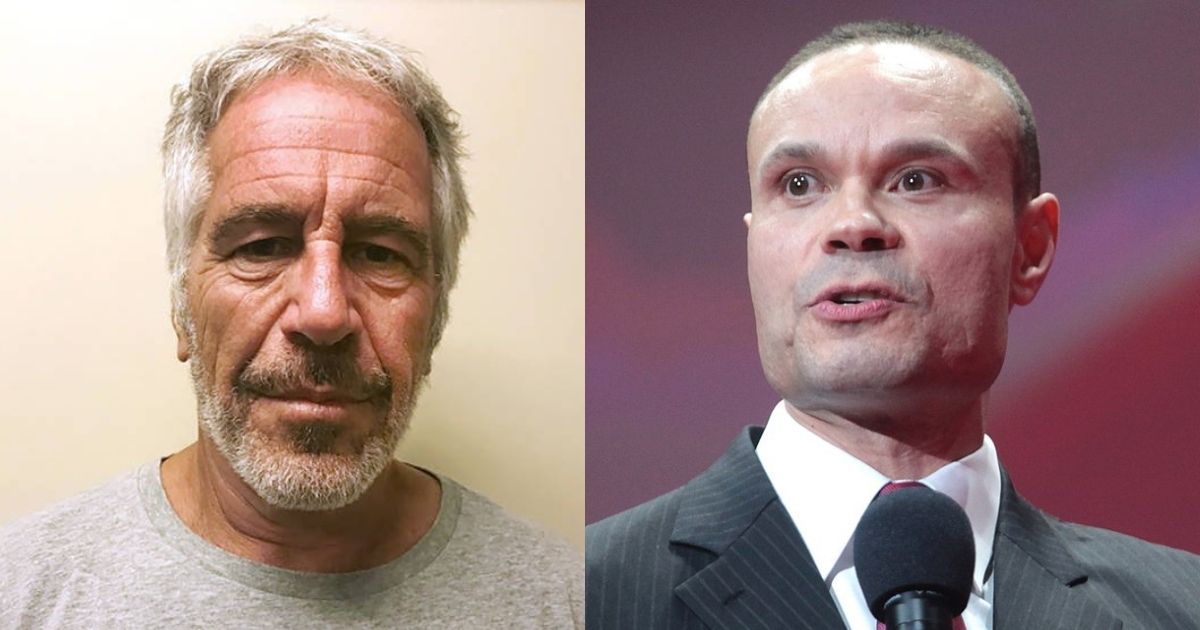
For years, Dan Bongino built his brand by insisting on the need to uncover every piece of government paper related to Jeffrey Epstein. He presented himself as the person who would unlock the vault. As the deputy director of the FBI, he is facing the backlash he once unleashed on those in his position. This comes after revelations that he was aware of a large internal effort to heavily redact those same files.
Recent reports indicate that Bongino got involved in the redaction project almost immediately after he arrived at FBI headquarters. The former Secret Service agent and MAGA celebrity, who joined the bureau’s leadership in March under Director Kash Patel, had publicly promised that the Trump administration would approach the long-awaited Epstein releases carefully and openly. He insisted that their goal was to protect victims, not to shield powerful individuals.
That narrative has become difficult to maintain.
Over the weekend, Bloomberg detailed a major initiative within the FBI to comb through the government’s Epstein documents and black out large sections before any public release. The effort reportedly involved extensive training, overtime work, and a large team of agents engaged in what critics now describe as a glorified censorship project. Internal emails referenced in the reports show that Bongino was informed about the redaction plan almost immediately after he took office, placing him in the loop on the project he once criticized.
The Daily Beast followed up with its own report, highlighting the contrast between Bongino’s previous statements and his current situation. During his time hosting a radio show and podcast, he emphasized that the public was being misled about Epstein’s network and demanded that investigators “release the files” to rebuild trust. As deputy director, he suddenly became silent, publicly supporting a cautious, victim-focused approach and avoiding his earlier demands for full transparency.
Folks, I entered on duty on March 17th. The emails in the chain you see forwarded to me, at my request, were sent before I began in my position.
I wanted to review what have been done before I entered on duty. It was a priority and, as you can see, they responded immediately.… https://t.co/G9F5z9b5vY— Dan Bongino (@FBIDDBongino) December 1, 2025
When the internal emails came to light, Bongino sought to manage the backlash. Posting on X, he claimed that critics were misinterpreting the timeline and that the emails did not support their assumptions. “Folks, I entered on duty on March 17th,” he wrote, stating that the messages in the chain were originally sent before he officially began. He claimed he asked for the emails to be forwarded to see what had already been done.
In the same post, he emphasized that reviewing the work was a priority. He stressed that staff “responded immediately” and expressed relief that the emails were now public for everyone to review. To his supporters, this suggests a leader trying to grasp a sensitive project he inherited. To his critics, it sounds like a deflection from someone who was more aware of the situation than he admits and chose not to be honest with his own audience.
What is evident is that this episode has damaged one of Bongino’s most valuable assets: his image as a straightforward truth-teller who would never become part of what he previously labeled a cover-up. Now, he is defending unclear decisions, attempting to explain bureaucratic timelines, and asking people to take him at his word.