



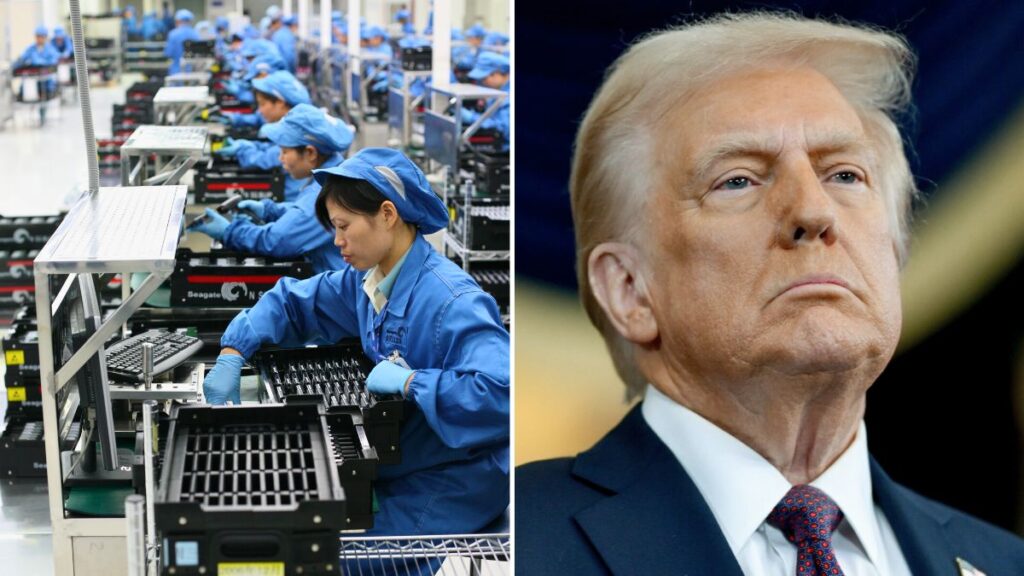
After the Supreme Court of the United States struck down President Donald Trump’s global tariffs in a 6-3 ruling, Beijing warned Washington not to light the fuse again. On Wednesday, China’s Commerce Ministry, through a spokesperson, said China “reserves the right to take all necessary steps to firmly safeguard its legitimate rights and interests.”
The warning comes as Trump attempts to replace tariffs that were invalidated by the court. The justices ruled that he used the 1977 International Emergency Economic Powers Act, or IEEPA, which does not mention tariffs, to impose duties ranging from 10% to 50% on nearly every U.S. trade partner. Chief Justice John Roberts wrote that the president usurped Congress’ authority.
Trump criticized the justices and declared a new 10% global tariff under Section 122 of the Trade Act of 1974. This provision allows temporary duties for up to 150 days without congressional approval. He has indicated he wants to raise that to 15%.
“Congressional action will not be necessary,” Trump said in his State of the Union address.
RELATED: Netizens Spot Mysterious ‘Tag’ in Trump’s Hair During SOTU
Trump increased tariffs on China to 125%, while pausing it for other countries
👉🏼 Americans will now import Chinese products from third countries
👉🏼 China will still get its money pic.twitter.com/13Nwv7xAYQ
— Iran Observer (@IranObserver0) April 9, 2025
Global Trade Alert found that China may benefit from the IEEPA ruling, as seven percentage points will be cut from its tariffs. However, many Chinese goods are subject to other duties, including Section 232 (national security) and Section 301 (unfair trade practices).
Beijing is retaliating creatively. For example, last year China tightened rare earth exports, raising concerns for U.S. defense and tech manufacturing. Additionally, Trump is scheduled to travel to China from March 31 to April 2 for meetings with President Xi Jinping, making the tariff war even more complicated.
Meanwhile, the U.S. Supreme Court ruling could lead to more than $100 billion in refunds for importers who paid tariffs that are now unlawful. Major firms, including FedEx and Costco, have also filed lawsuits seeking repayment. However, lower courts and the U.S. Court of International Trade will have to sort out the process, which could take months or years.
Economists say that even if refunds are issued, companies that raised prices are unlikely to lower them, given the continued uncertainty. Businesses are already complying with the new 10% global levy that took effect at 12:01 a.m. Tuesday.
Yesterday:
Trump says he implemented a 10% global tariff
16 hours, 20 minutes later:
Trump says he implemented a 15% global tariff pic.twitter.com/E1tfm6eYbV
— Morning Brew ☕️ (@MorningBrew) February 21, 2026
Before the ruling, the Congressional Budget Office estimated that Trump’s tariffs could generate roughly $3 trillion over nine years. Yale economists calculated that the court wiped out about $1.5 trillion of that, but Trump insists:
“Tariffs paid for by foreign countries will (…) substantially replace the (…) system of income tax.”
Except that studies by the Federal Reserve Bank of New York have found that the bulk of tariff costs will be on U.S. businesses and consumers, not foreign exporters. As of now, Canada and Mexico have been shielded by their North American trade pact. The European Union has responded cautiously. China, on the other hand, is ready to test Washington’s resolve again.