

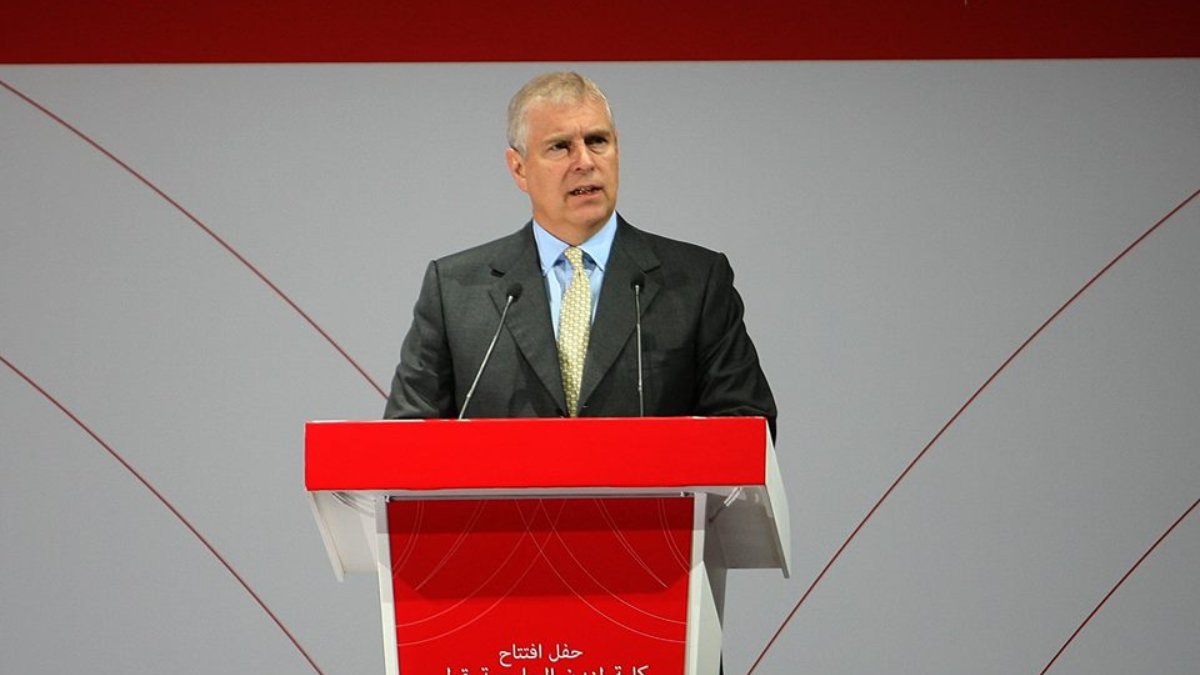
On an overcast February morning on the King’s Sandringham estate, the carefully choreographed quiet of royal life fractured around a single, startling fact: Andrew Mountbatten-Windsor was being arrested in his own home.
By late Thursday, Andrew Mountbatten-Windsor — the man most of the world still instinctively calls Prince Andrew — had been released from police custody. He left without charges, but not without a new and brutal line in the history books: the first senior royal in modern times to be arrested.
He turned 66 the same day.
Thames Valley Police confirmed that officers arrested “a man in his sixties from Norfolk” on suspicion of misconduct in public office, after opening an investigation into allegations linked to Andrew Mountbatten-Windsor’s decade as the UK’s trade envoy between 2001 and 2011. They did not name him, in line with national guidance, but it was hardly necessary. Within hours, Andrew’s identity was widely reported by British and international media.
The arrest took place at his home on the Sandringham estate in Norfolk, one of two properties searched by police. A second search is ongoing at a property in Berkshire. In a statement issued after his release, officers said: “The arrested man has now been released under investigation. We can also confirm that our searches in Norfolk have now concluded.”
BREAKING: Prince Andrew ARRESTED today (his 66th birthday) for misconduct in public office tied to Jeffrey Epstein.
Thames Valley Police took him into custody at Sandringham after he allegedly shared confidential UK trade docs with Epstein as trade envoy.
Max penalty: LIFE in… pic.twitter.com/0QOiWbgdlH
— KanekoaTheGreat (@KanekoaTheGreat) February 19, 2026
The allegation at the heart of the police inquiry is that Andrew may have shared sensitive information with disgraced financier and convicted sex offender Jeffrey Epstein while serving as trade envoy. Thames Valley Police had previously said they were “assessing a report” making that claim. Now that quiet assessment has become a full criminal investigation.
Assistant Chief Constable Oliver Wright tried to strike a careful balance between transparency and restraint. “Following a thorough assessment, we have now opened an investigation into this allegation of misconduct in public office,” he said. “It is important that we protect the integrity and objectivity of our investigation… We understand the significant public interest in this case, and we will provide updates at the appropriate time.”
For now, that “appropriate time” is not today. Police have ruled out any press conference and say there will be no further comment.
Misconduct in public office is not some obscure regulatory breach; it is one of the most serious allegations that can be laid against someone who has held public power.
The Crown Prosecution Service defines it as the “serious wilful abuse or neglect of powers” by a public office holder. Gareth Martin, a specialist criminal defense and regulatory lawyer at Olliers Solicitors, said that the offense is a common law crime with no statutory maximum sentence — in other words, it can carry life imprisonment.
“The threshold for this offence is exceptionally high,” Martin explained. “The courts have been clear that it should only be used where the conduct is so blameworthy that it warrants criminal punishment rather than civil or disciplinary action.” Prosecutors would need to show a “wilful breach of his official duties” to secure a conviction.
🚨 BREAKING: A video is resurfacing of Donald Trump in 2015 CALLING OUT Prince Andrew — who has now been arrested
“That island was a cesspool. No question about it — just ask Prince Andrew. He’ll tell you about it!”
Trump was EARLY to blow the whistle!pic.twitter.com/H6cznOg1E7
— Eric Daugherty (@EricLDaugh) February 19, 2026
That bar is high by design. It is supposed to be. Yet the fact that police have crossed the line from “assessment” to arrest suggests they believe the allegation is at least serious enough to test under that standard.
While Andrew Mountbatten-Windsor has been released under investigation — a status that can last months, sometimes longer — the social and moral dimensions are moving far faster than the legal clock.
The family of Virginia Giuffre, who accused Andrew of sexually assaulting her when she was 17, said their “broken hearts have been lifted” by news of his arrest. Giuffre, who long alleged that Epstein trafficked her to Andrew, died by suicide last year.
Andrew Mountbatten-Windsor has always denied her claims and has not been arrested in connection with those allegations, but the emotional through-line is impossible to ignore. For many, this moment looks less like a narrow UK misconduct case and more like the long, jagged shadow of the Epstein scandal finally reaching into royal space.
The palace, for its part, is clinging to the language of process. King Charles III issued a carefully calibrated statement about his younger brother’s arrest: “I have learned with the deepest concern the news about Andrew Mountbatten-Windsor and suspicion of misconduct in public office,” he said.
Q: “With Prince Andrew arrested by the police…Do you think people in this country, associates of Jeffrey Epstein, will wind up in handcuffs too?”
Trump: “I am the expert in a way because I have been totally exonerated. I can speak about it very nicely. I think it’s a shame.” pic.twitter.com/il0xS3uboC
— The Bulwark (@BulwarkOnline) February 19, 2026
“What now follows is the full, fair and proper process by which this issue is investigated in the appropriate manner and by the appropriate authorities… Let me state clearly: the law must take its course. As this process continues, it would not be right for me to comment further on this matter.”
He added that he and the rest of the royal family would continue their “duty and service” to the country — a familiar phrase, but under the circumstances, a defensive one.
There is something undeniably jarring about that split-screen: one royal house promising continuity and “duty,” while another royal address is being combed through by police in connection with a potential life-sentence offense.
For years, Andrew has been the Windsor problem that would not go away, the embodiment of what happens when inherited privilege collides with modern expectations of accountability. His arrest — and now his release under investigation — does not resolve that tension. It exposes it, in a way that will be far harder to quietly manage behind palace walls.
Whether prosecutors ultimately bring charges is an open question. What is no longer in question is this: the old assumption that certain people were simply beyond the reach of a police warrant has been publicly, and perhaps permanently, shattered.
PRINCE ANDREW ARRESTED: FORWARDING DOCUMENTS RELATED TO TRADING/INVESTMENTS TO EPSTEIN
“The only reason this is happening is because the UK officials have access to documents released by the DOJ. There are ongoing investigations into coconspirators.” @AndrewKolvet pic.twitter.com/p1qljade2R
— Real America’s Voice (RAV) (@RealAmVoice) February 19, 2026
Andrew Mountbatten-Windsor has yet to release an official statement following his arrest.