



President Donald Trump sparked widespread attention after launching a late-night social media barrage that saw him rapidly posting and resharing dozens of messages on Truth Social within a short span of time.
The burst of activity reportedly occurred around midnight after Trump returned to Washington, D.C., following travel earlier in the day. During roughly an hour online, the president shared more than 70 posts and reposts, highlighting commentary from allies, videos praising his administration, and messages targeting political opponents.
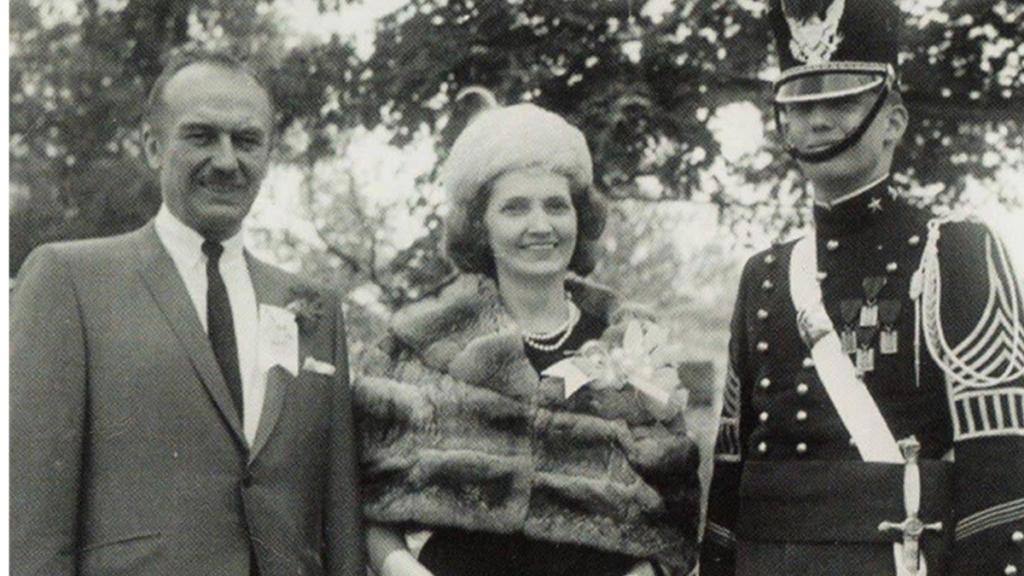
“At the Military Academy with my parents, Fred and Mary!” President Trump posted on Truth Social Thursday night, following U.S. Central Command release about an American military refueling aircraft went down in western Iraq.
— Rapid Response 47 (@RapidResponse47) March 13, 2026
The rapid-fire sequence quickly caught the attention of observers tracking Trump’s social media habits, as the pace of posts amounted to nearly one message per minute during parts of the spree. The posts ranged from commentary about government policy to supportive statements from political allies and influencers.
“We are totally destroying the terrorist regime of Iran, militarily, economically, and otherwise, yet, if you read the Failing New York Times, you would incorrectly think that we are not winning,” Trump also shared. “Iran’s Navy is gone, their Air Force is no longer, missiles, drones and everything else are being decimated, and their leaders have been wiped from the face of the earth.”
Trump has long used social media as a direct communication tool with the public, frequently bypassing traditional media outlets to share his views instantly with supporters. His late-night flurry continued that pattern, amplifying posts that praised his leadership and promoted messaging aligned with his administration’s priorities.
Some of the messages reposted by Trump included commentary from supporters describing his presidency in sweeping terms. One reposted message declared that Trump represented a movement in American politics rather than simply a traditional party figure.
The late-night session also featured posts touching on broader cultural and political topics circulating online, with Trump resharing videos, images, and commentary from conservative commentators and social media figures. In some cases, the same posts were shared more than once, both with and without added commentary.
Observers noted that the president’s overnight social media activity echoes patterns seen during his earlier years in national politics. Trump was famously active on Twitter during his first presidency, posting thousands of times to comment on current events, defend his administration, and criticize political rivals.
Data analyses of Trump’s social media usage in recent years have shown that he occasionally engages in concentrated posting sessions that can stretch for hours, underscoring how rapidly he uses online platforms to communicate with followers and shape public discussion.
Despite the intensity of the midnight session, Trump returned to posting again early the next morning. Shortly before 6 a.m., the president celebrated his preferred social platform with a brief message declaring: “TRUTH SOCIAL IS THE BEST! There is nothing even close!!!”
At the same time, Trump’s long public career continues to bring renewed attention to earlier moments in his life, including the medical deferment he received during the Vietnam War era, according to a report by AOL.
In 1968, Trump, then 22, received a diagnosis of bone spurs in his heels that qualified him for a medical deferment from the military draft. Prior to that, he had received four student deferments while attending college.
The decades-old diagnosis has resurfaced in public discussion after the daughters of a late Queens podiatrist, Dr. Larry Braunstein, claimed in interviews that their father once suggested the diagnosis may have been granted as a favor to Trump’s father, real estate developer Fred Trump.
One of the daughters, Elysa Braunstein, described the story as something that had circulated among family members over the years and said she believed the diagnosis had been a courtesy extended to the elder Trump, whose properties the doctor rented for his medical practice.
“I know it was a favor,” Elysa Braunstein reportedly said while recounting the family’s recollection of the events from the late 1960s.
However, no medical records have been publicly produced to verify those claims, and the doctor left no documentation behind regarding the alleged diagnosis. Government draft medical records from that period are also no longer available, according to archival officials.
Trump himself has rarely spoken in detail about the issue. In a previous interview discussing the deferment, he said that “a doctor gave me a letter – a very strong letter – on the heels,” which he later provided to draft officials at the time.
For Trump, the midnight posting spree served as another example of how social media remains a central part of his communication strategy. Through rapid-fire messages, reposts from supporters, and commentary on current events, the president continues to use online platforms to reach millions of Americans directly and keep political conversations moving in real time.


