



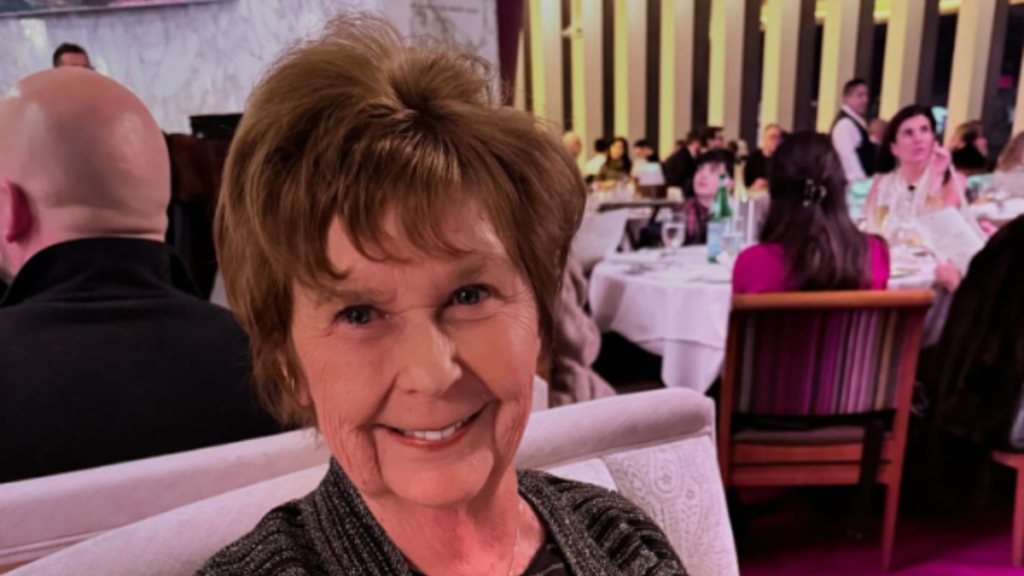
As weeks pass by in the search for Nancy Guthrie, authorities may locate her through the pacemaker implanted in her heart.
Dr Laurence Epstein, System Director of Electrophysiology for Northwell Health, and Professor of Cardiology at Hofstra Medical School, told People Magazine, that authorities are attempting to locate Guthrie using the “signal sniffers” to detect the device’s Bluetooth signal, but only if they can get close enough.
However, the doctor noted that “a pacemaker is not a GPS chip,” and that its signal is weaker than an Apple AirTag.
Dr Epstein further explained that some pacemakers can send health data to a smartphone to track the patient’s health and the pacemaker’s performance.
In Nancy’s case, her pacemaker was connected to her smartphone. However, according to Dr Epstein, when the device “is no longer in proximity of the pacemaker for more than like 24 hours, it’s no longer connected.”
A device that could detect signals emitted from Nancy Guthrie’s pacemaker is among the tools investigators are using as their search for her continues into its third week, law enforcement sources told CBS News.
The high-tech tracking tool, called a “signal sniffer,” has been… pic.twitter.com/K0A4ah4wC0
— CBS News (@CBSNews) February 17, 2026
That’s what happened on February 1. Nancy Guthrie’s pacemaker and her phone lost connection, but “the pacemaker is still doing what the pacemaker is doing and still functioning. It doesn’t need that connection to function.”
The doctor also emphasised that the pacemaker continues to work even if the patient passes away.
Furthermore, Dr Laurence Epstein stated that before pacemakers had Bluetooth, patients had to visit their doctor in every three months for check-ups. “This remote monitoring technology has really been an important advance,” he said.
“Instead of waiting three months to find out there was a problem with the wire, we know within 24 hours, or instead of waiting three months to find out somebody has atrial fibrillation, and then you’ll find out because they had a stroke, we can find out earlier and intervene,” the doctor explained.
He continued, “It’s such a safety issue and it’s so much better for patients,” adding that the patient’s health is “followed remotely for their own sake and, not to worry that, ‘Oh my God, Big Brother is keeping track of me.’ ”
Nancy Guthrie, an 84-year-old elderly woman, and the mother of Today host Savannah Guthrie, was reported missing on February 1, 2026, and was last seen a day prior when her son-in-law dropped her off at her Arizona home after she had dinner with him and her other daughter.
It has now been three weeks since Nancy Guthrie disappeared. Despite several efforts by authorities, she still has not been found.
On February 10, authorities released surveillance photos and video footage of an armed individual who appeared to be masked on Nancy’s front porch. The image featured the man wearing a ski mask, a zip-up jacket, gloves, and a backpack.
Although the individual has not yet been identified, authorities have described him as being approximately 5 feet, 9 inches tall.
The FBI has also increased “its reward up to $100,000 for information leading to the location of Nancy Guthrie and/or the arrest and conviction of anyone involved in her disappearance,” the agency shared in an X post dated February 13.
Today, the FBI is increasing its reward up to $100,000 for information leading to the location of Nancy Guthrie and/or the arrest and conviction of anyone involved in her disappearance.
New identifying details about the suspect in the kidnapping of Nancy Guthrie have been… pic.twitter.com/GJcx4ra6wX
— FBI Phoenix (@FBIPhoenix) February 12, 2026
“New identifying details about the suspect in the kidnapping of Nancy Guthrie have been confirmed after a forensic analysis of the doorbell camera footage by the FBI’s Operational Technology Division. The suspect is described as a male, approximately 5’9” – 5’10” tall, with an average build. In the video, he is wearing a black, 25-liter ‘Ozark Trail Hiker Pack’ backpack,” the agency added.


