



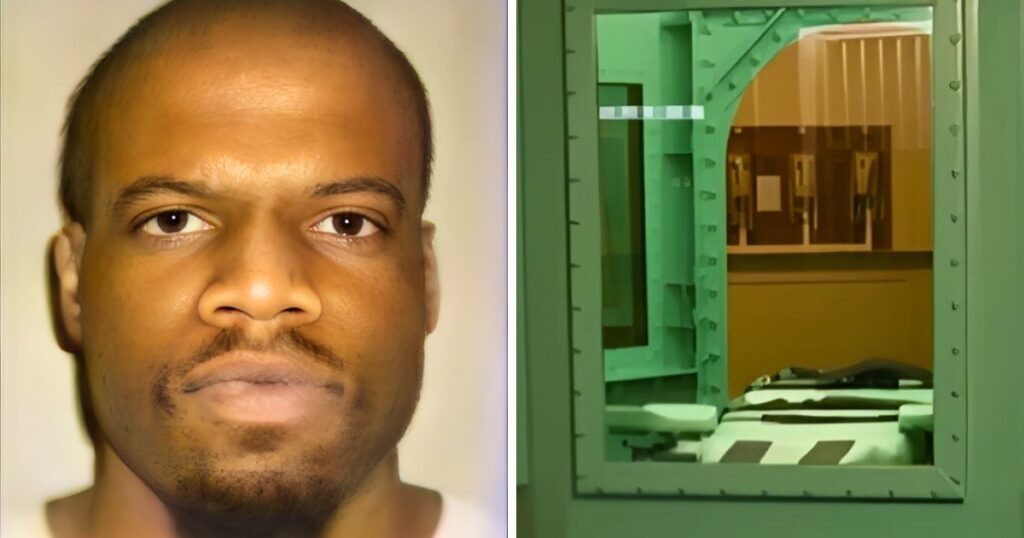
Executions are usually designed to look like a cold, efficient machine, but Oklahoma’s 2014 attempt to execute Clayton Lockett was just the opposite. It was bloody, yes, but more than that, it was entirely out of control. Lethal injections are supposed to be the sanitized face of capital punishment. Instead, that night in the Oklahoma State Penitentiary chamber was far from a medical procedure.
Ten years later, everyone agrees the fallout was a “mess” from the first needle. Lockett was convicted of the 1999 killing of 19-year-old Stephanie Neiman and was strapped to the gurney at 6:23 p.m. The drugs began flowing, and the protocol was to administer a controversial sedative called midazolam to stop the heart. It would be followed by vecuronium bromide and potassium chloride.
Instead, witnesses say they watched him groan, writhe, try to speak, and then lift his head and shoulders off the gurney. “Man,” would be the last coherent word he would say. Then the blinds snapped shut.
State documents later revealed that the problem wasn’t the d— cocktail alone. The IV line was the real disaster. After 16 needles were stuck to insert one, a doctor went for the groin. He hit an artery, and blood sprayed on his clothes.
Per the Guardian, a paramedic said she told him,
“You’ve got the artery. We’ve got blood everywhere.”
Oklahoma prisoner Clayton Lockett dies of heart attack during botched execution attempt http://t.co/im03xf4s0p pic.twitter.com/ACpRKB65EZ
— BBC Breaking News (@BBCBreaking) April 30, 2014
The warden called the scene “a bloody mess” as Lockett’s groin IV had swollen up to the size of a golf ball! And still, the execution continued. The doctor declared him unconscious at 6:33 pm, but then he started moaning and moving.
Warden Anita Trammell panicked,
“Oh my God, he’s coming out of this. It’s not working.”
Things got worse, and a witness ran out of the viewing room. A paramedic said she believed Lockett was in pain, and nobody tried to save him. The prisoner was still fighting for breath, and that was when the corrections director halted the execution at 6:56 p.m. Still, Lockett died 43 minutes after the first d— was pushed into his body. But where did the illegal d—- even come from?
Before the execution, Oklahoma didn’t disclose the source of its d—-. Attorneys who represent death-row inmates warned that an untested pharmaceutical supply chain could lead to a torturous death. Midazolam had never been used to kill a human before that.
Some swore there was political pressure to “get it done” as the attorney general’s office pushed for results, the governor demanded executions move forward despite concerns, and legislators had gone so far as to threaten to impeach Oklahoma justices who stayed the execution. International human-rights experts called Lockett’s death torture. Legal scholars from Cornell argue that the case should have forced a re-examination of the Supreme Court’s ruling that botched executions aren’t always “cruel and unusual.”
At the end, Oklahoma vowed to revise its procedures but did not stop hiding its suppliers.