



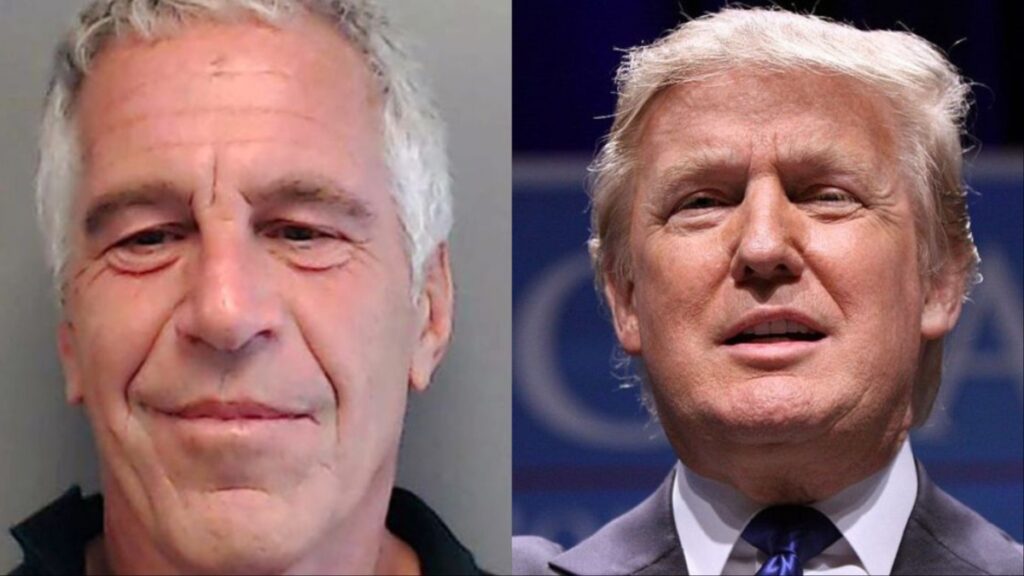
A newly surfaced email from Jeffrey Epstein reveals that the convicted sex offender planned to contact Donald Trump in 2011. This detail contradicts Trump’s claim that he ended their relationship years earlier.
The email, dated April 18, 2011, is part of the Justice Department’s recently released Epstein records. It shows Epstein writing to an associate named William Riley about a possible call with Trump. “Before I call Trump, with regard to Virginia, are there any other alternatives?” Epstein wrote, according to a copy shared in reporting on the release.
The message became public after the Justice Department released nearly 3.5 million pages of documents, as required by the Epstein Files Transparency Act. Trump signed this law in November 2025, which mandated the department to release unclassified materials related to Epstein and his network, with limited redactions.
The mention of “Virginia” has caught attention since it likely refers to Virginia Giuffre, one of Epstein’s most prominent accusers. However, the message does not provide her name or any context for the planned call.
The Times identified Riley as a private investigator who worked with Epstein. They reported that Riley was involved in efforts to gather information about accusers, including Giuffre, as Epstein and his associates tried to undermine her credibility. The Times noted that there is no evidence that some ideas discussed in the emails were acted upon.
Trump has claimed he ended his association with Epstein long before Epstein’s arrest in 2019. ABC News summarized the newly released records, stating that Trump claimed his friendship with Epstein ended over 20 years ago. They also cautioned that simply mentioning names in the files does not prove wrongdoing.
The April 2011 email does not indicate that Trump spoke with Epstein, only that Epstein considered calling him. However, its timing suggests a possible contact years after Trump stated their relationship was over.
The email appears amid a growing political dispute over the Justice Department’s disclosures and its handling of redactions. The department admitted it “erred on the side of over-collecting” and explained that some items were withheld as duplicates, privileged materials, or unrelated to the Epstein or Maxwell cases.
Lawmakers have called for more transparency about what remains undisclosed and why. Rep. Jamie Raskin, the top Democrat on the House Judiciary Committee, reviewed a limited number of unredacted records at a Justice Department facility. He accused the department of making unnecessary redactions while not adequately protecting some victims’ identifying information. Raskin also mentioned seeing an Epstein-related email about discussions involving lawyers, Trump, and Mar-a-Lago, which seemed to contradict Trump’s earlier statements about Epstein’s status at the club.
The Justice Department has not publicly addressed the specific April 2011 email to Riley in detail. A press release regarding the document release warned that the files include tips and submissions to the FBI that may contain “untrue and sensationalist claims.” Inclusion in the collection does not imply verified evidence.
Epstein died in federal custody in 2019 while awaiting trial on sex trafficking charges. The government’s handling of his case, the extent of his contacts, and what remains undisclosed in investigative records continue to fuel legal and political battles in Washington as document release efforts move forward.